









The method, which is unusual
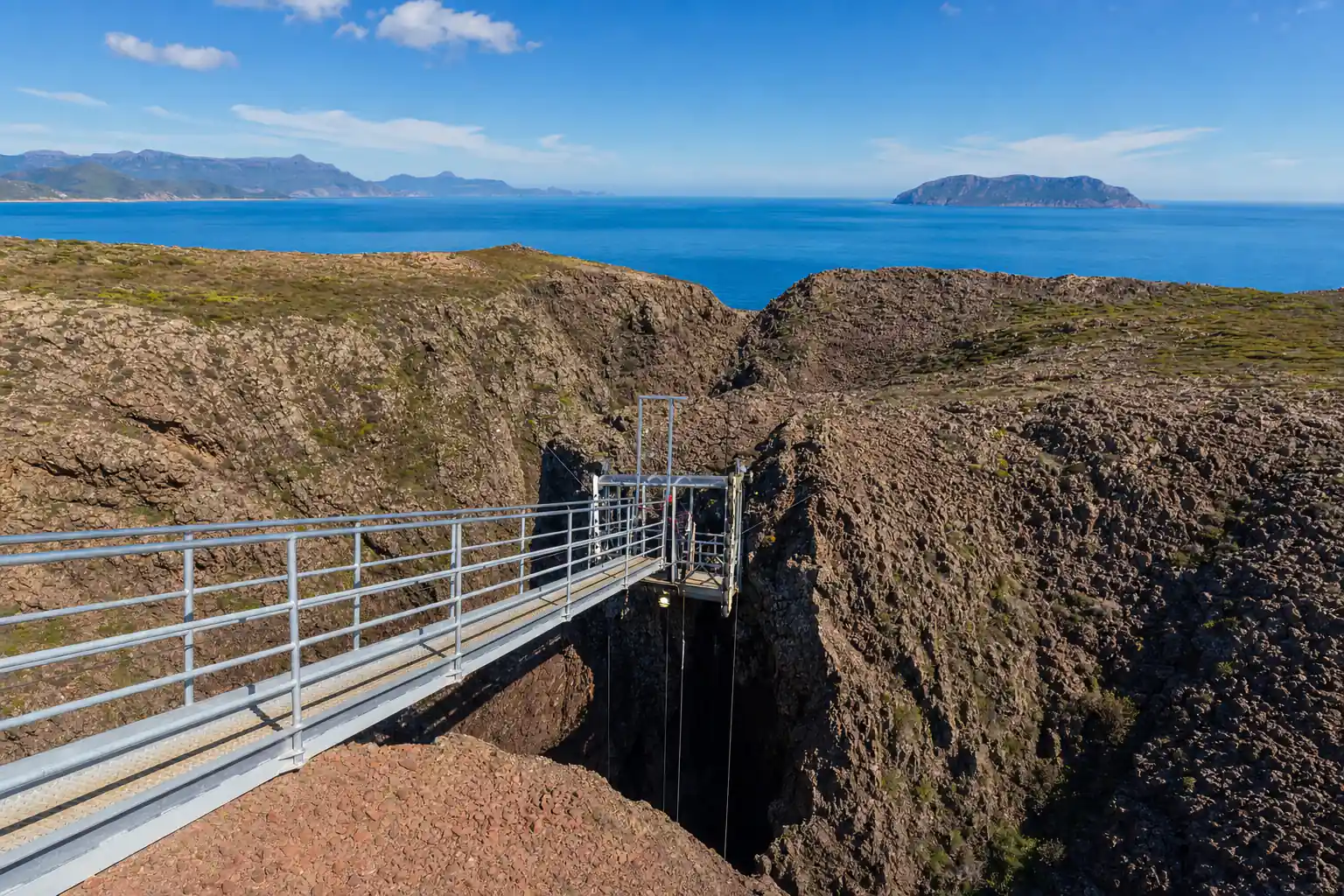
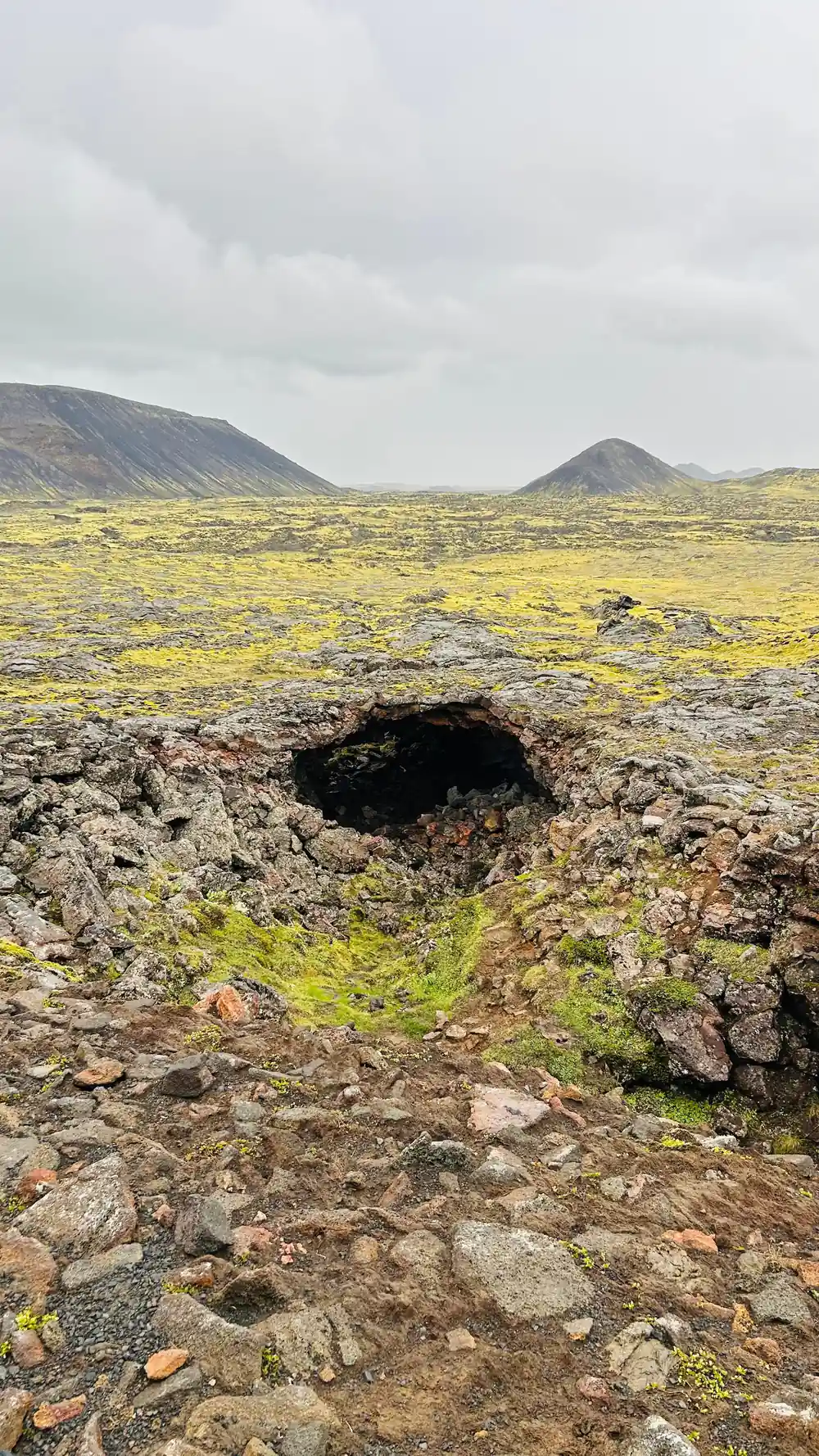
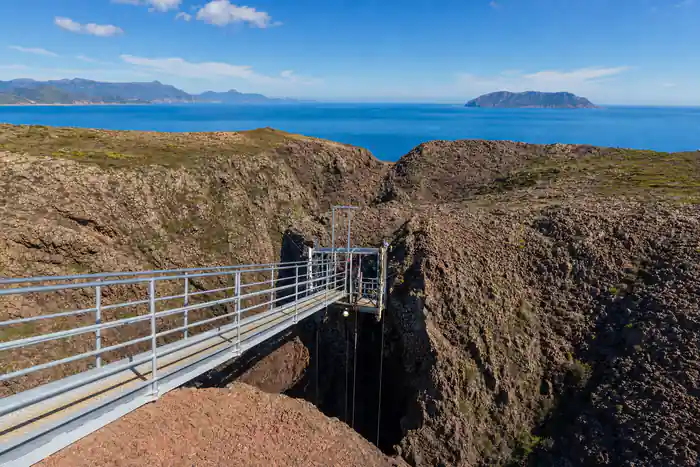
Most underground attractions are entered by walking. You go through a door, or down steps, or along a tunnel, and at some point you are inside. This one has none of those, because the way in is a gap barely wider than a doorway, punched through the base of the crater bowl, and nobody was ever going to be allowed to widen it.
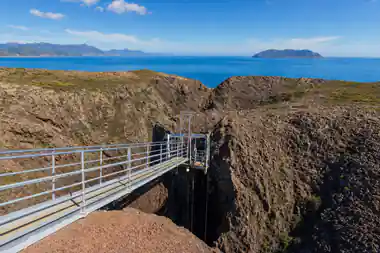
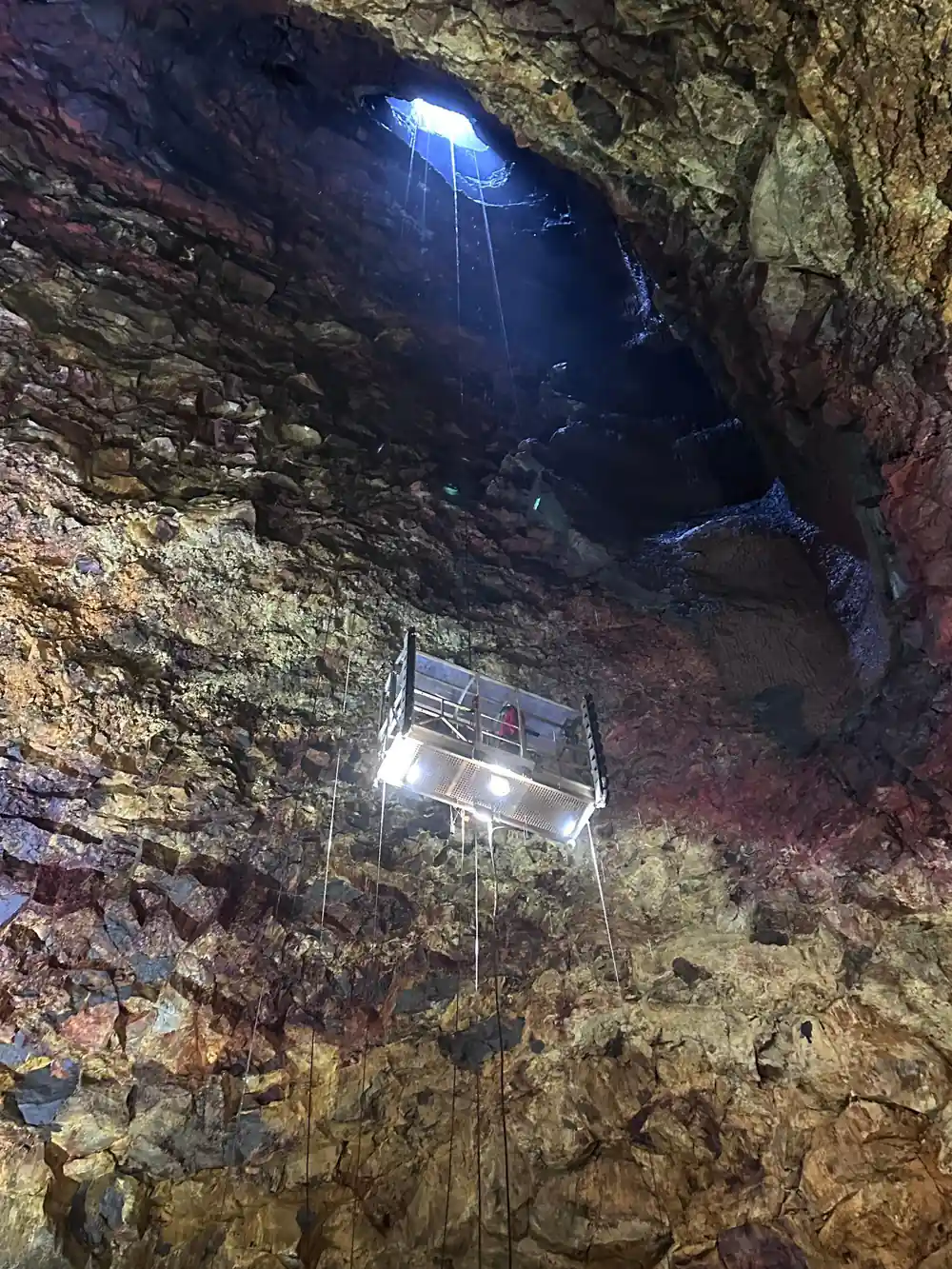
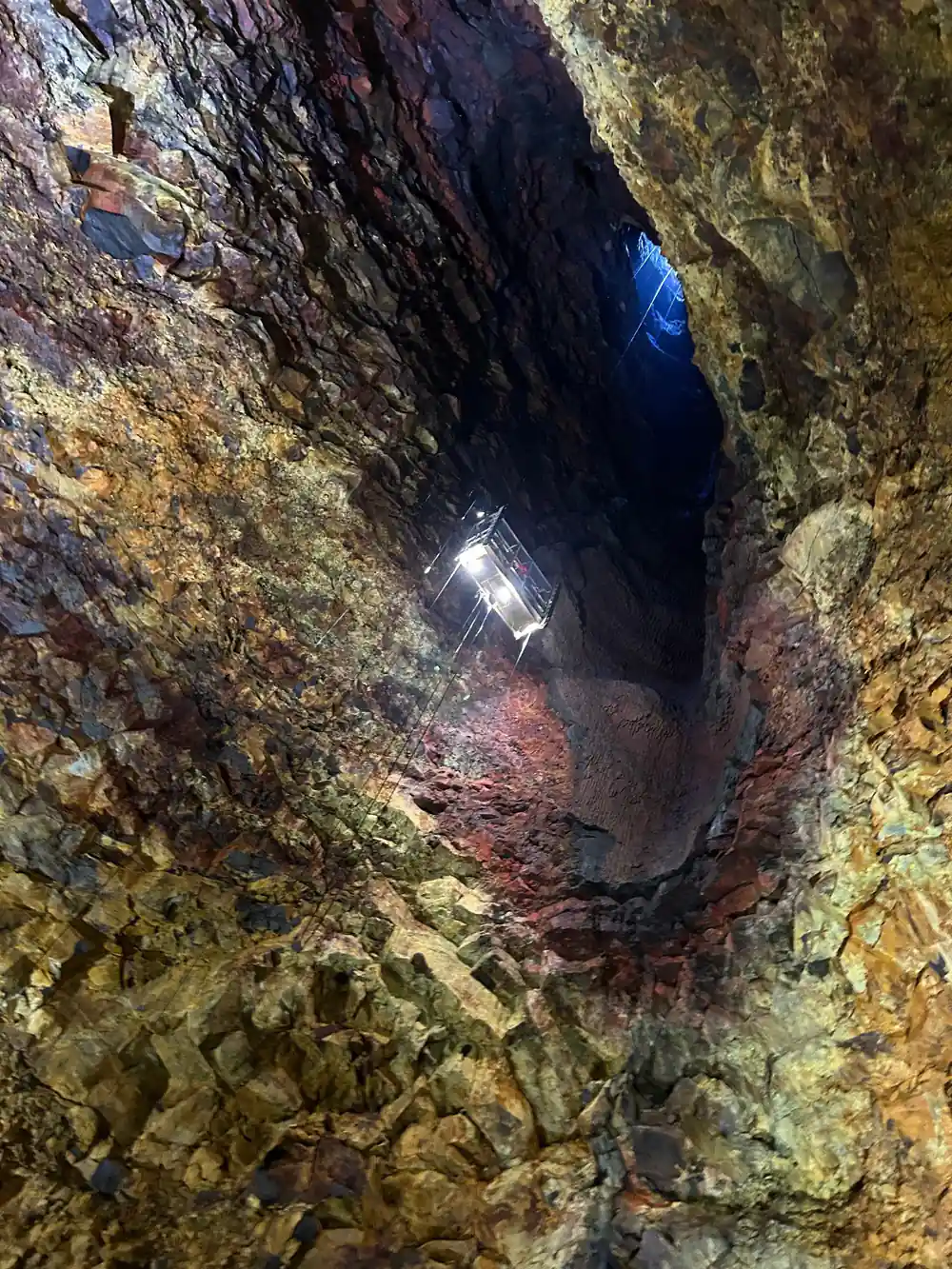
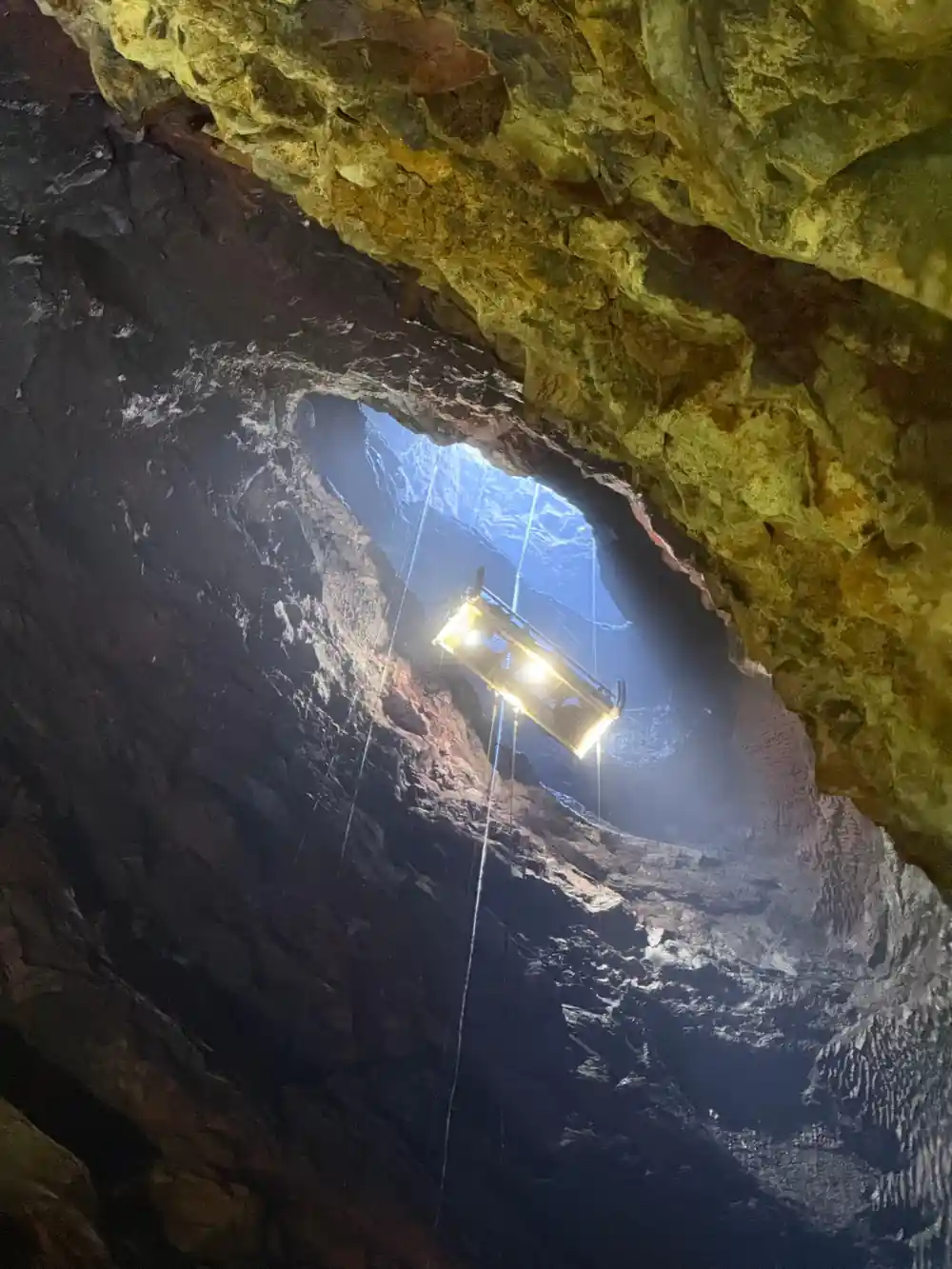
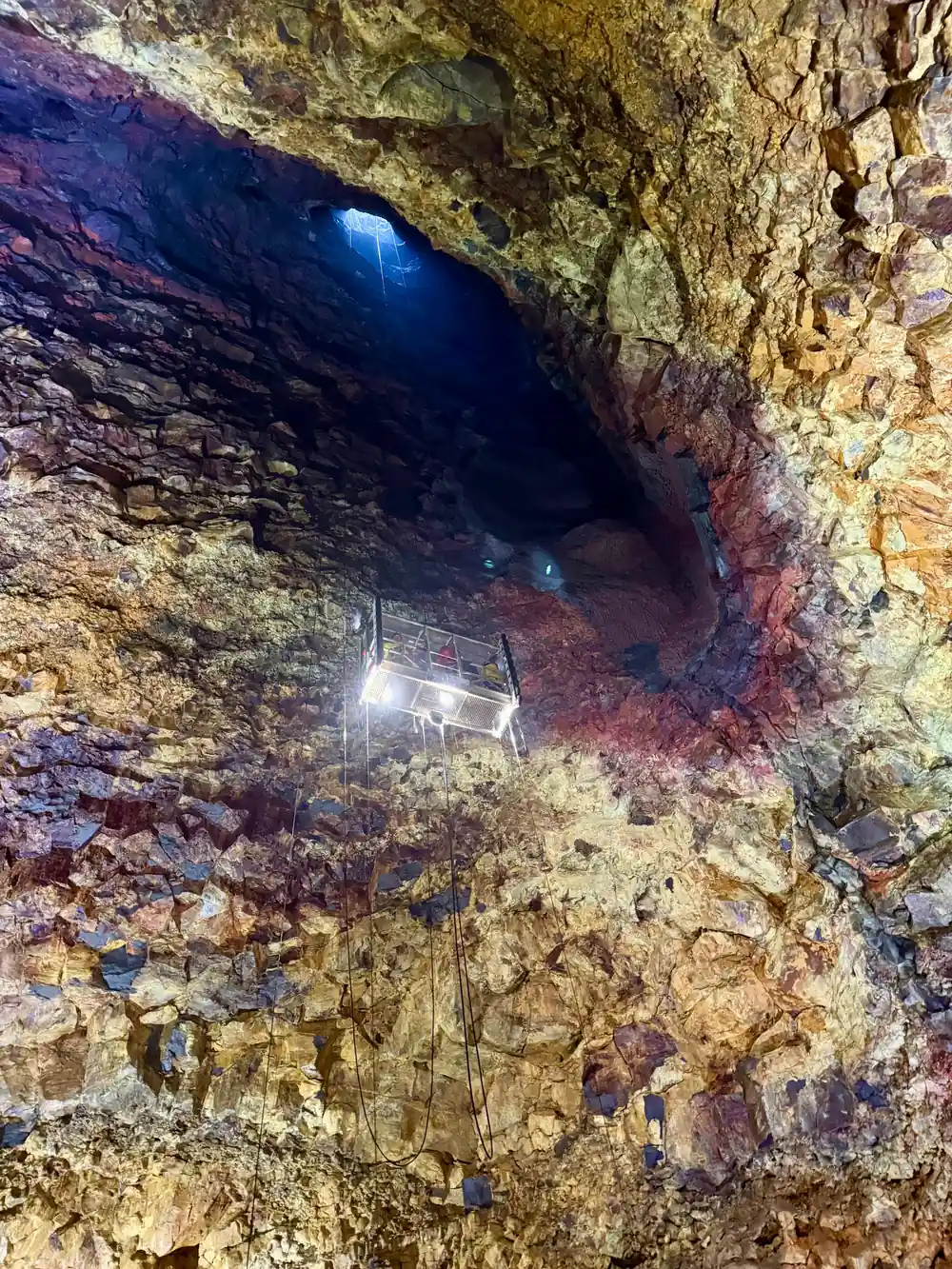
So the access is a steel gantry spanning the hole, a platform slung underneath it on a cable, and a winch. It is open: a floor, a rail, and air on all sides. Four or five people and a guide stand on it, and it goes down.
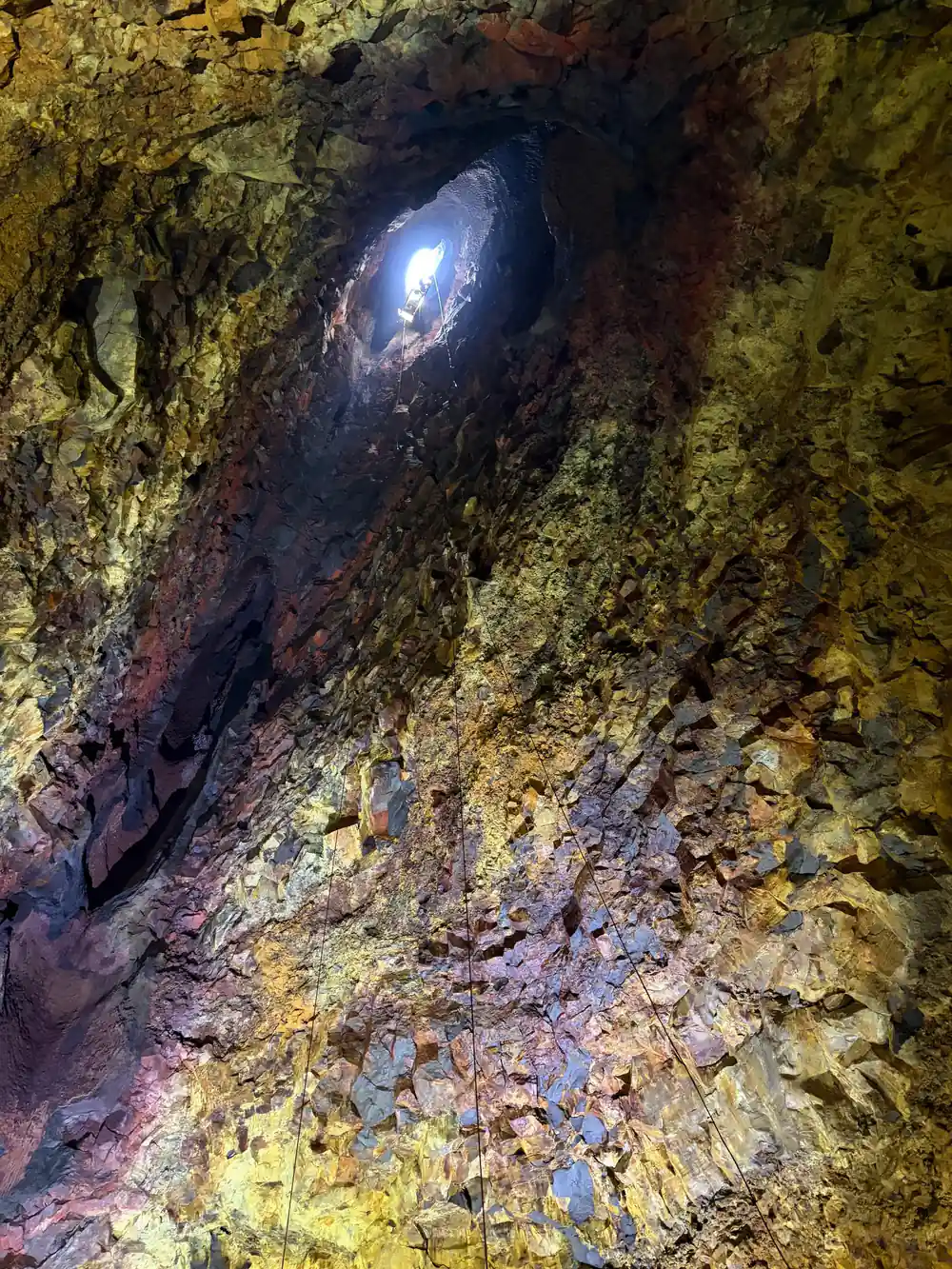
The descent takes about ten minutes for 120 metres, which is slow, and the slowness is deliberate. It gives the eye time to adjust from daylight, it gives the guide time to point things out, and it means the transition from a shaft to a chamber happens gradually enough to register.
What the ten minutes are like
For the first part the walls are close. You are in the neck of the volcano and it feels like a shaft, which is roughly what people expect and is not what makes the trip memorable.
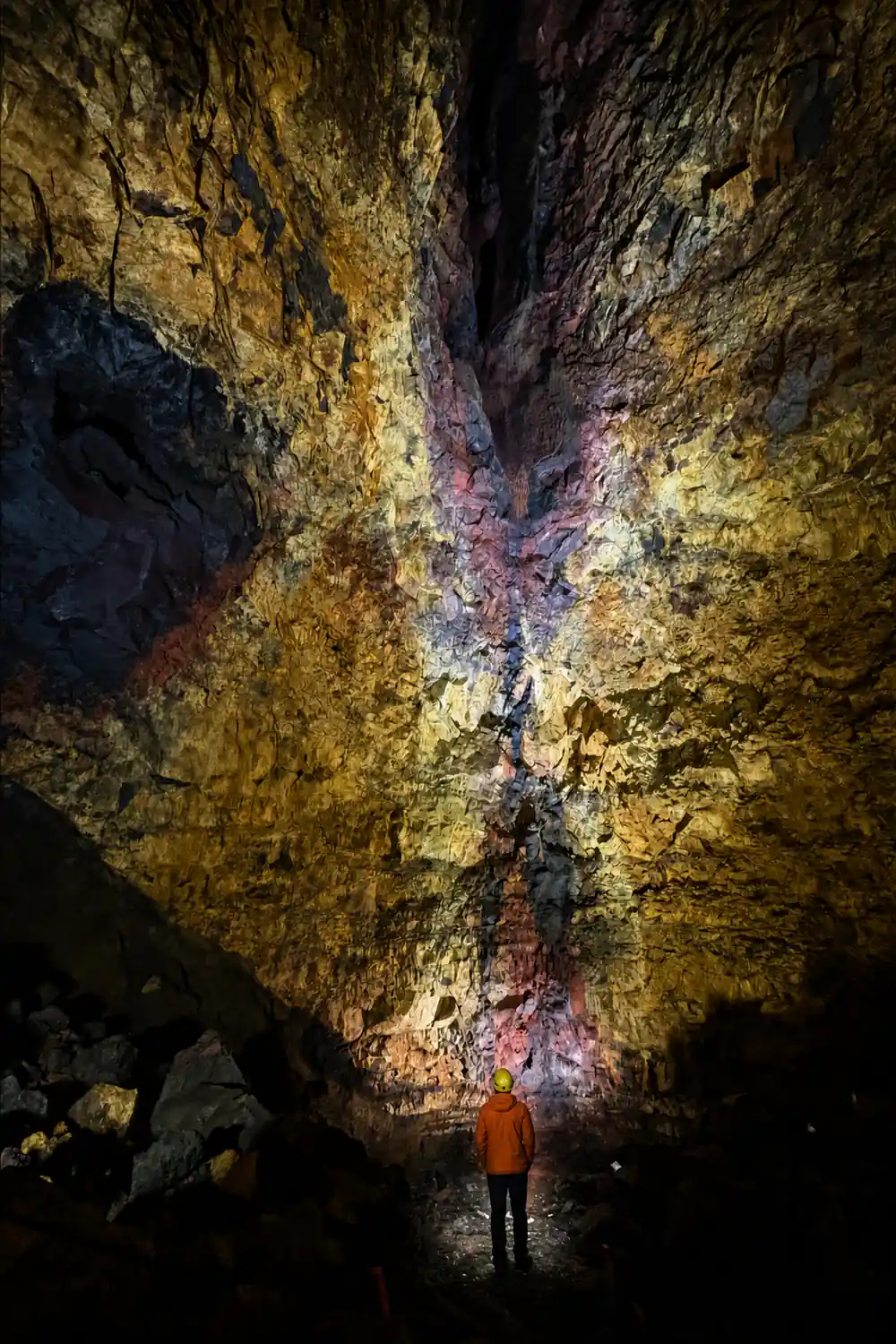
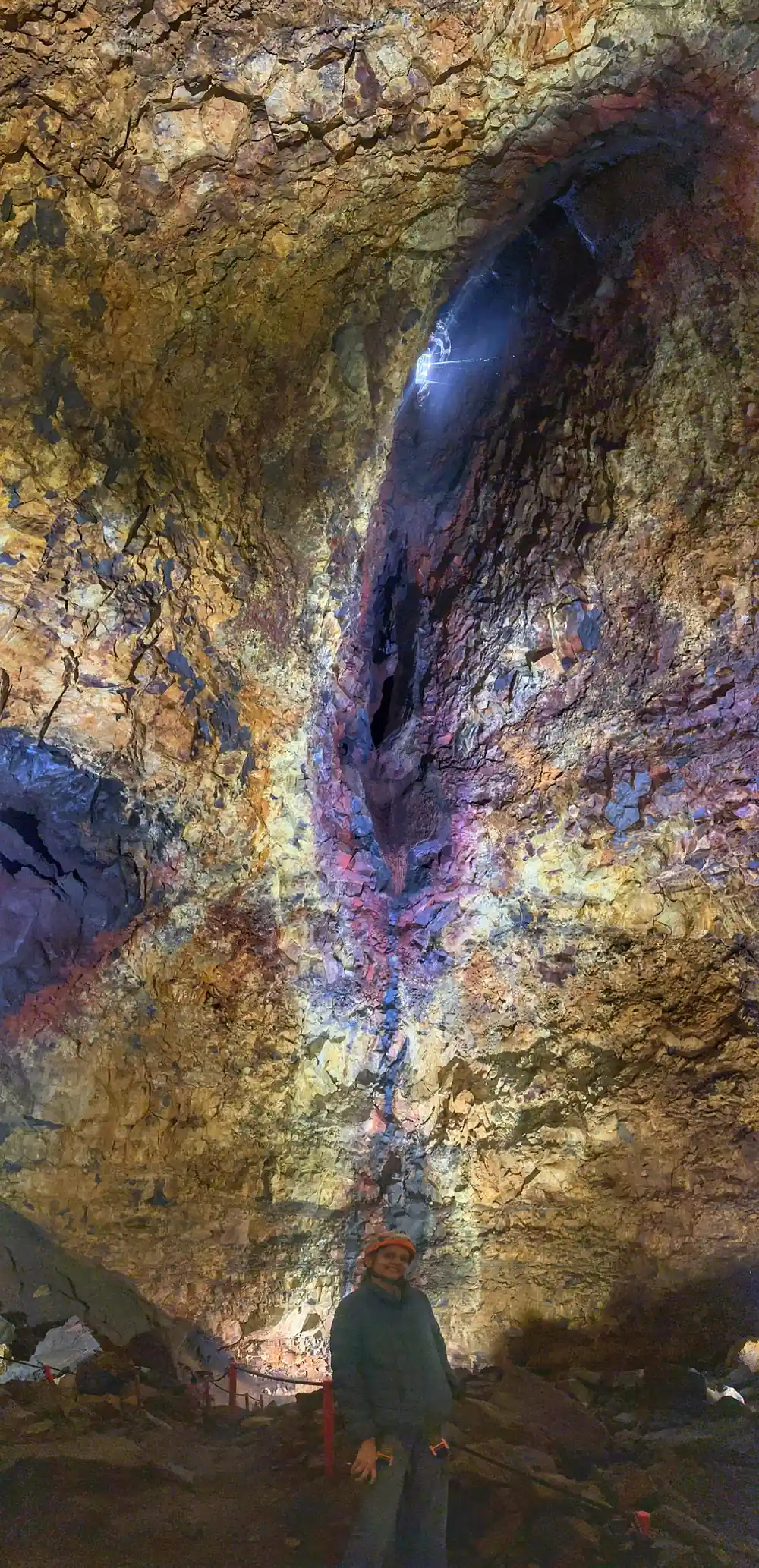
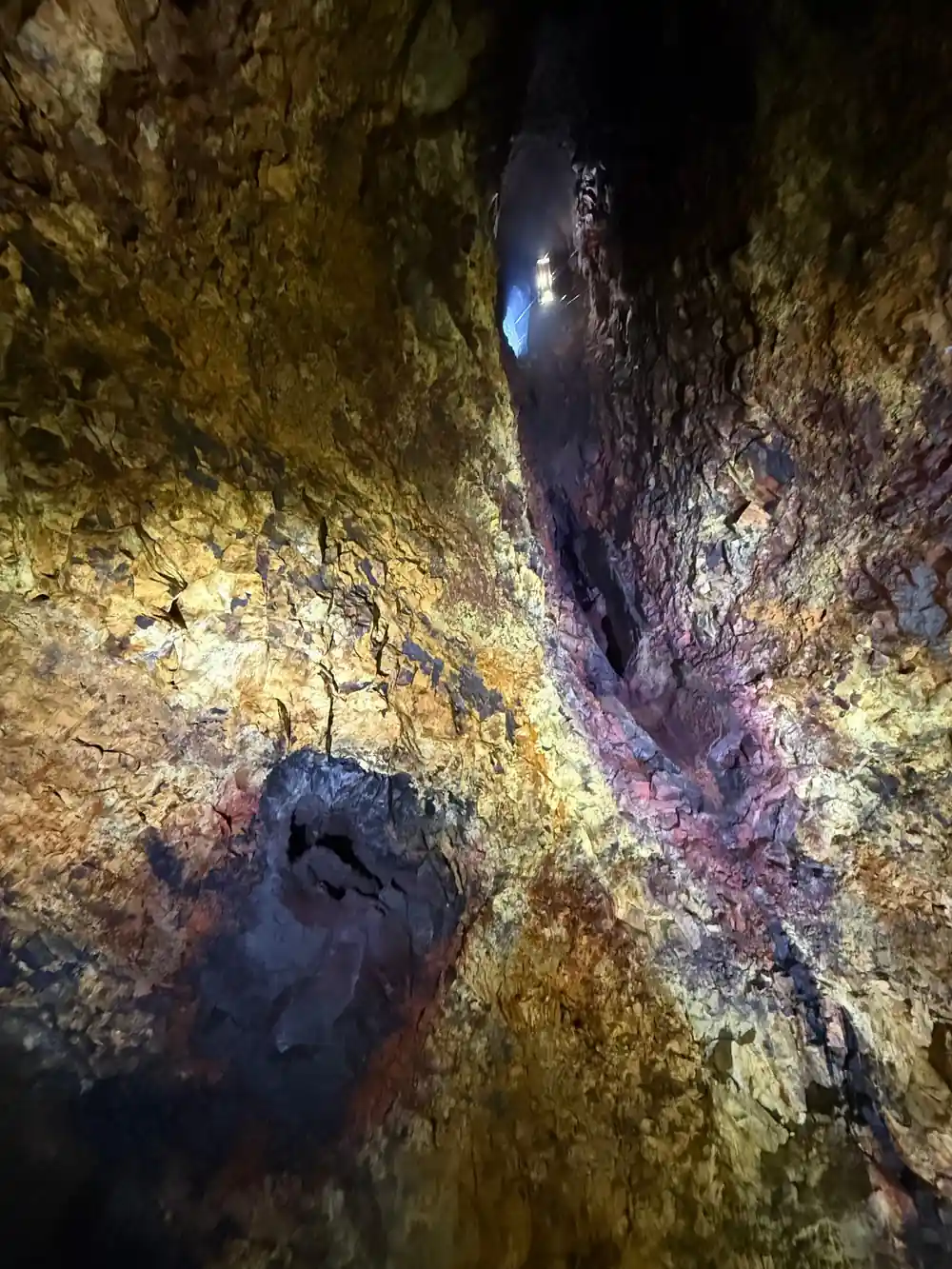
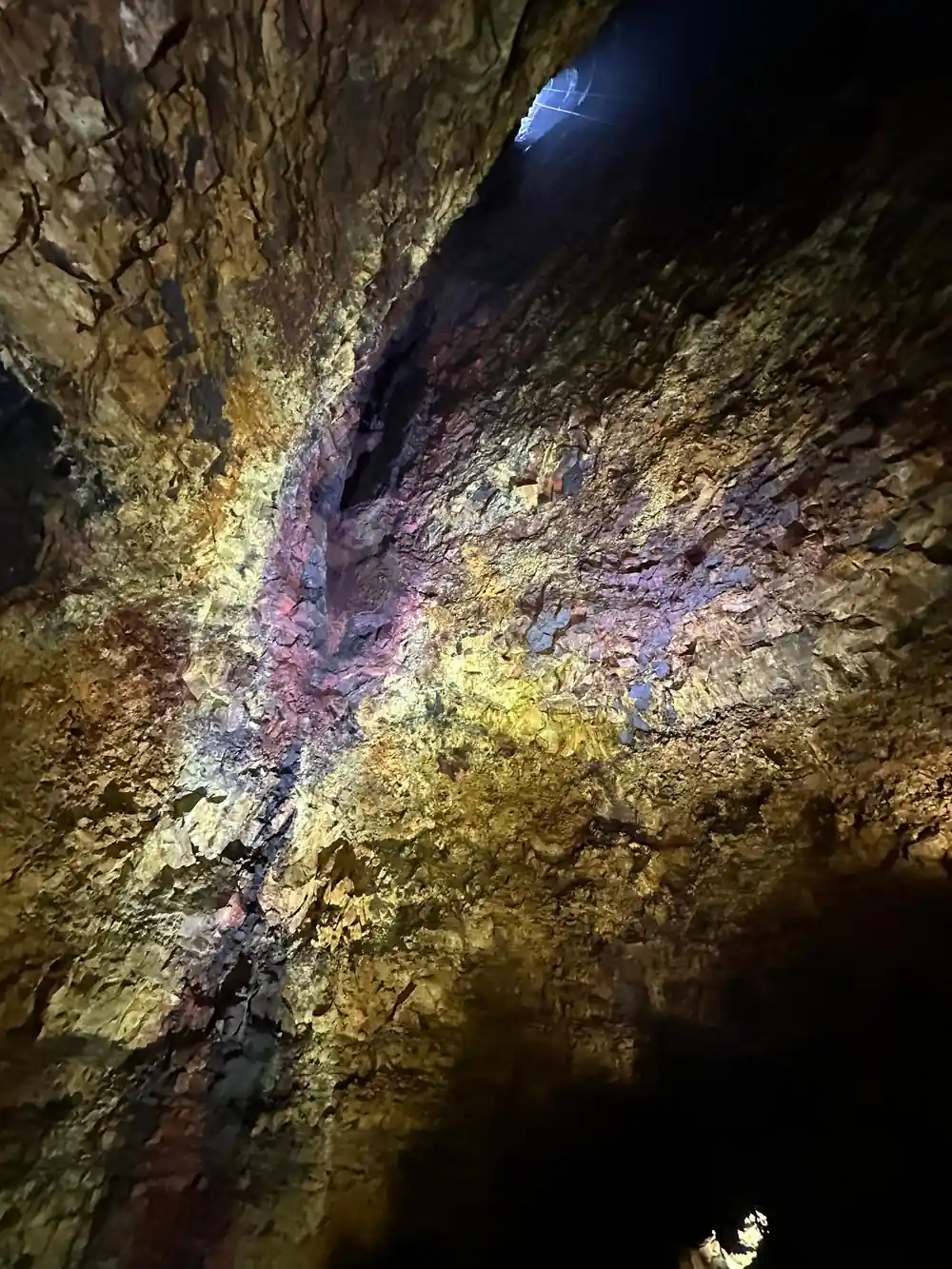
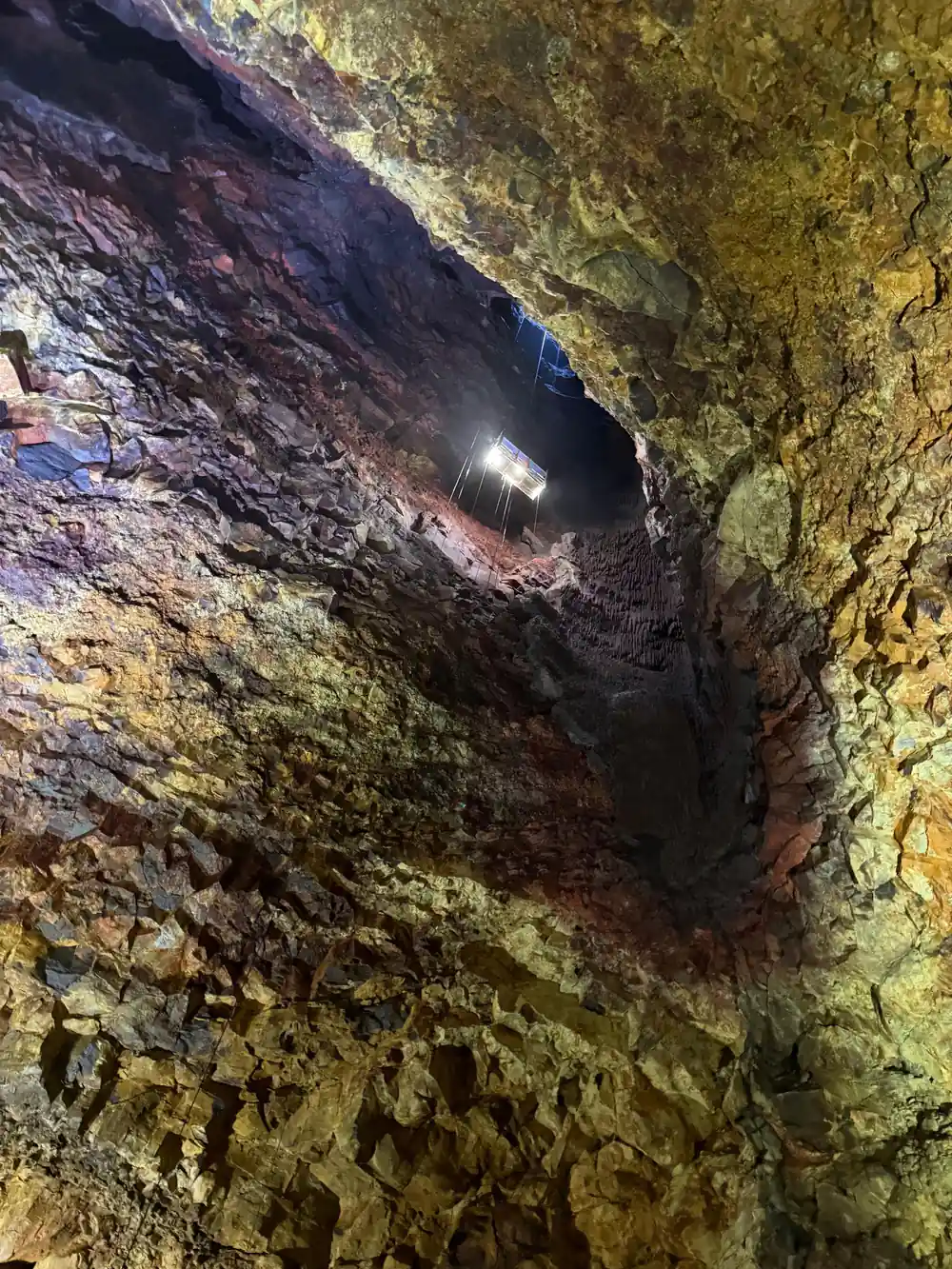
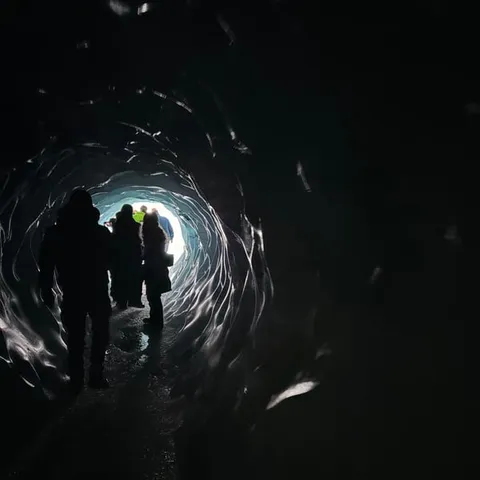
Then the walls stop being close. The shaft opens out below the constriction and the rock moves away from the platform on every side, and it keeps moving away. There is no equivalent experience above ground. Descending into a space that is getting larger, on an open platform, with the entrance shrinking to a bright coin above you, is the thing this tour sells and the thing no photograph has ever conveyed.
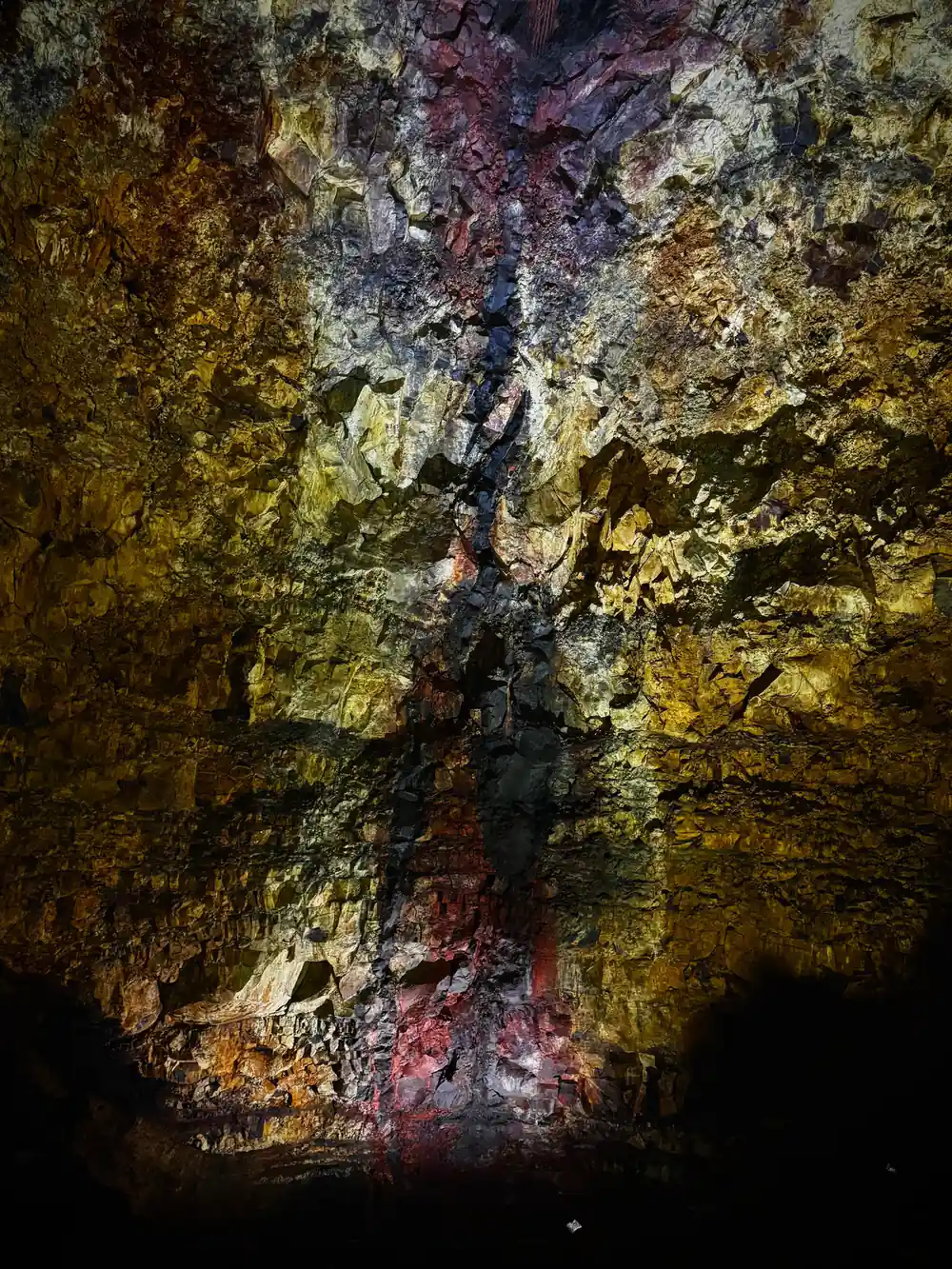
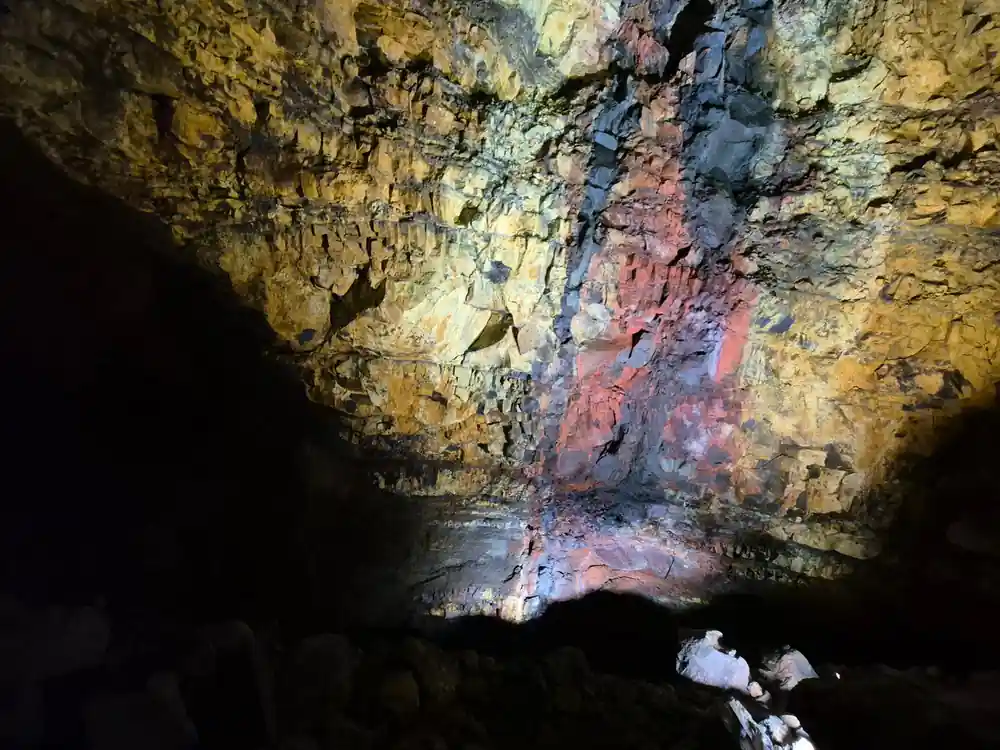
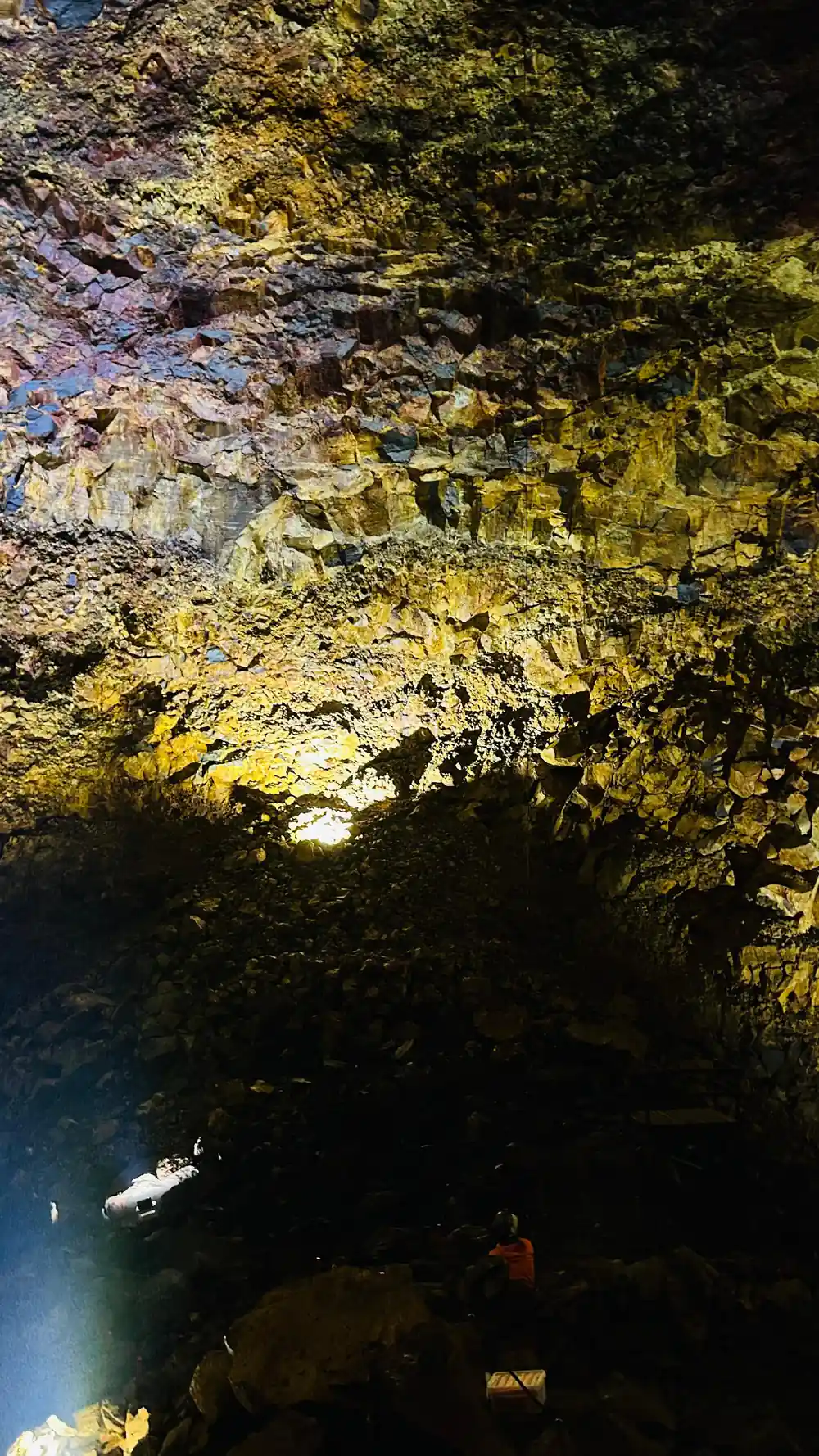
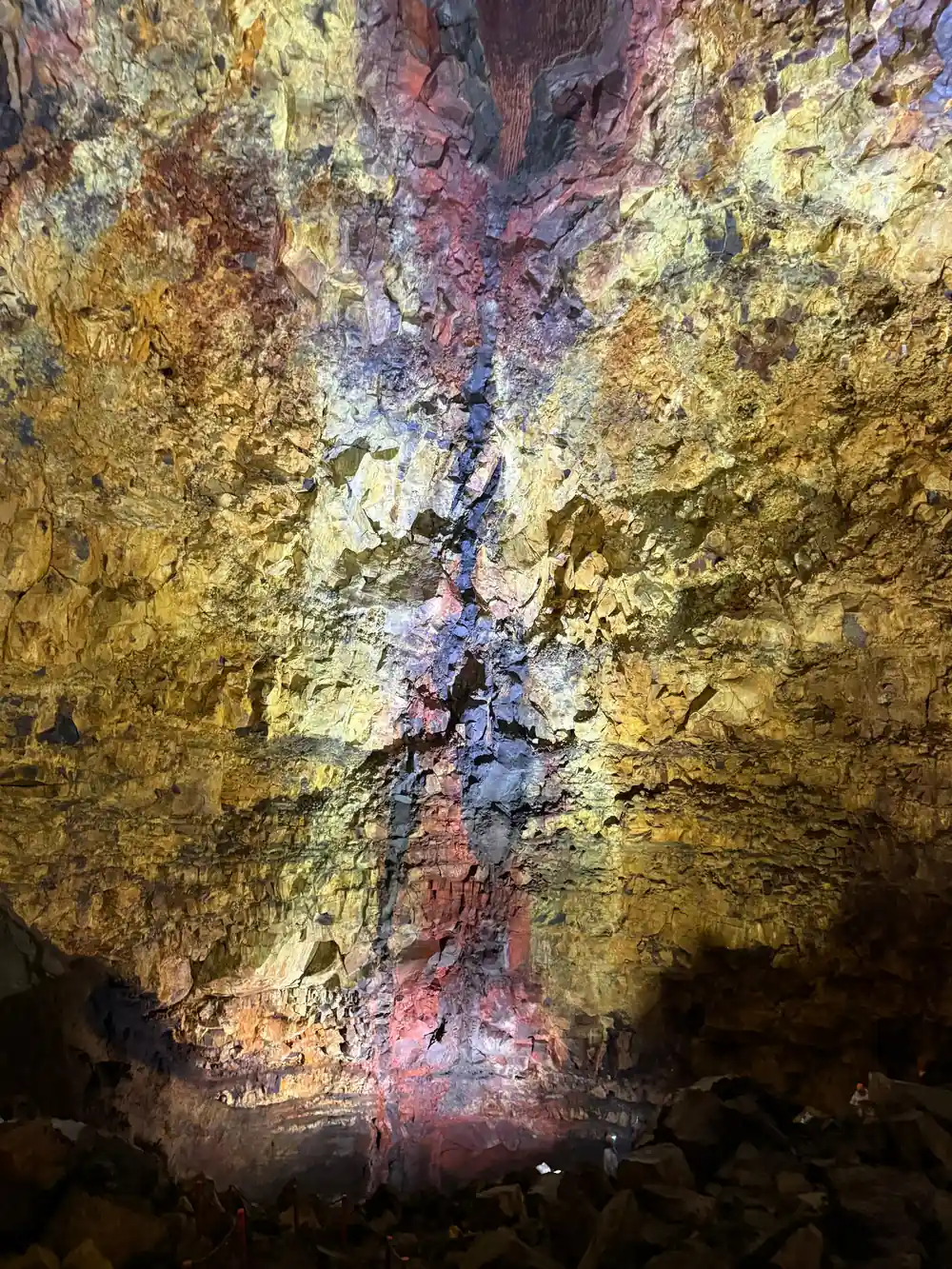
The lighting changes as you go. Daylight gives out early and the lamps take over, and because they are placed on particular faces rather than spread evenly, the chamber reveals itself in patches rather than all at once.
The hour on the floor
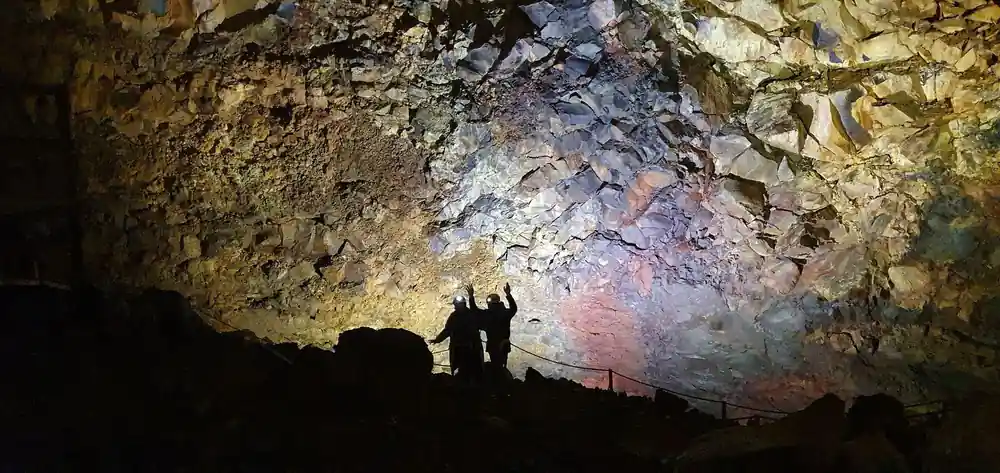
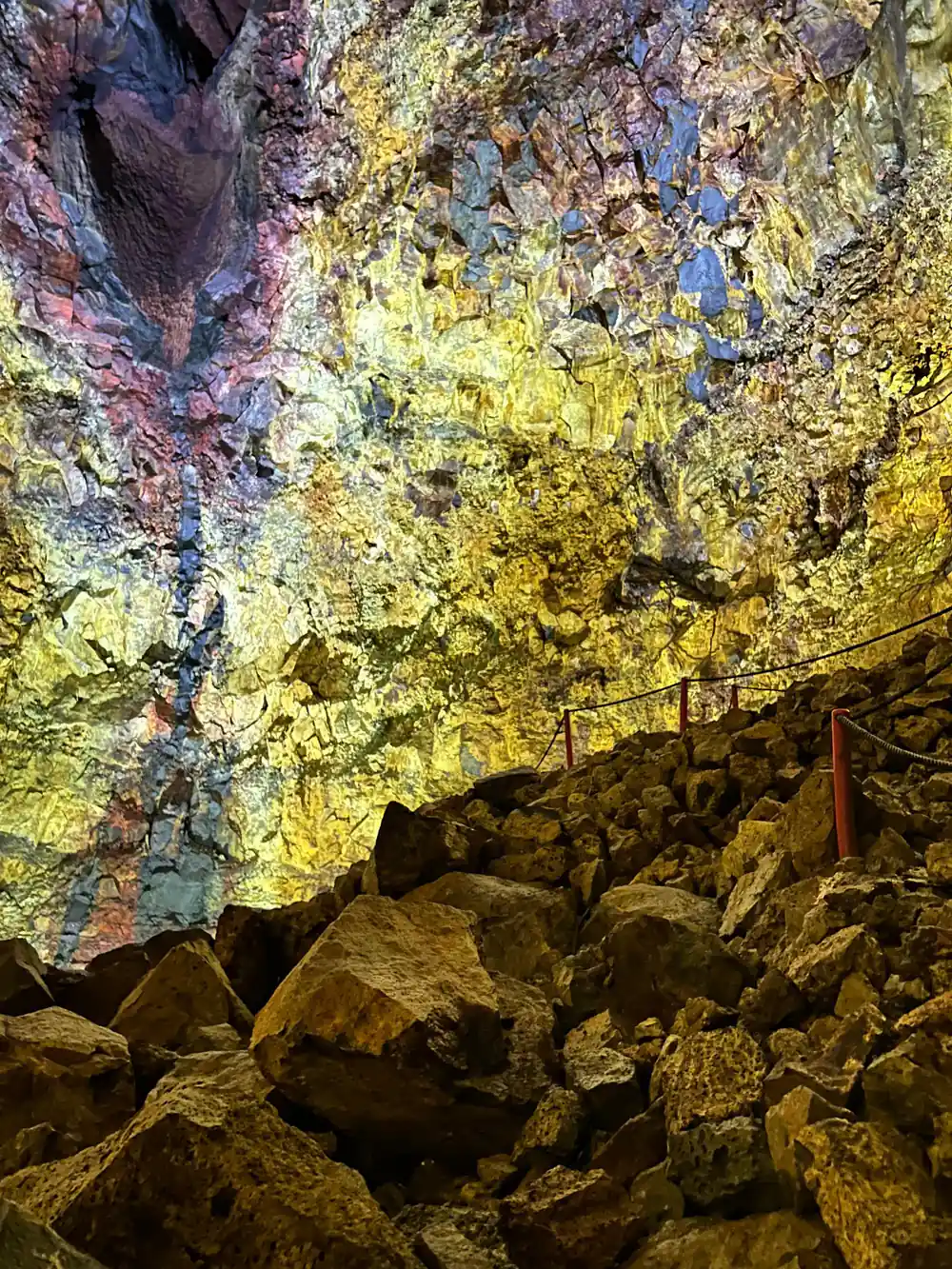
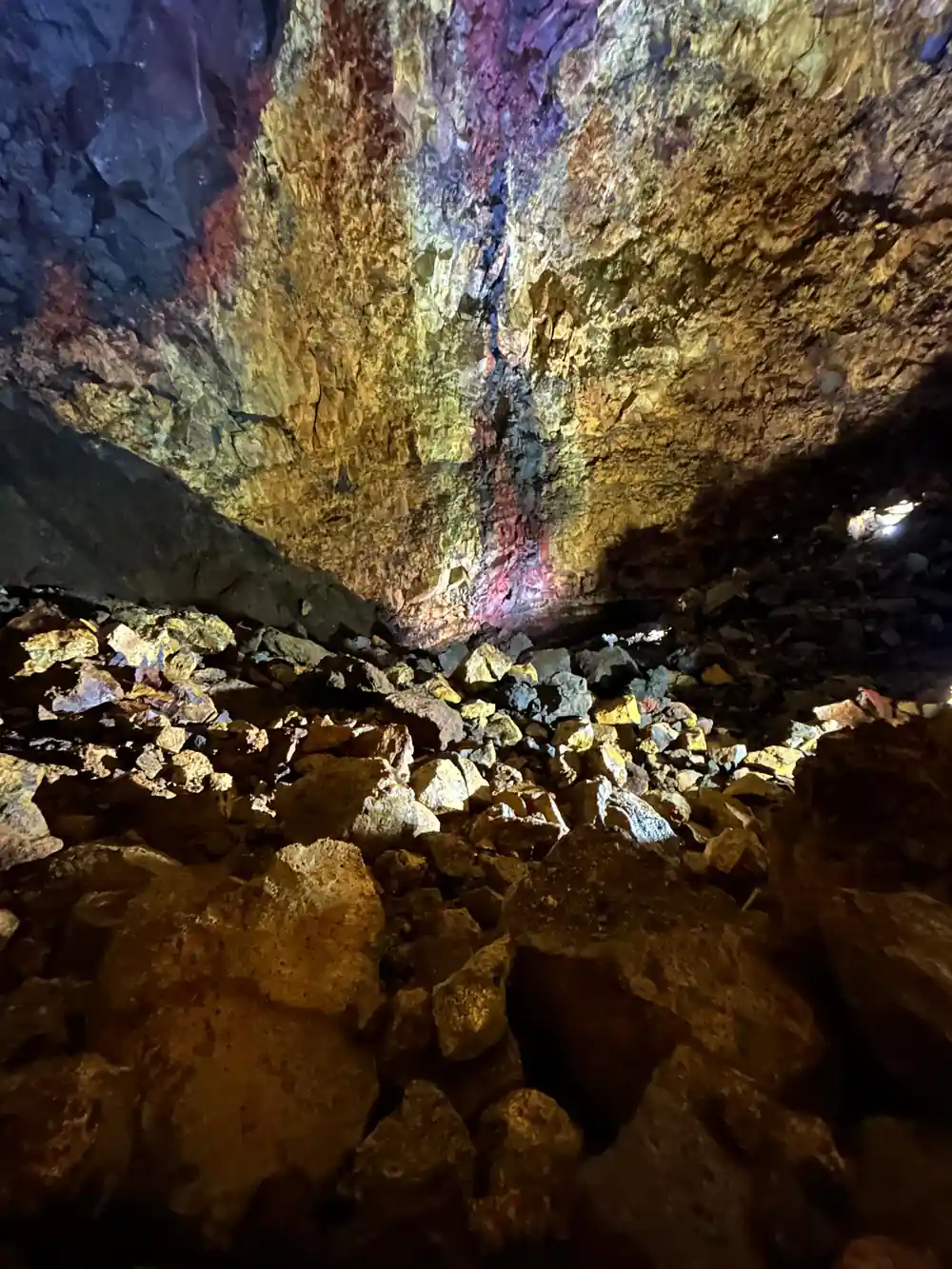
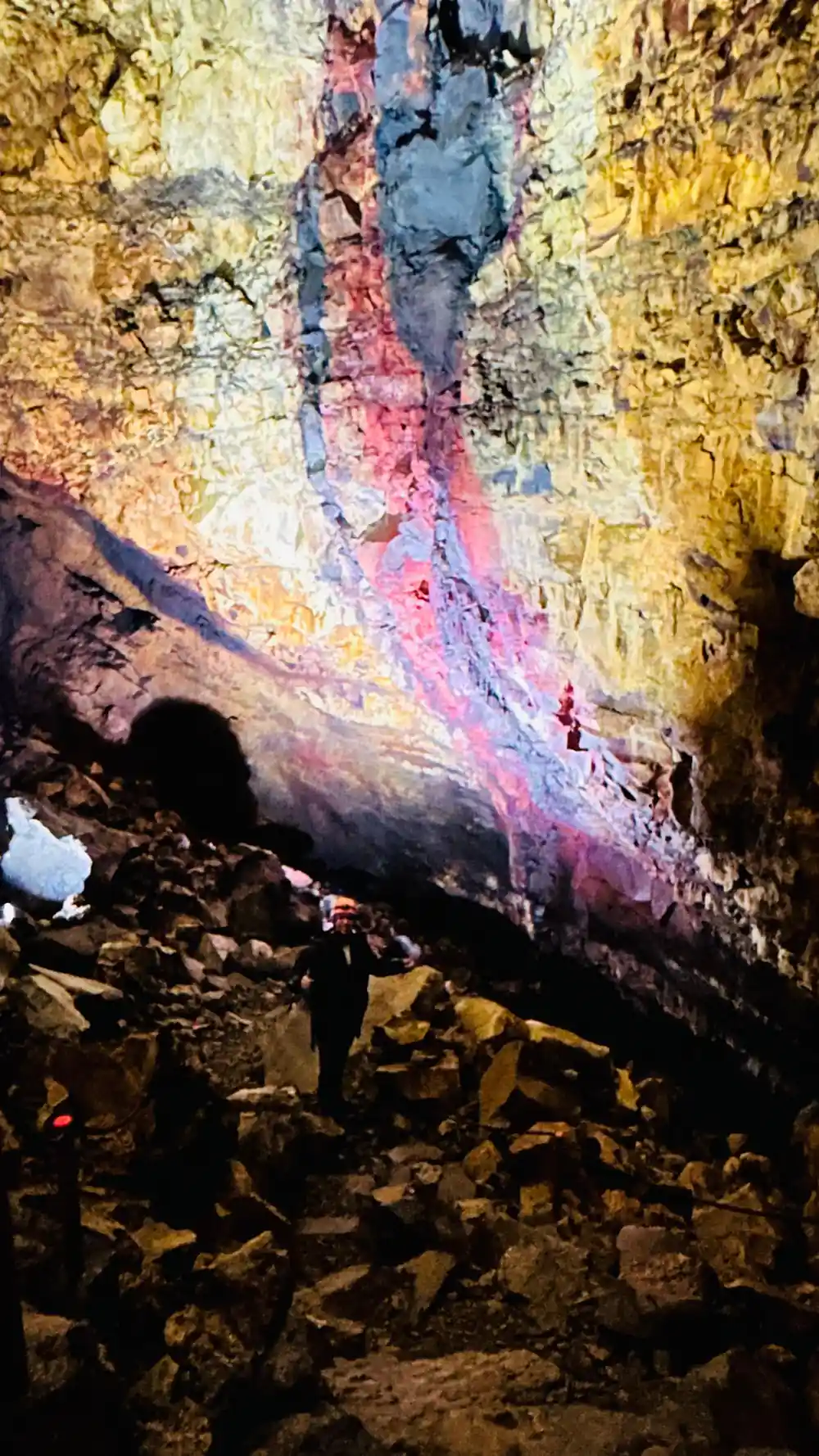
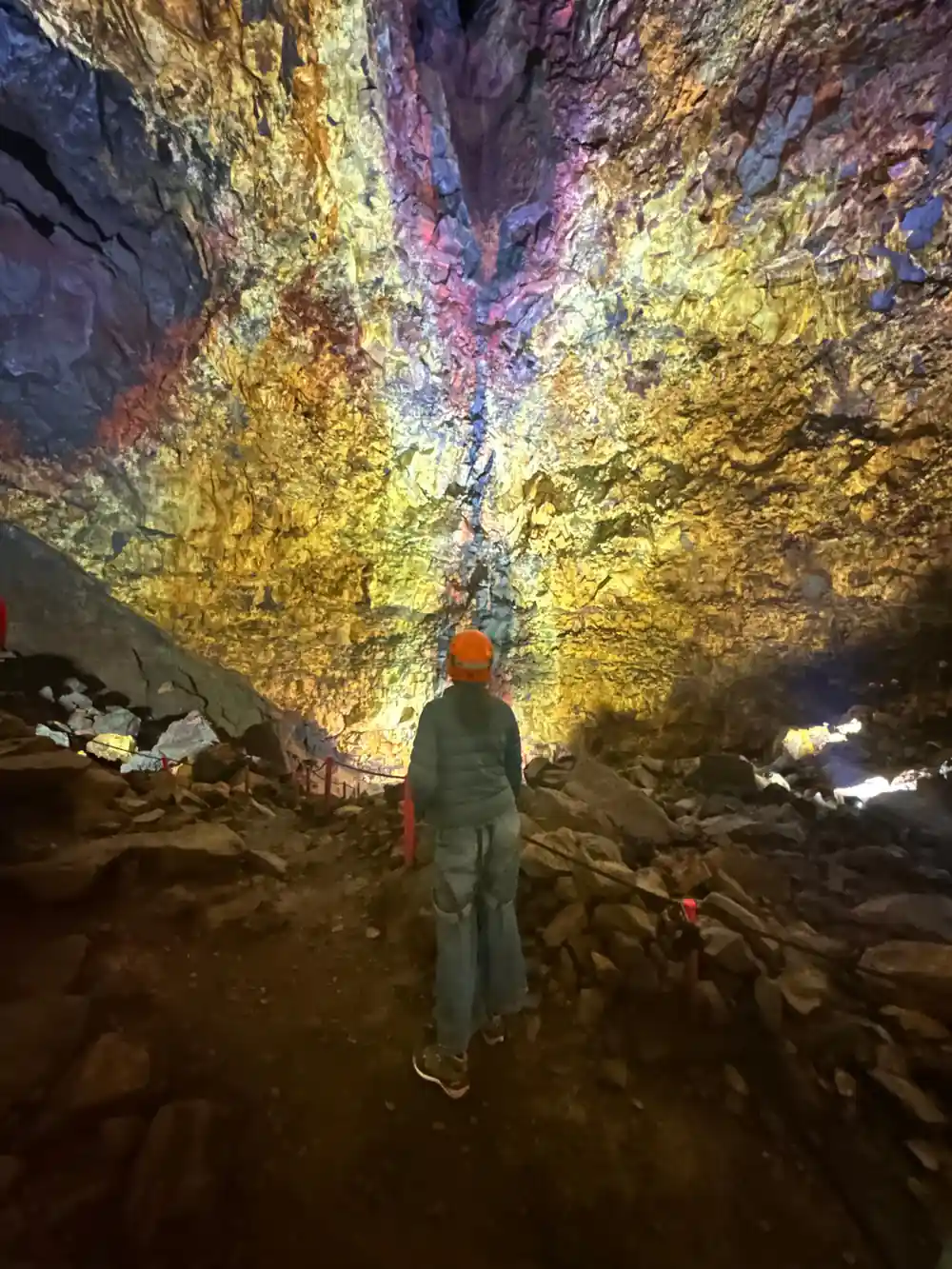
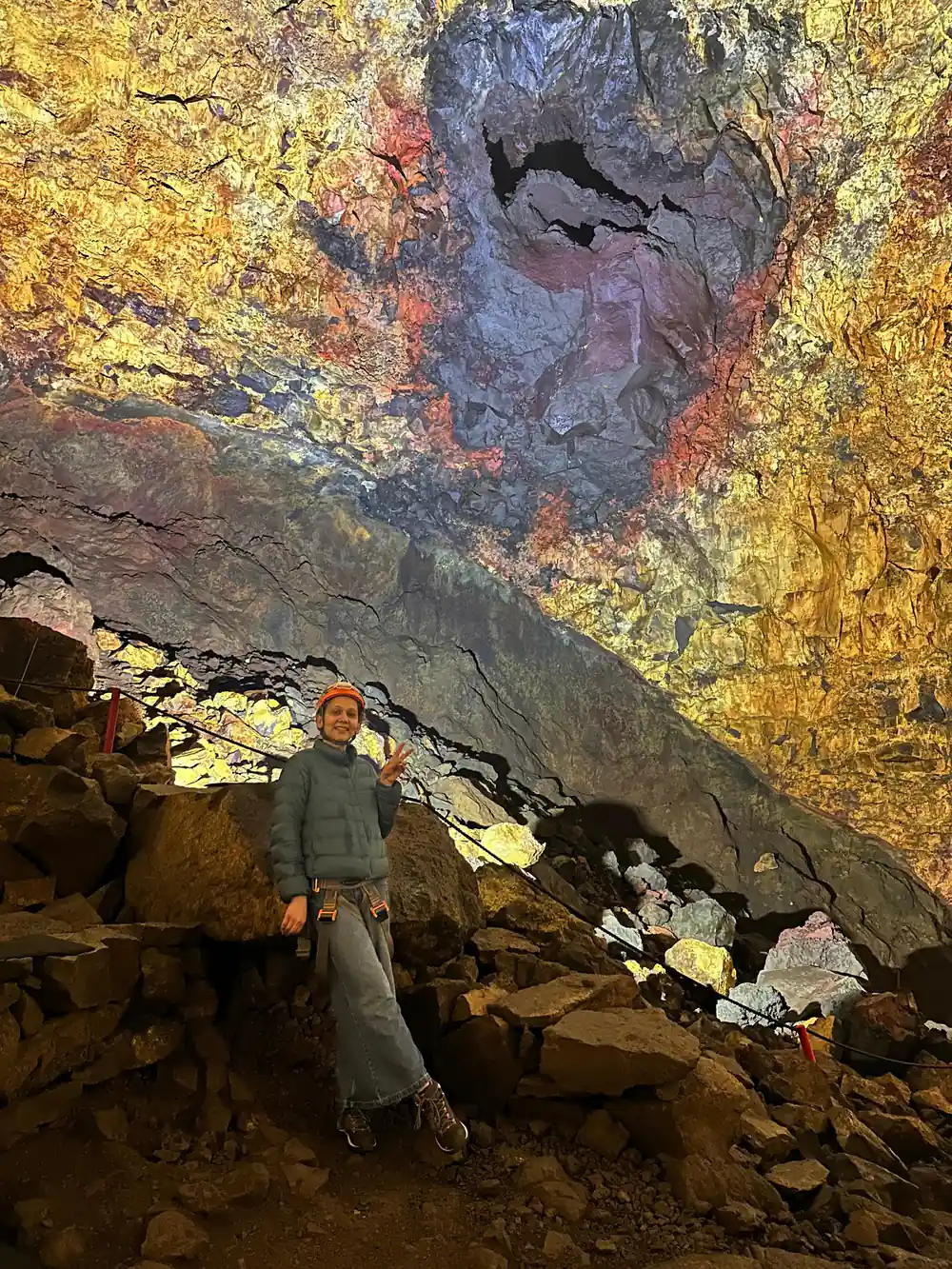
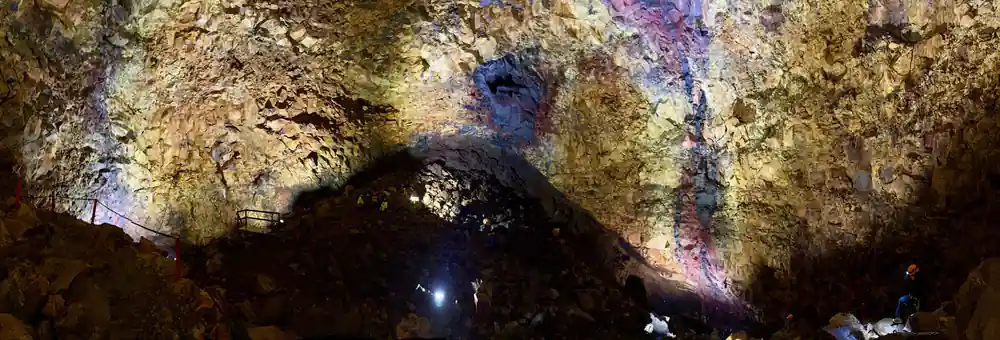
The floor is not the original floor. Four millennia of debris shed by the roof and the walls has piled into a sloping cone of loose stone. Underfoot it behaves like a mountain scree slope that happens to have a ceiling, and you cross it inside a roped area, in the dark, which is exactly as odd as it sounds and is entirely fine.
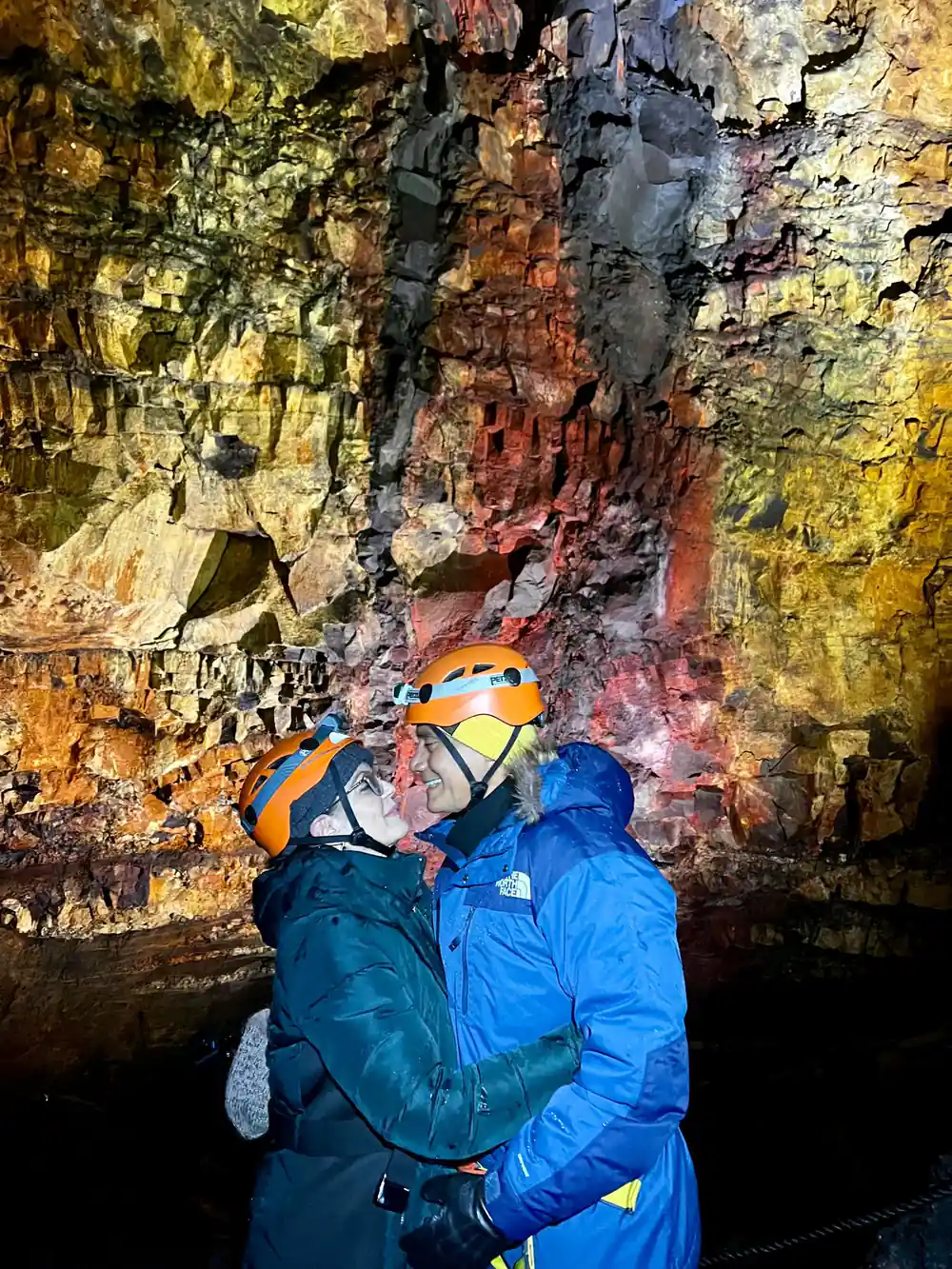
It is cold. This surprises almost everybody, because a volcano ought to be warm and this one has not been warm since the Bronze Age. It is also dry, with none of the dripping and slick surfaces a limestone cave would have.
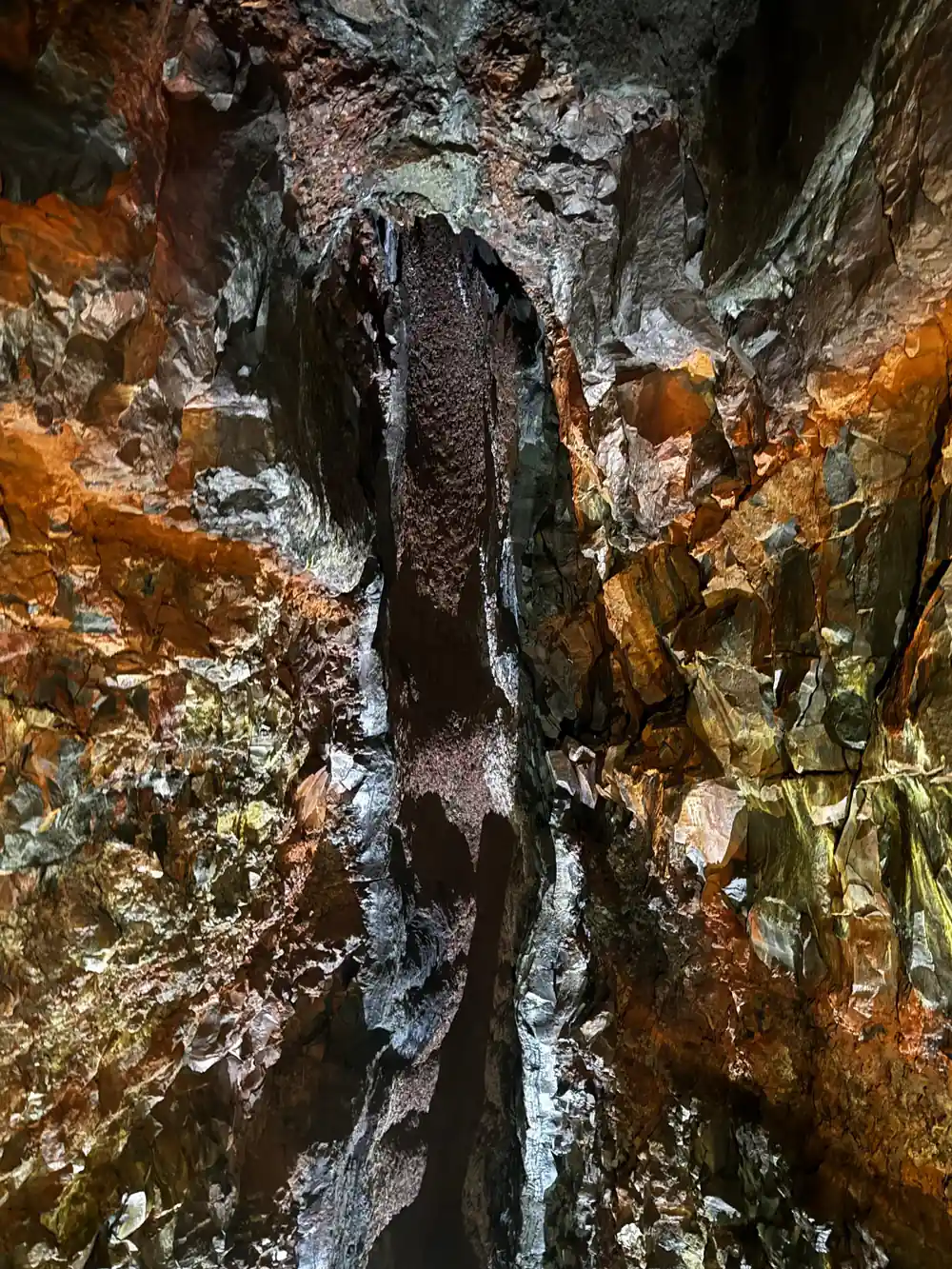
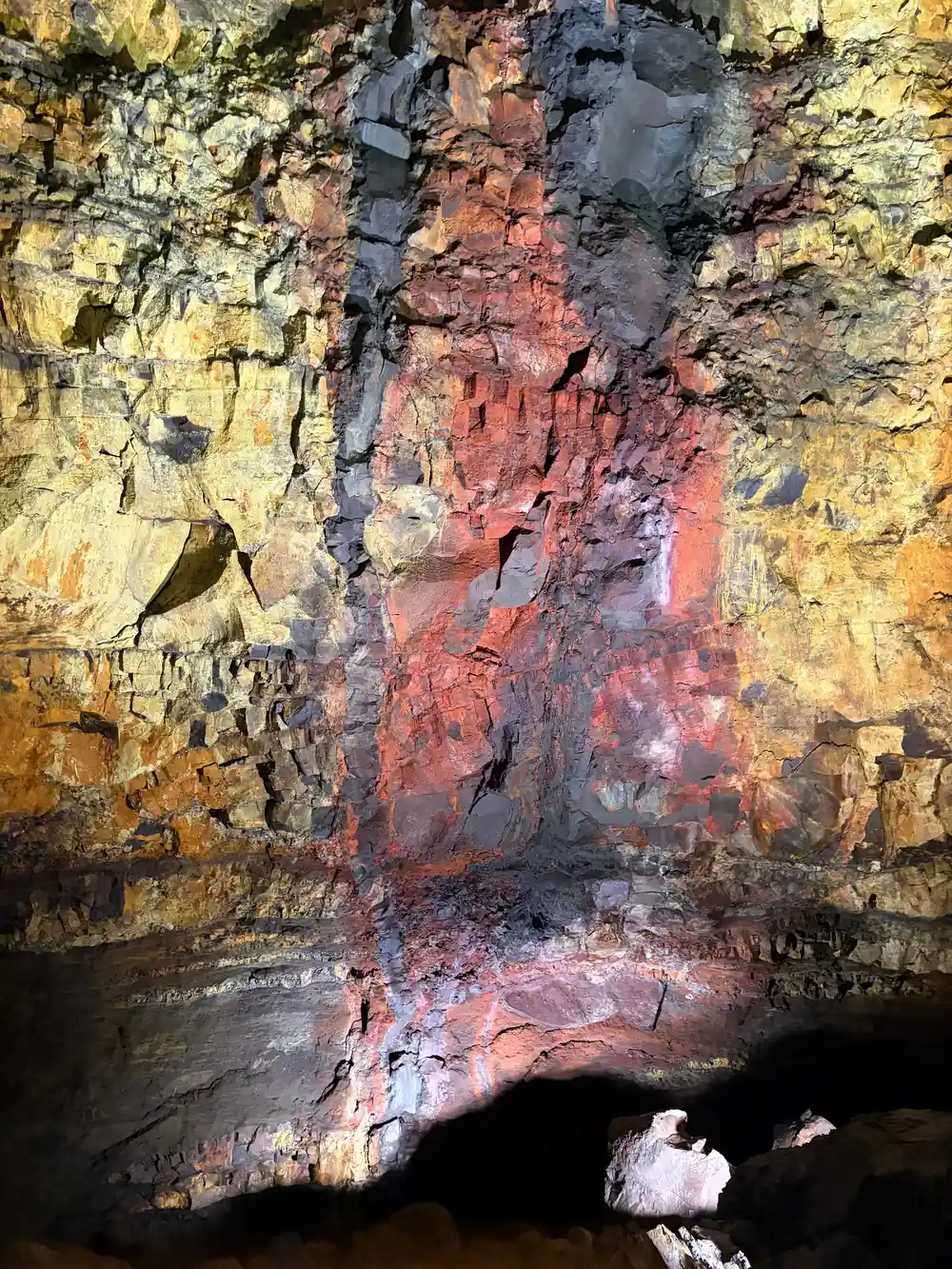
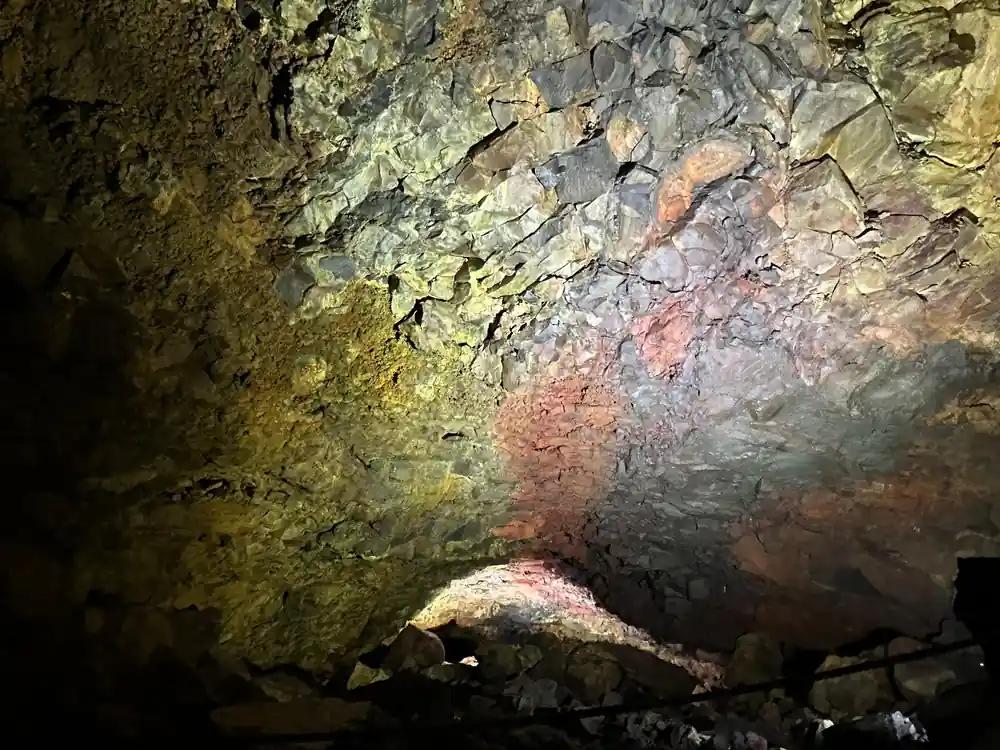
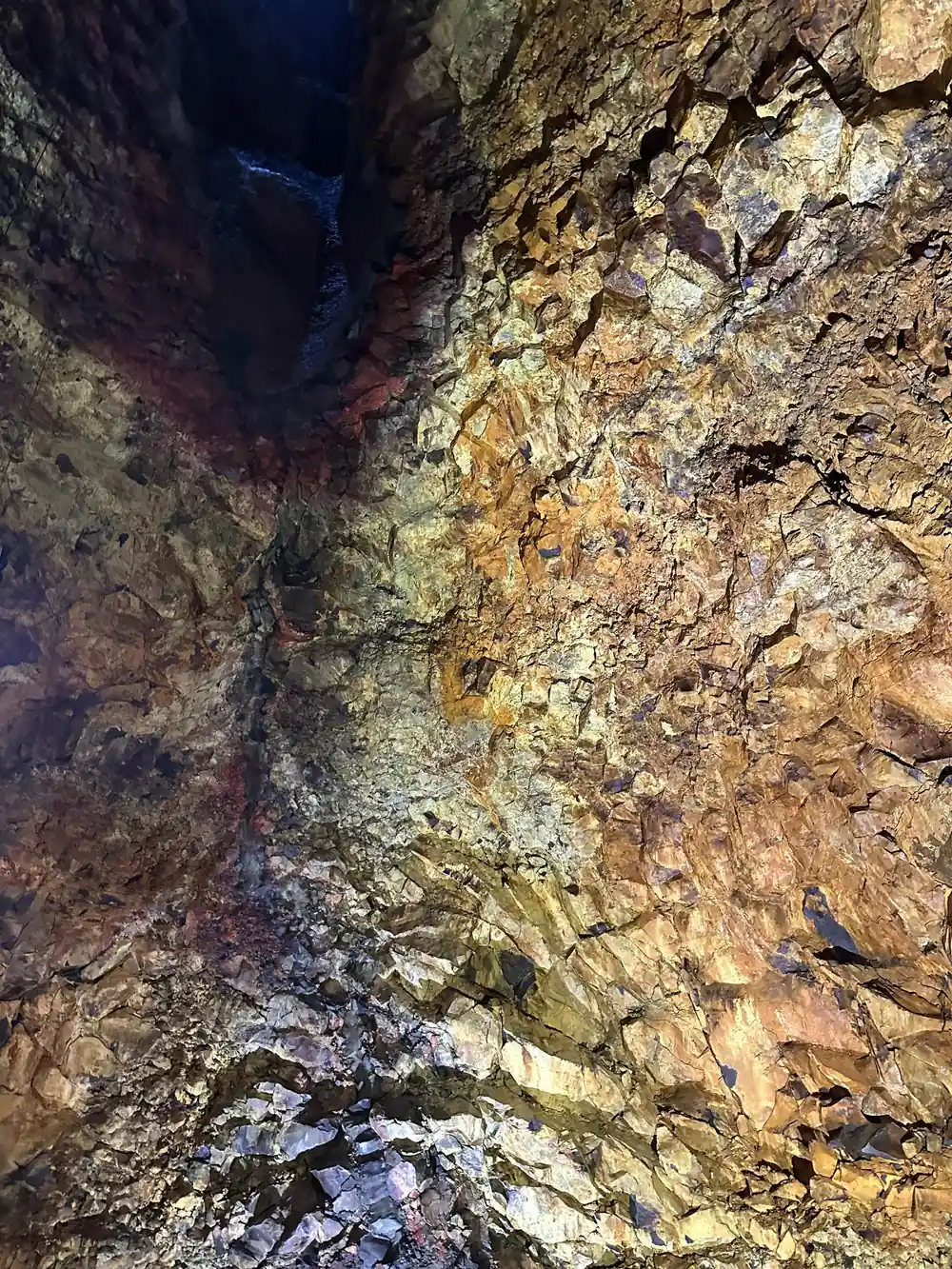
What you do for an hour is mostly look up. The guides point out features - flow surfaces where the melt was in contact with the wall, the colour bands, the shaft above - and then leave you to it. Most people report that the chamber appears to grow during the hour. It does not; the eye is adapting.
Two different fears
People prepare for claustrophobia and are ambushed by vertigo. The chamber is far too big to feel enclosed; the platform is an open cage over a hundred-metre drop.
The hard moment is the step. Going from solid rock onto a platform hanging over a hole is where people hesitate, and it lasts about two seconds. Once you are aboard and it starts moving, the fear generally converts into something else, because the thing your eyes are doing is too interesting to be frightened through.
People do occasionally decide not to go, and that is allowed. It is worth knowing in advance that the crater is a poor place to discover this about yourself, three quarters of an hour from the cabin, so the honest thing is to think about it before booking rather than at the rim.
The parts either side
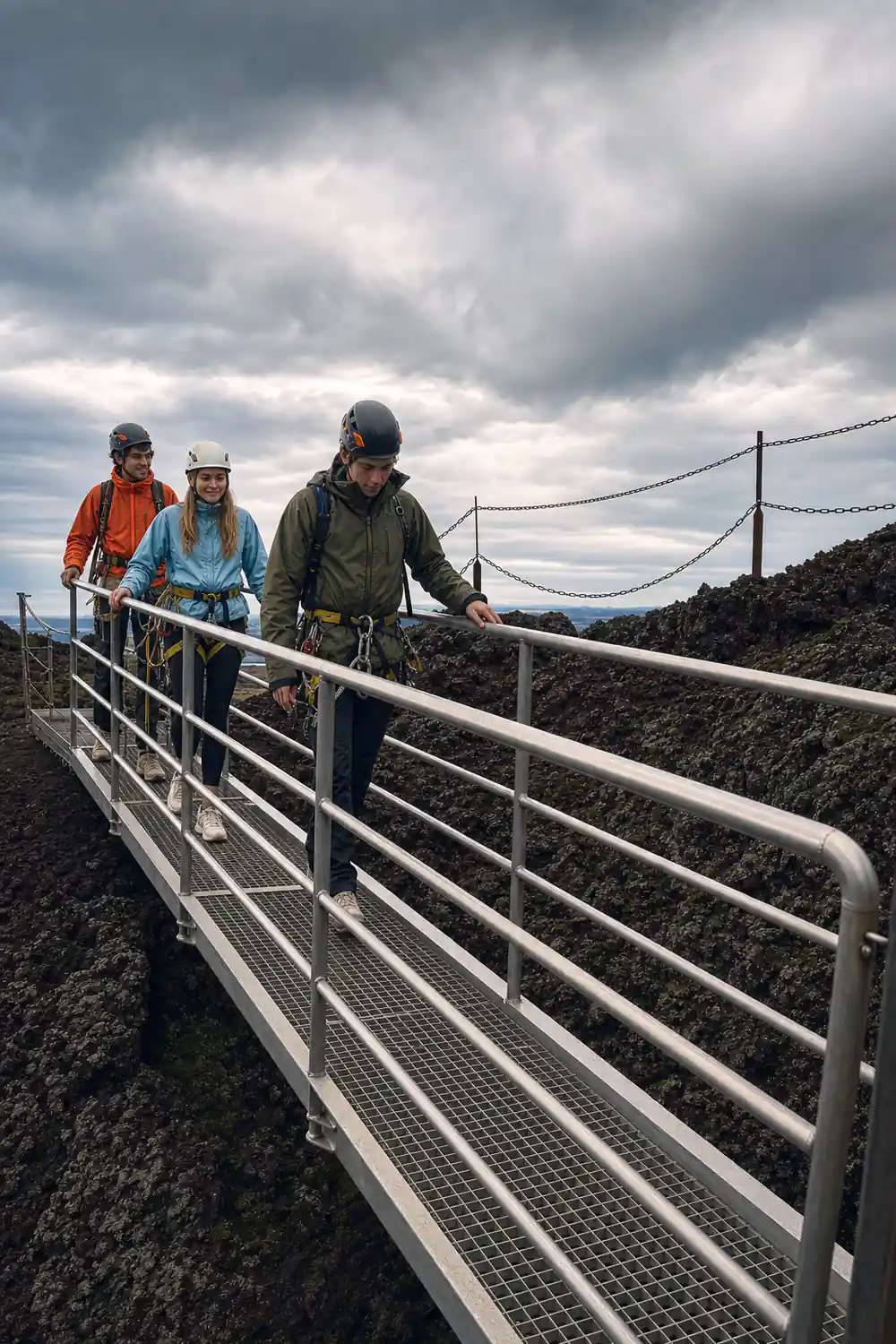
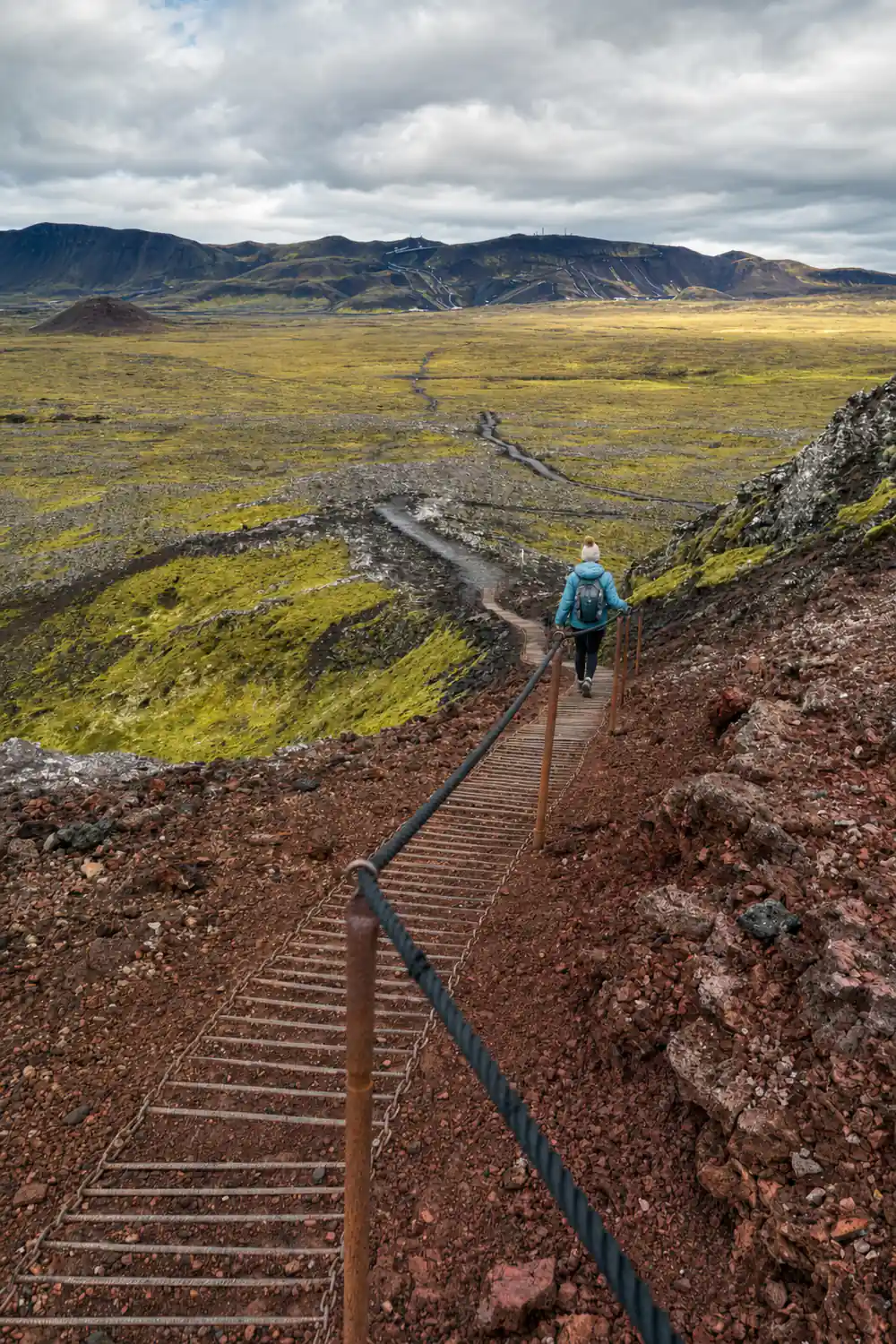
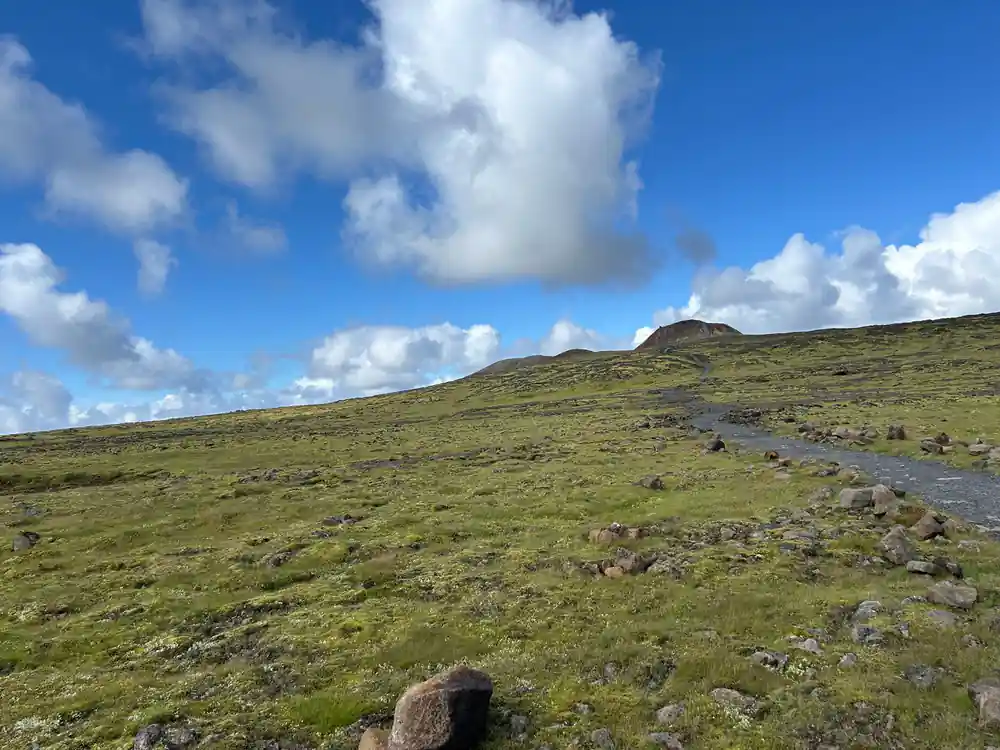
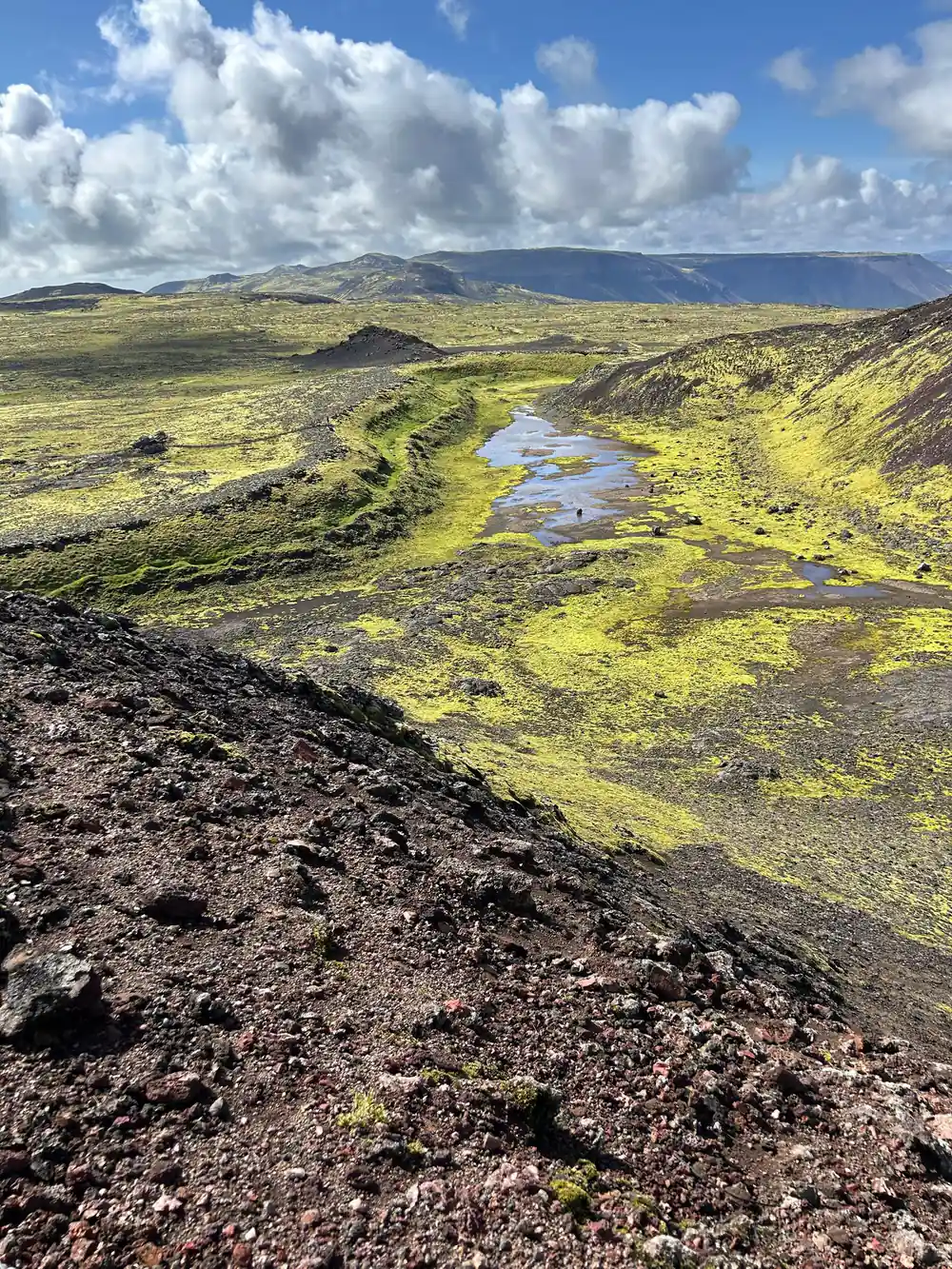
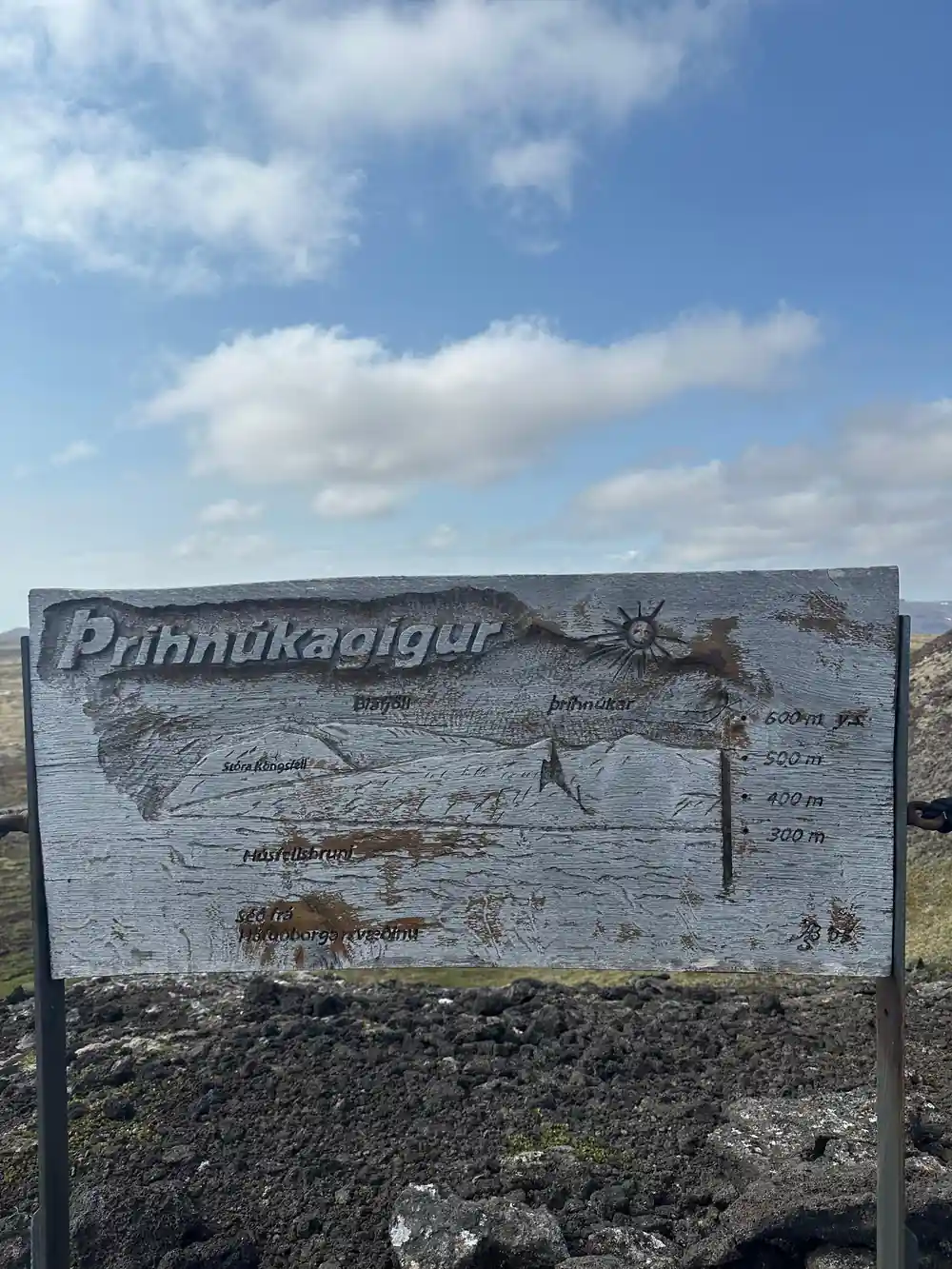
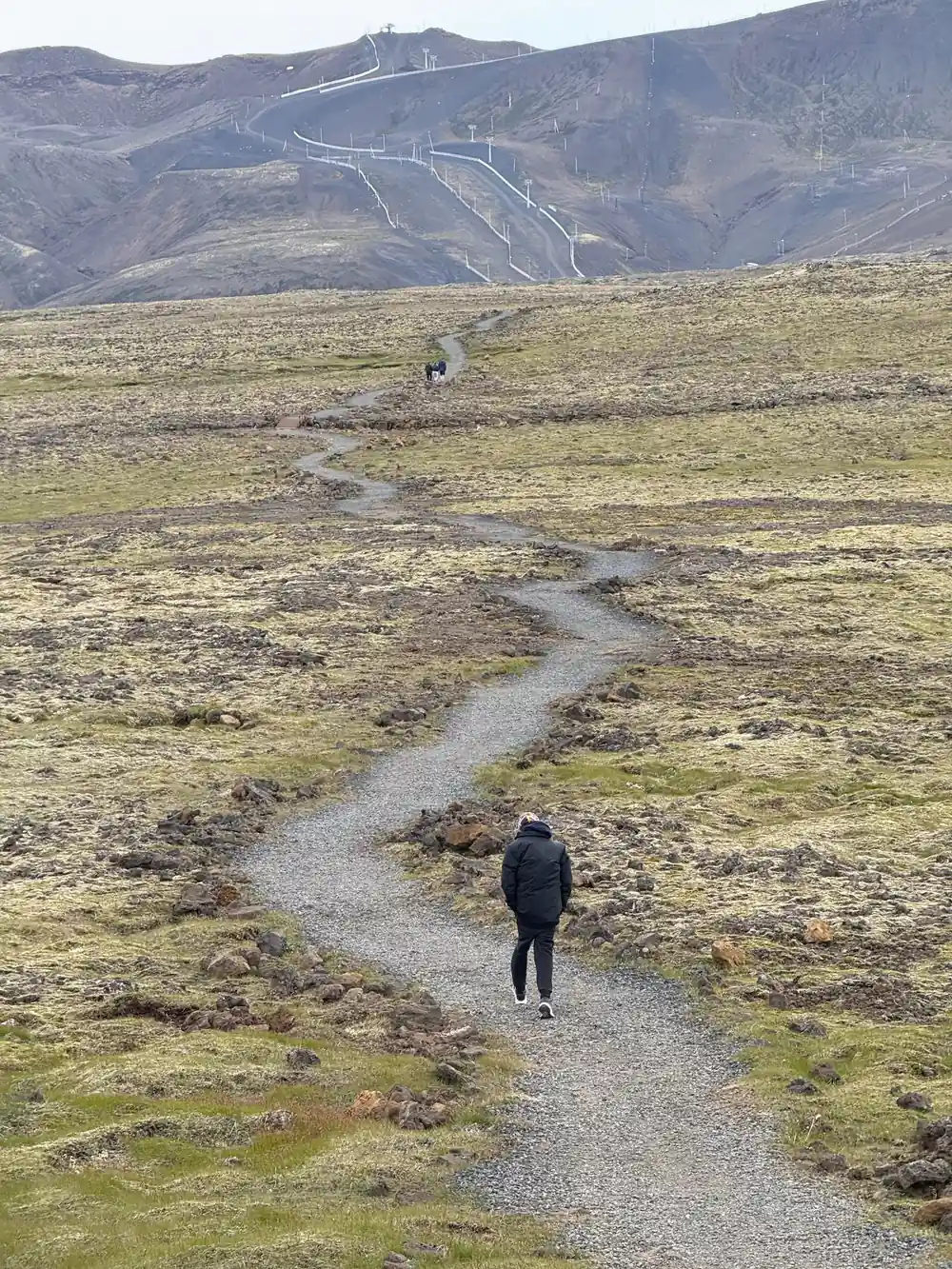
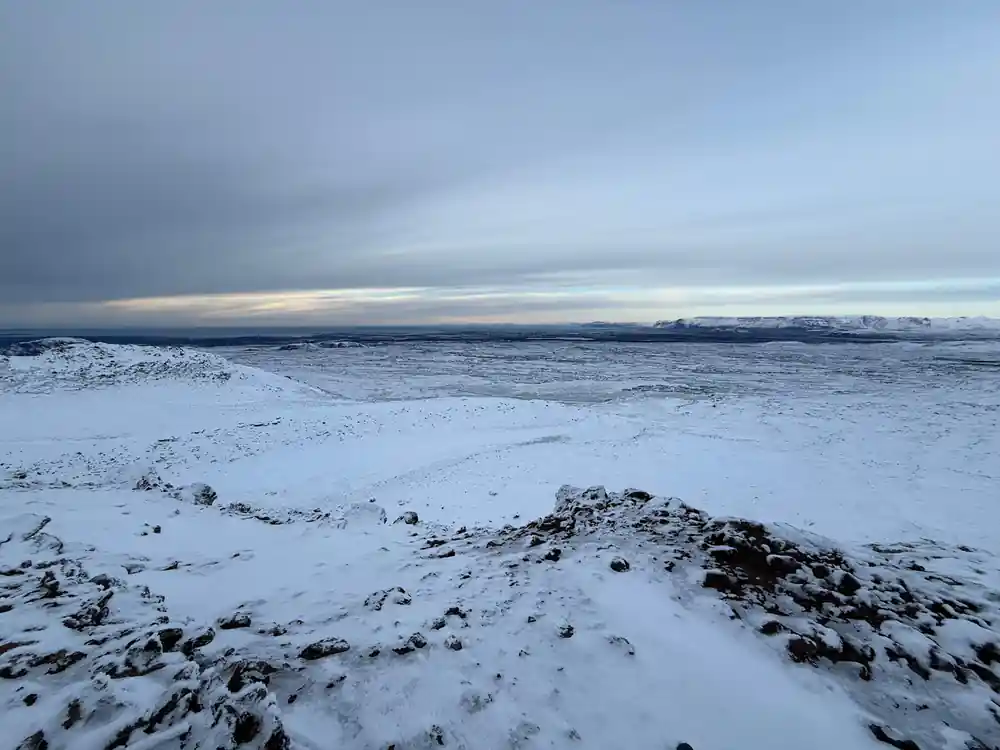
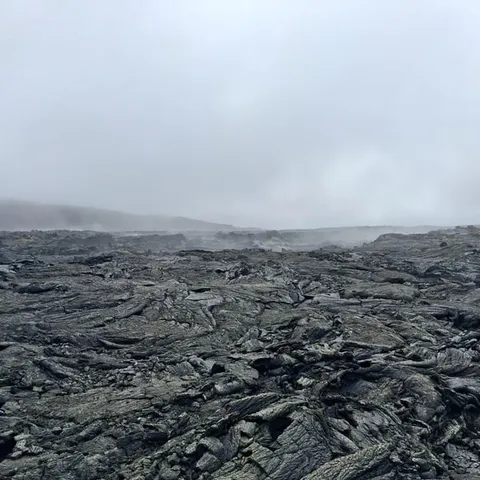
The chamber is one hour of a six-hour day and the rest is worth understanding. The meeting point is a ski cabin about half an hour from Reykjavik. Gear is fitted there. Then it is a walk of 45 to 50 minutes each way across an old lava field under moss, which is not steep and is genuinely uneven, and which is the reason the operator requires hiking boots rather than suggesting them.
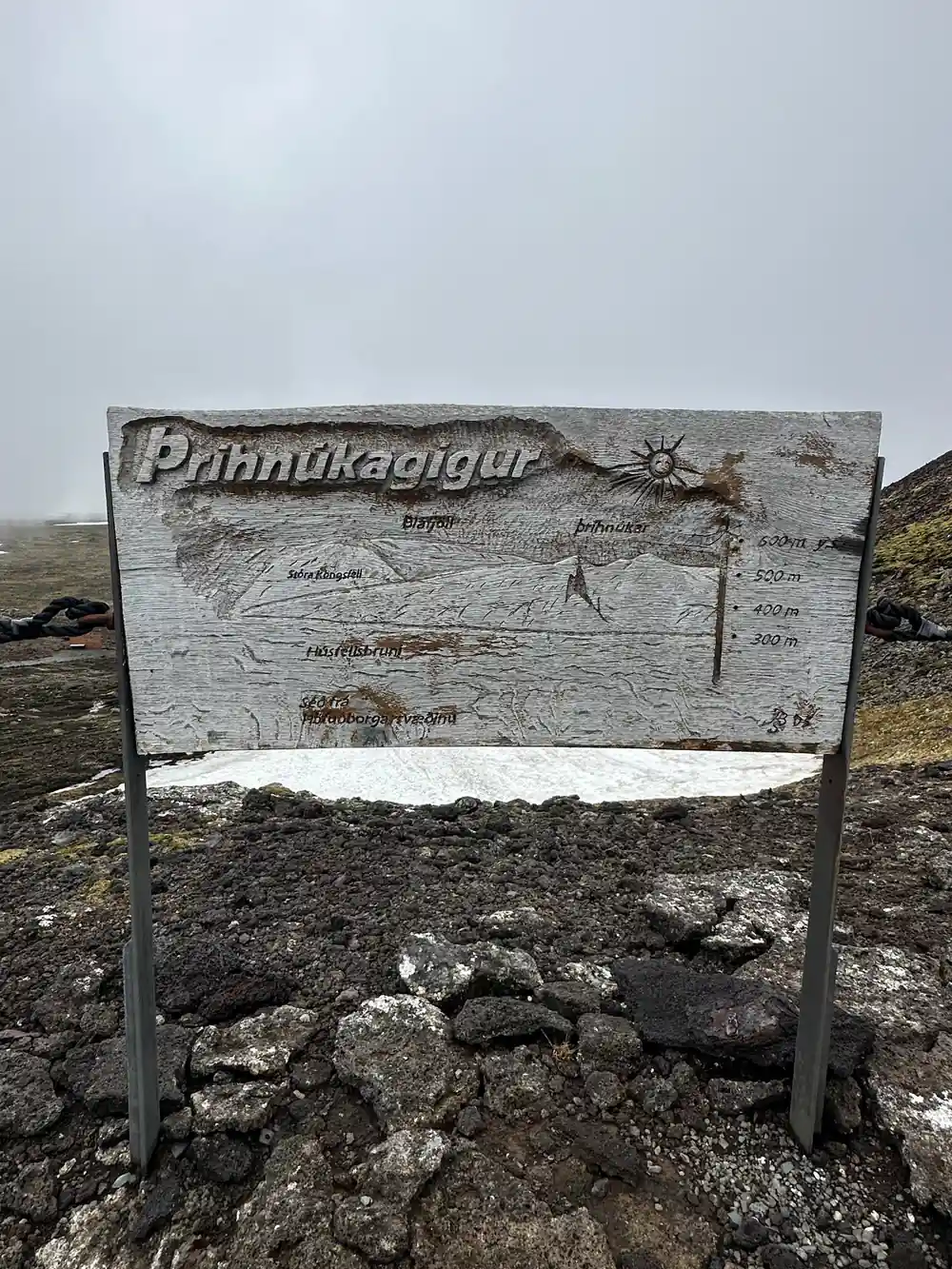
At the crater there is a wait, because parties of five go down one at a time and somebody is always last. The weather on that plateau is its own thing and frequently fog.
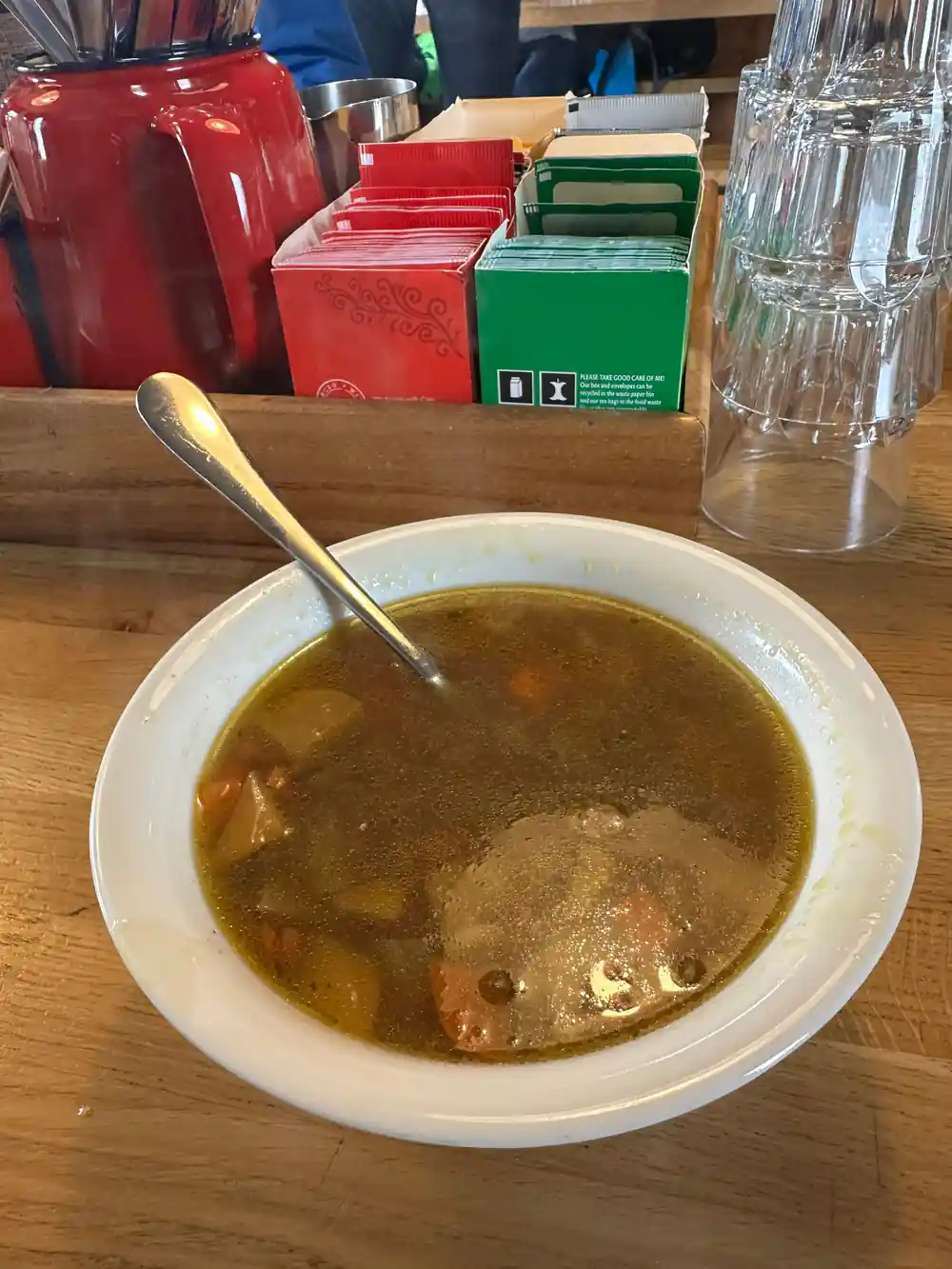
Afterwards there is Icelandic meat soup at the cabin, with a vegetarian alternative and hot drinks. It sounds like a footnote and it is the second thing most reviewers mention.
Whether the arithmetic works
Six hours, of which about ninety minutes is walking, an unknown amount is waiting, and sixty minutes is the thing you came for. Set out plainly like that it looks poor value, and anybody booking this as a quick attraction is going to be annoyed.
The counter-argument is that the sixty minutes has no substitute. There is exactly one drained magma chamber on earth with a platform into it, and everything about the day - the small parties, the short season, the walk - follows from keeping it that way rather than from manufacturing scarcity.
If you want an efficient morning, this is not it. If you want the one hour, the other five are what it takes, and they are worth taking.