If you read nothing else
- Helmet and harness, fitted at the cabin and checked again at the rim.
- Not handed out for a photograph and collected afterwards.
- A hard ceiling on how many people can be in the chamber at once.
- Most of what you are asked not to do is about the walls, not about you.
What you are issued
Everything needed is provided and included: a helmet, and a harness. They are fitted at the mountain cabin before the walk out, which is a sensible arrangement because doing it at the crater in wind would be slower and colder.
The helmet is the obvious one and needs no defending. You are going into a space whose floor is made entirely of material that has fallen off the ceiling. That process is extremely slow, and the sensible response to extremely slow is still a helmet.
The harness surprises people, because the platform has a rail and nobody is dangling from anything. It is worn as a precaution rather than used as a suspension point in normal operation, which is the correct way round: the equipment that matters is the equipment that is already on you when something unusual happens.
Fitted, then checked again
Gear is fitted at the cabin and checked a second time at the crater before boarding. Two checks for a piece of equipment nobody expects to use looks like theatre and is not. Harnesses loosen over three quarters of an hour of walking across uneven ground, and a harness that has worked loose is a harness that is not doing anything.
The second check is also where the group is organised into descent parties, so it doubles as the moment the day stops being one group of twenty and becomes four groups of five.
Wear something the harness can go over. Leg loops and a waist belt over a bulky waterproof are workable; over an unfastened flapping shell they are a nuisance to adjust, and you will be adjusting them at the windiest point of the day.
Why four or five
This is the structural fact of the whole tour and it does more to shape the experience than any other decision the operator has made.
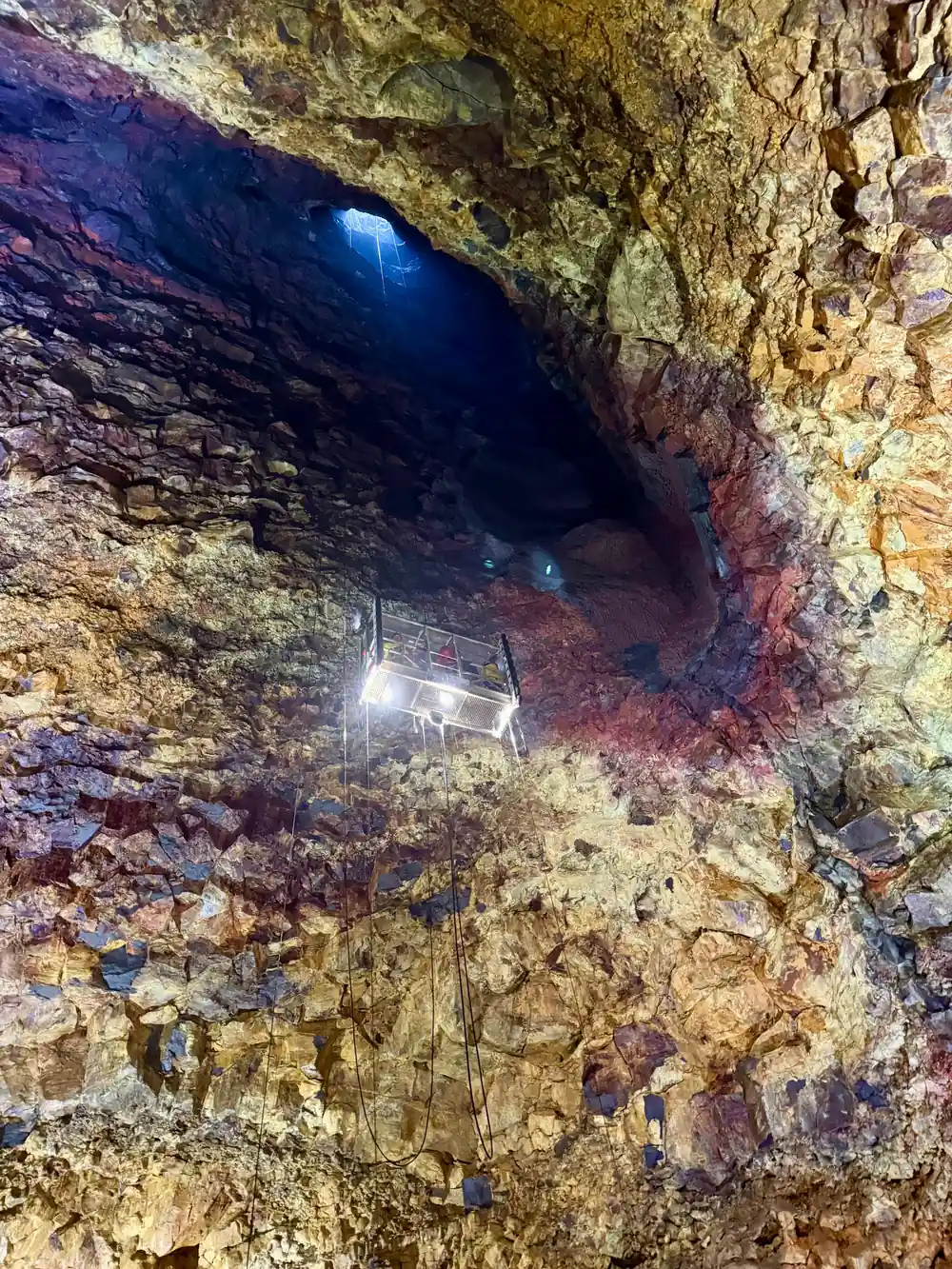
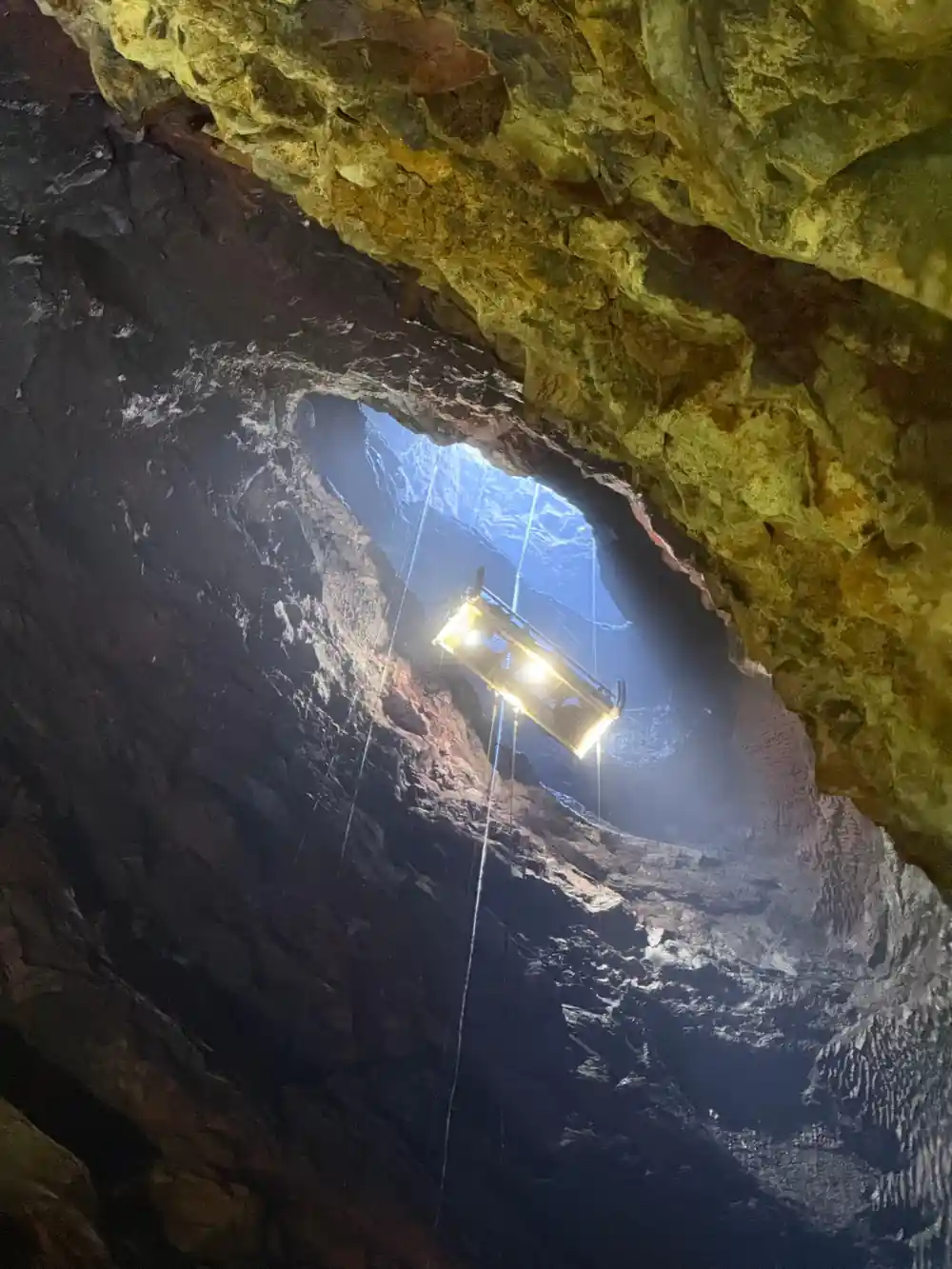
The deck carries four or five passengers and a guide. That is not a queuing arrangement, it is the physical capacity, and it sets a hard limit on how many people can be inside the chamber at any moment. Even with the winch running continuously the population down there stays small.
The consequence is that the chamber never feels like a venue. There is no crowd, no shuffling line past a viewpoint, no waiting your turn at a railing. There are a handful of people spread across a debris slope in the dark, several of whom you arrived with, and a guide who is talking to five people rather than addressing forty.
It also explains a great deal about the rest of the day. The short season, the fixed departures and the wait at the crater all follow from a throughput ceiling of five people every few minutes. None of that is manufactured scarcity; it is what the opening allows.
Harnesses and helmets being fitted at the cabin
The briefing
There is a briefing before the descent and it is short, specific and worth listening to. It covers where to stand on the deck, what to hold, what to keep inside the rail, and how the party will move once it reaches the floor.
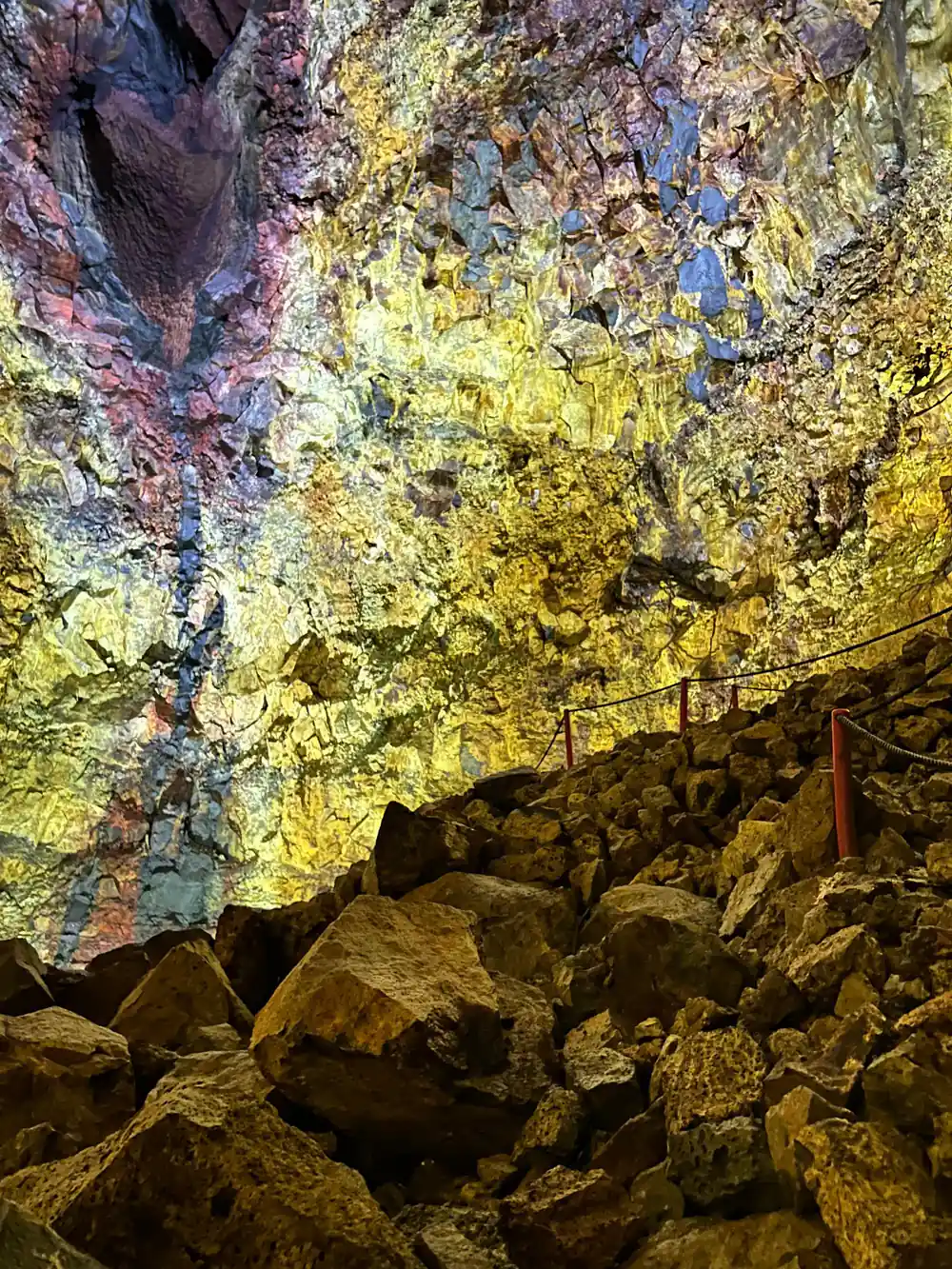
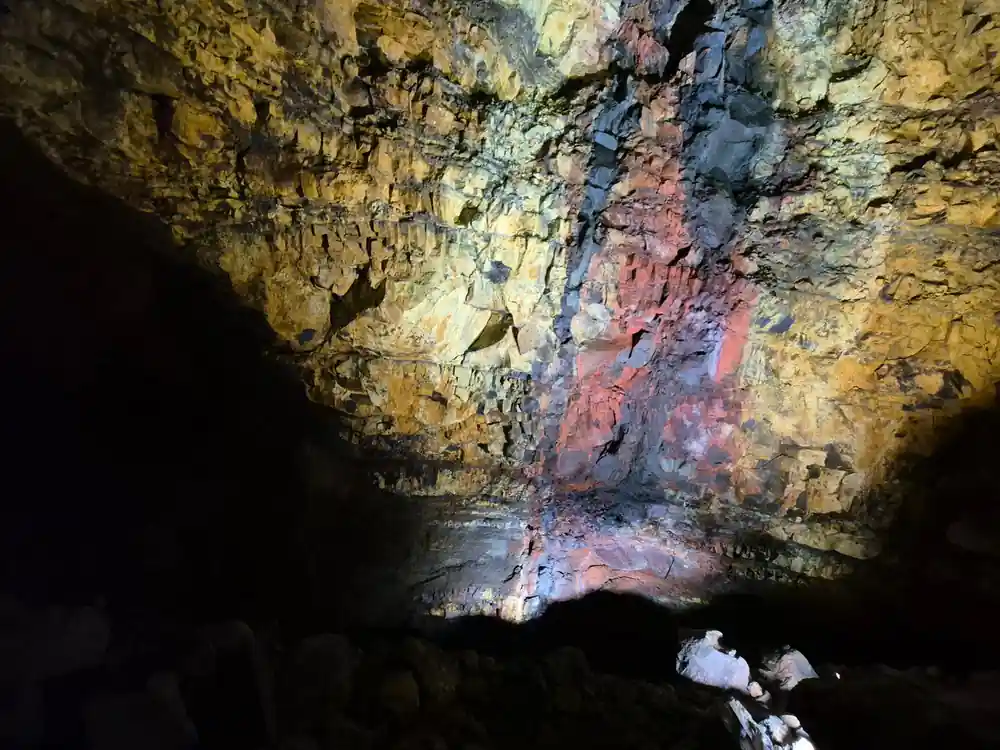
The part people underestimate concerns hands. The rock within reach of the deck as it passes is coated in exactly the mineral crusts that make the chamber worth visiting, and those coatings are not durable. A hand run along a wall on the way down removes a patch of colour permanently, and it does not grow back on any timescale that matters.
So the instruction not to touch is not about protecting your fingers. It is about the fact that a few thousand visitors a season, each running a hand along the most reachable rock, would strip the accessible parts of the chamber within a decade.
The rules on the floor
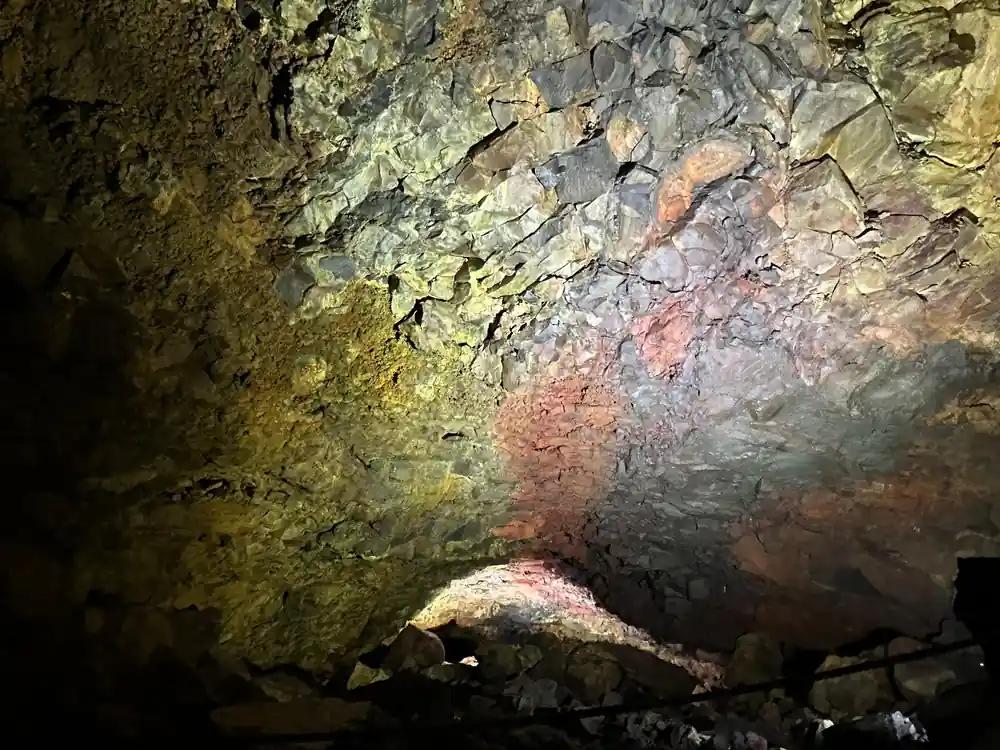
There is a roped area and you stay inside it. That is essentially the whole of it, and again the rope is protecting the surfaces rather than corralling the visitors: the debris slope carries crusts and delicate deposits that a boot destroys instantly.
You are asked not to take anything. This should not need saying and evidently does, because the temptation to pocket a piece of a magma chamber is apparently strong. The floor is the roof, slowly, and it is finite.
Nothing is thrown, nothing is left, and lights are kept out of other people's eyes, which is ordinary courtesy in a dark space where everyone's night vision is the thing making the visit work.
None of this is onerous. It amounts to staying on the rope, keeping your hands to yourself, and not stealing the volcano.
Who is with you
A guide comes down on every trip and guides remain in the chamber throughout. On a party of five that is a ratio you will not find at any other geological site of comparable interest.
They are not there principally as safety cover, although they are that. They are there because a large dark room is unreadable without somebody who knows what the surfaces are, and the difference between an hour of being impressed and an hour of understanding what you are looking at is entirely down to them.
Ask about the flow surfaces, the colour banding, the shaft geometry, the history of the access. The answers are better than anything written down, this page included, and they are the part of the tour that scales worst and is therefore worth using.
Gear included, five to a party, a guide on every trip
from US$432Reserve now & pay later