If you read nothing else
- People prepare for claustrophobia and meet vertigo instead.
- Fixed rock to hanging deck, over a hole. It lasts about two seconds.
- Enclosure is rarely the problem once you are down.
- It is allowed. The crater is a poor place to find it out, though.
The wrong fear
Almost everyone approaching this trip worries about the same thing, which is being shut in. It is the obvious anxiety for a phrase like inside a volcano, and it is largely misplaced.
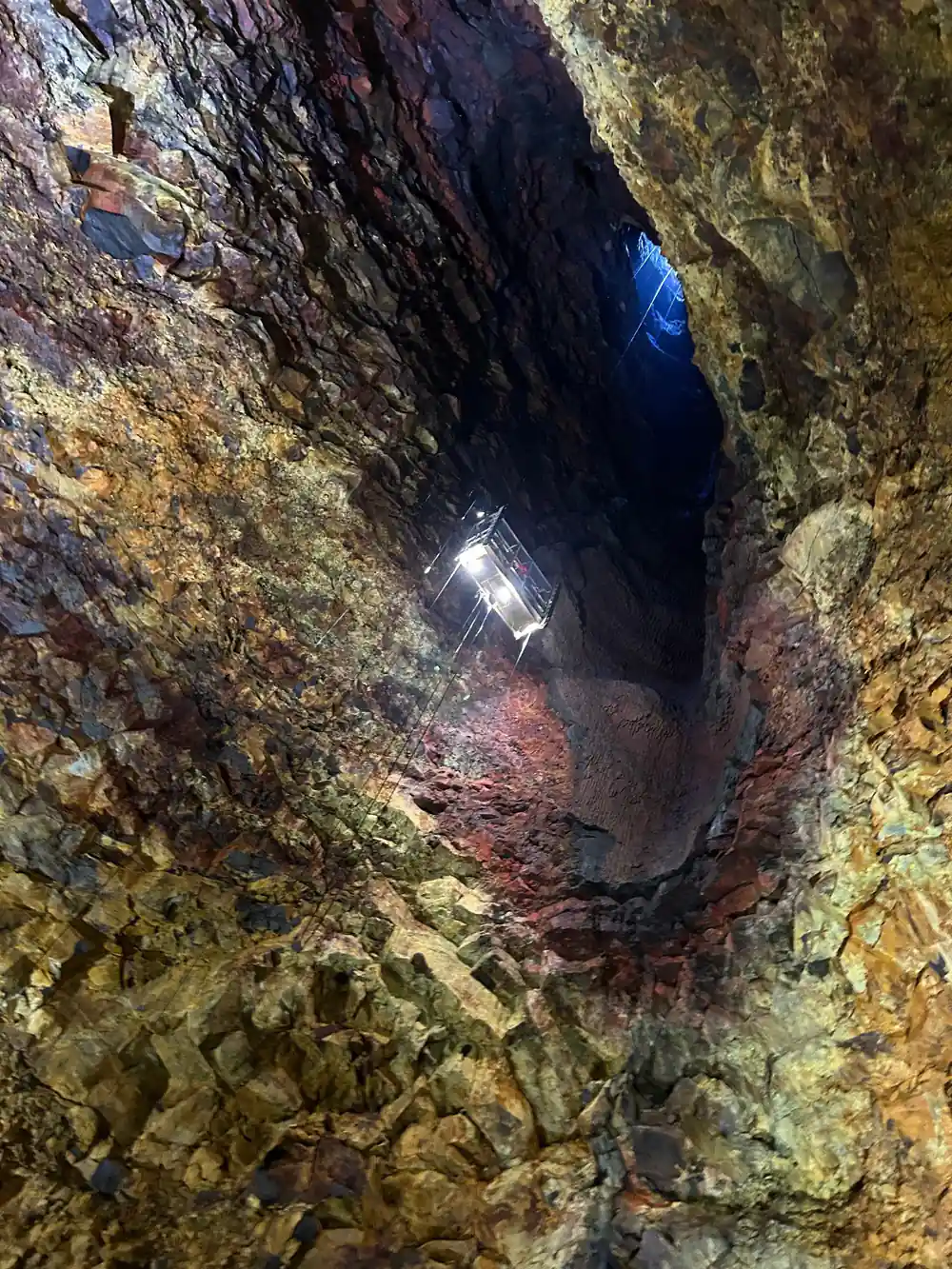
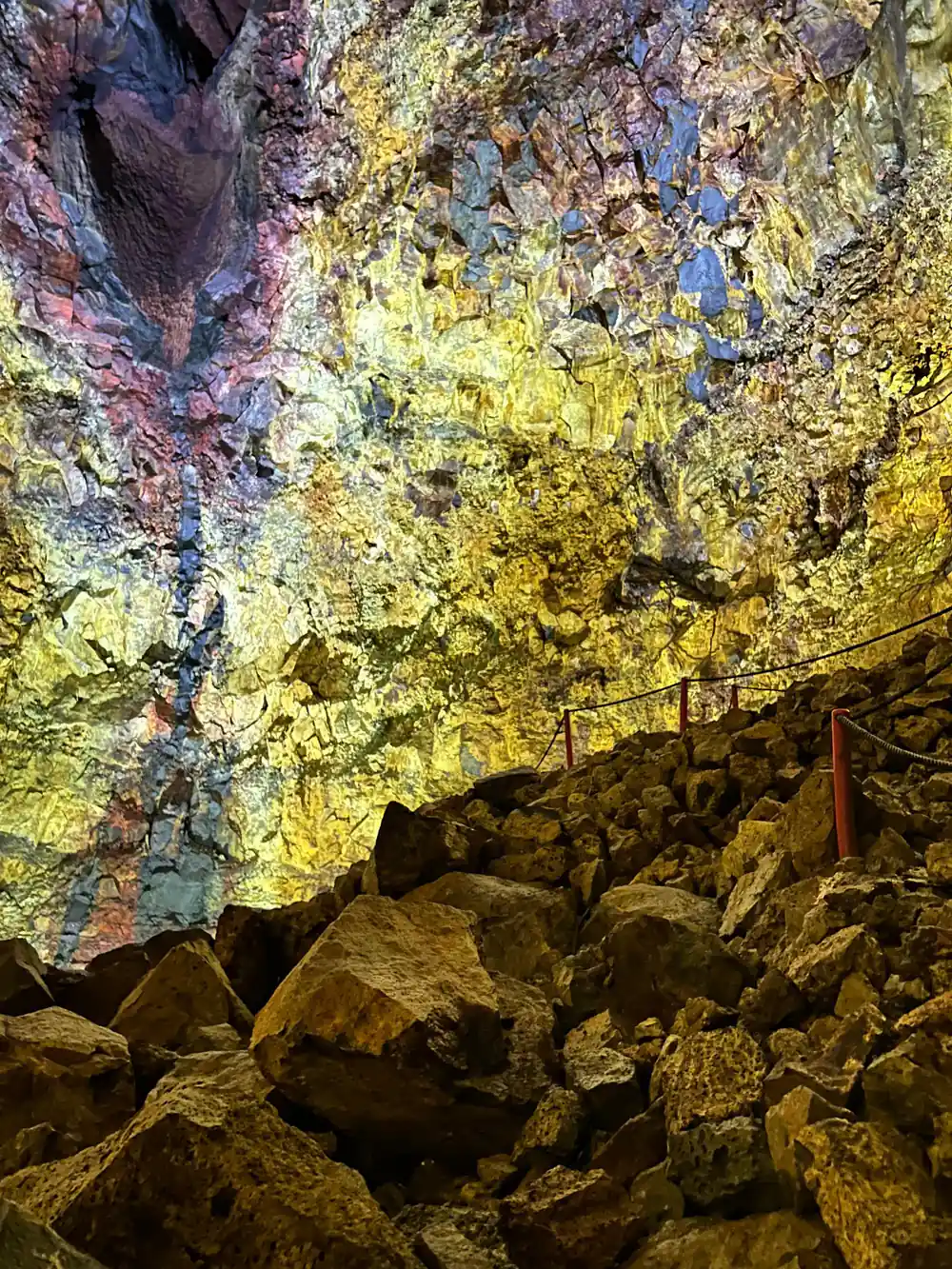
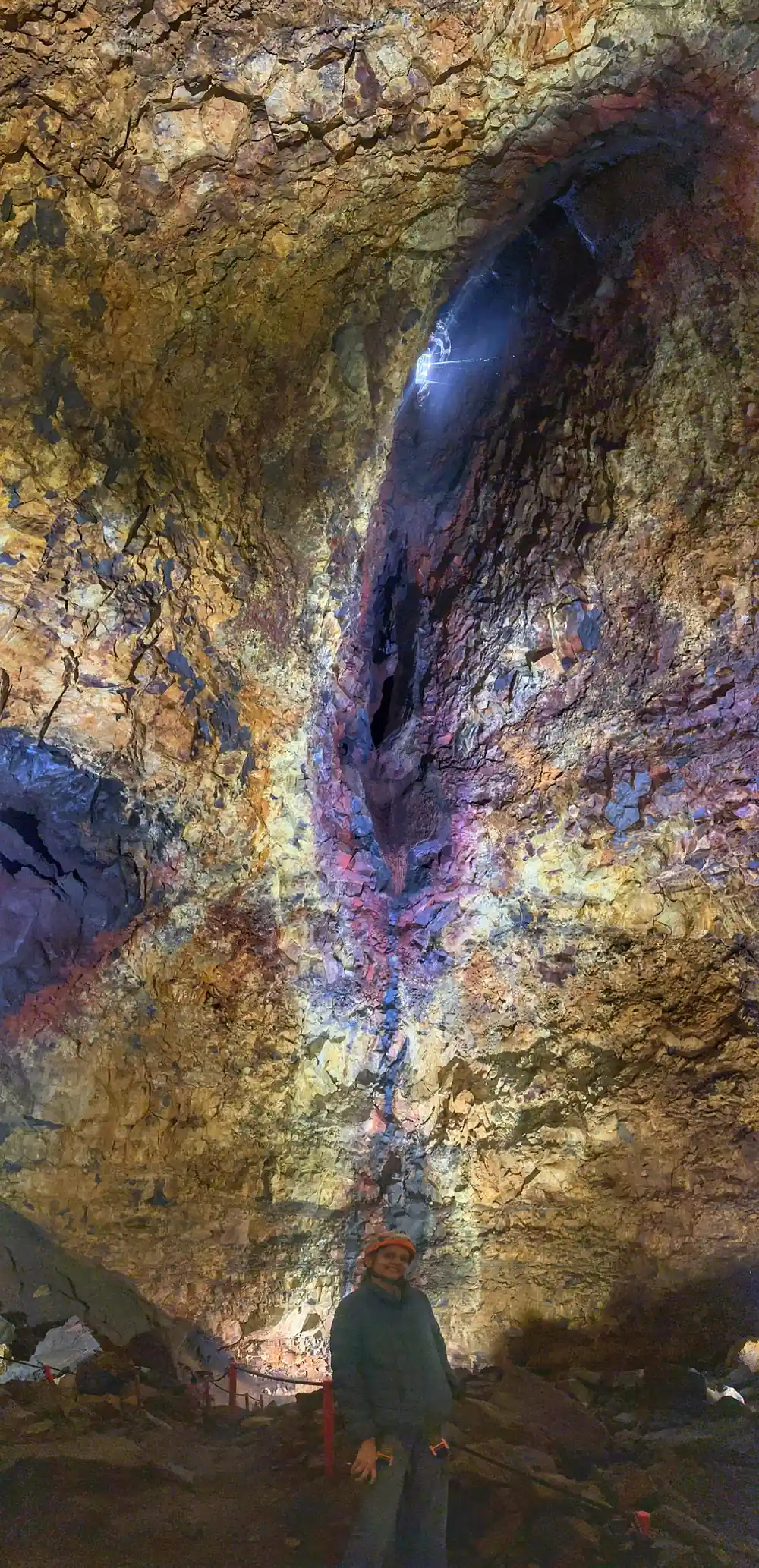
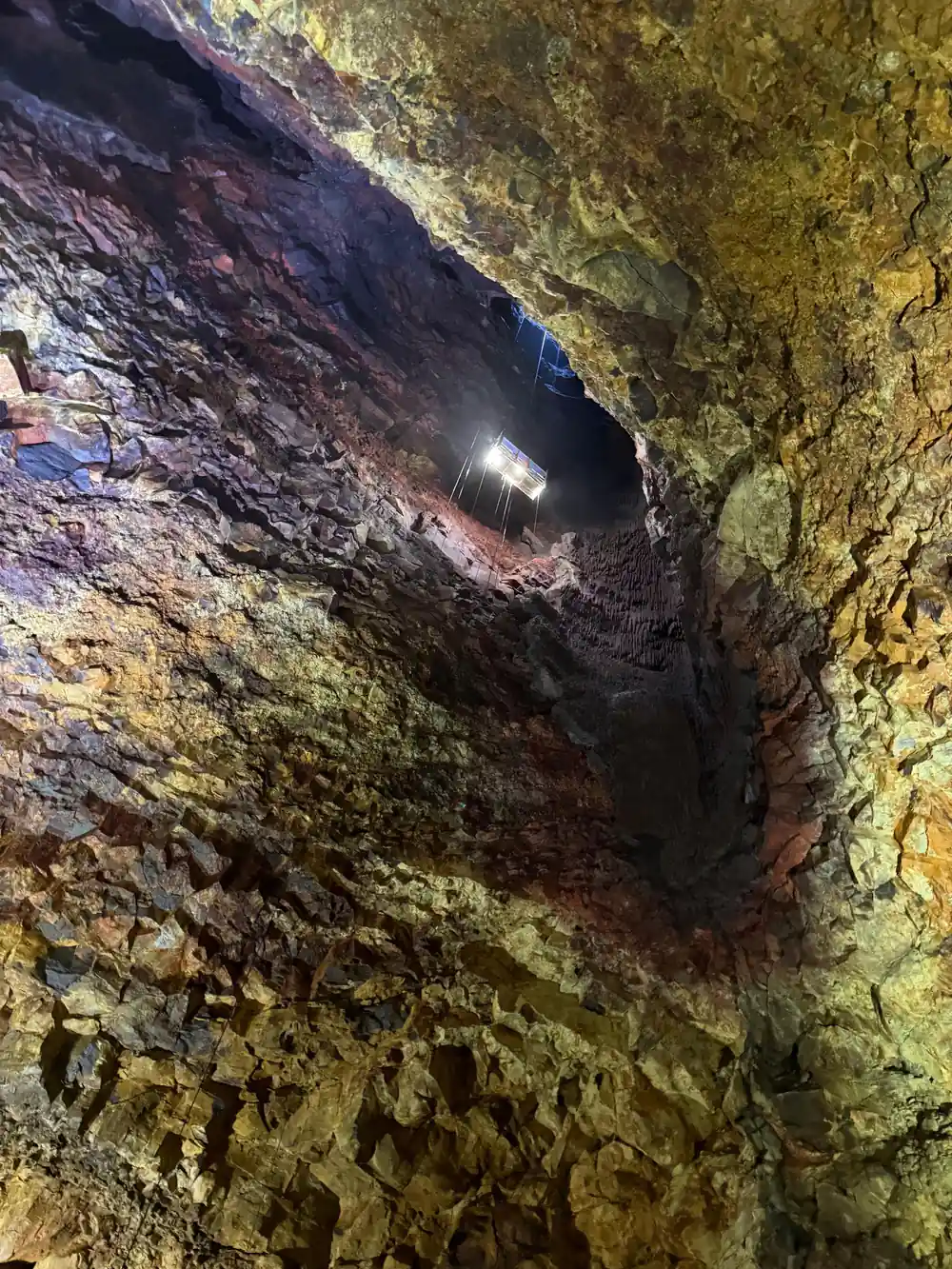
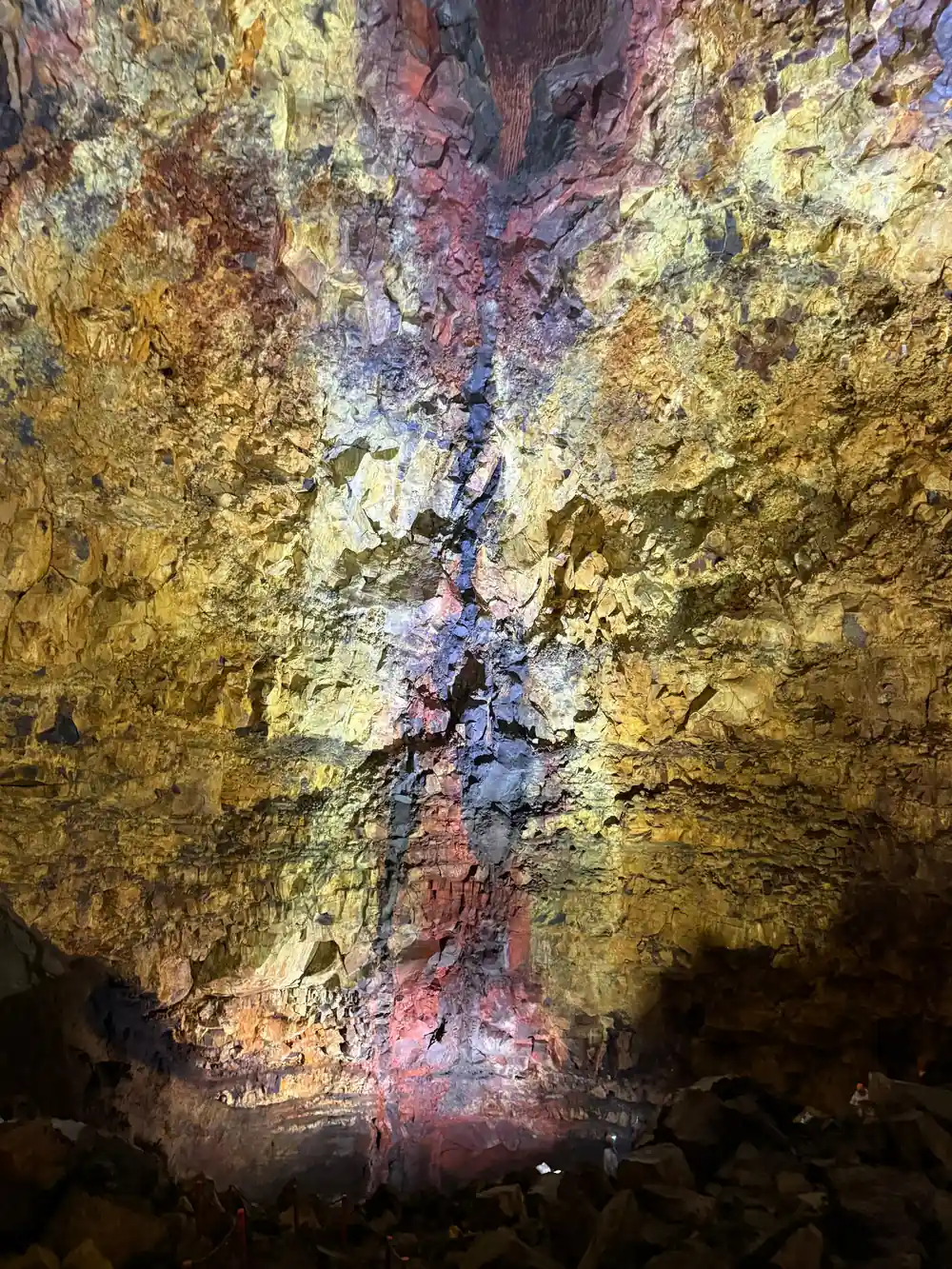
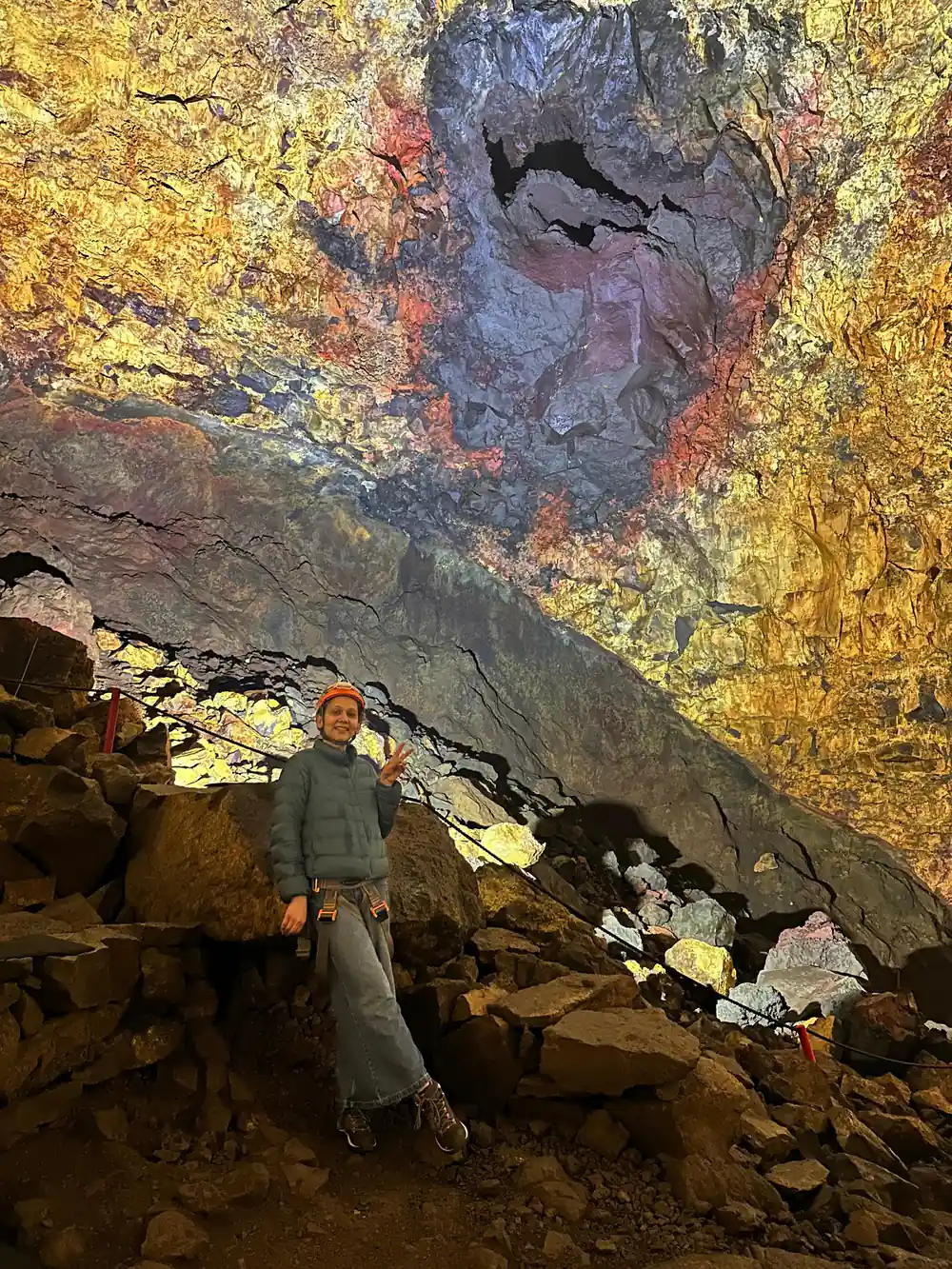
Claustrophobia is a response to confinement: a space that presses in, a route you cannot easily reverse, air that feels used. The chamber offers none of those. It is enormous, it is unusually still and cold rather than close and stuffy, and there is a lit opening overhead the whole time with a machine coming down through it every few minutes.
People with a genuine and diagnosed claustrophobia should still think carefully, because a hundred and twenty metres of rock overhead is a fact regardless of how much room there is under it. But the ordinary mild version that makes lifts unpleasant is rarely triggered here, and a good number of people who braced for it report noticing nothing at all.
The fear that actually turns up
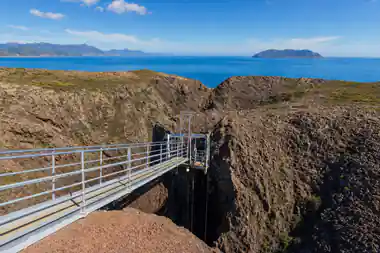
It is height. The access is an open deck with a rail, suspended over a vertical drop, and there is a moment where you step off solid ground onto it.
That step is the hard part of the day and it is worth naming precisely, because knowing where the difficulty sits makes it much smaller. It is not the descent. It is not the depth. It is the two seconds of transferring your weight from rock that is not going anywhere onto metal that is hanging from a cable, with a hole underneath.
Everything after it is easier. Once the deck is loaded and moving, the mind has something to look at, the guide is talking, and the walls are doing something no one has seen before. The overwhelming report is that the anxiety converts into attention somewhere in the first thirty seconds and does not come back.
The return trip barely registers at all, which tells you the fear was about the unfamiliar rather than about the height.
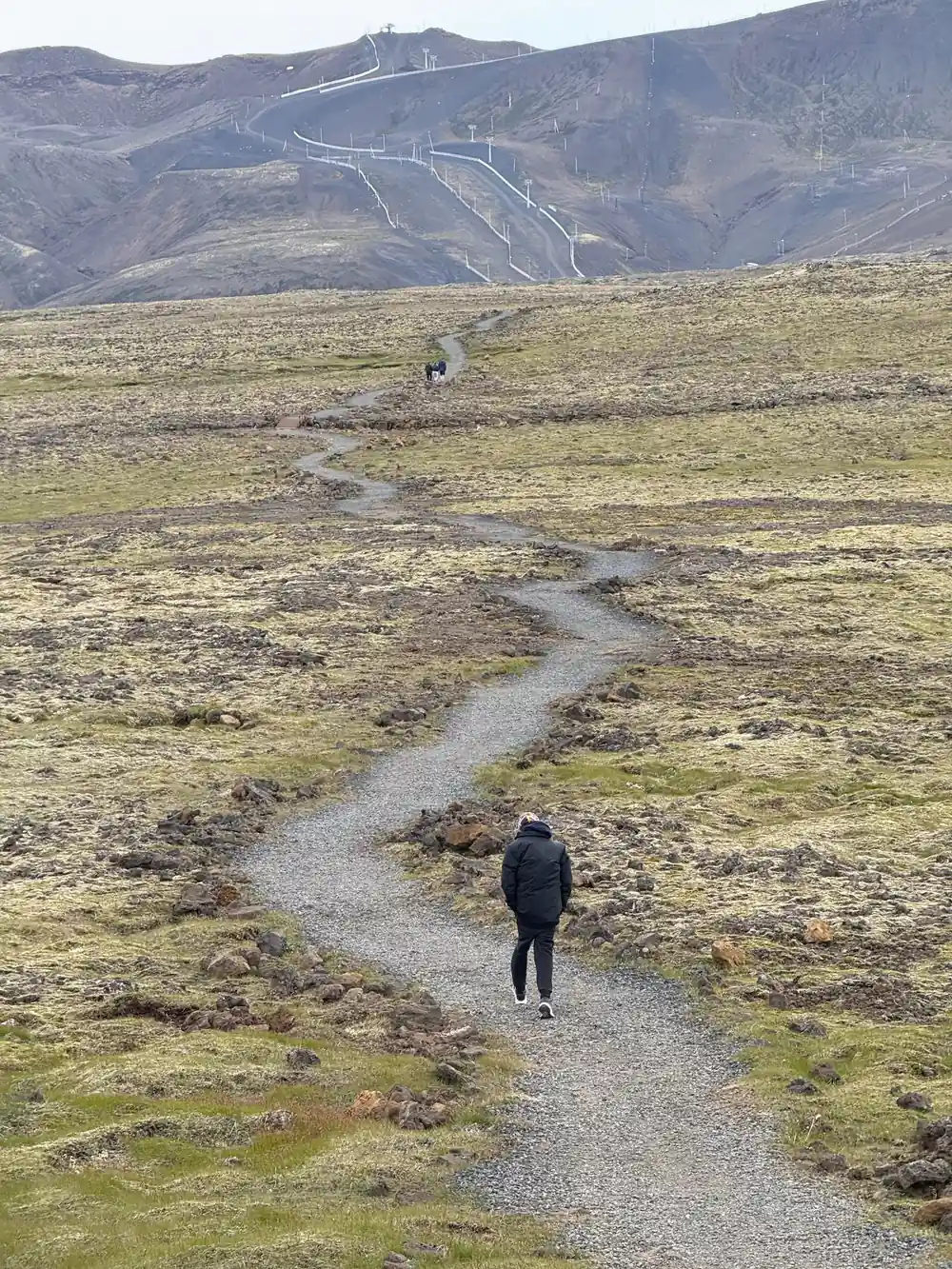
The step from fixed rock onto the hanging deck
What helps
Look out, not down. The mesh floor is a needless provocation and there is nothing to be learned from it; the walls are the interesting direction and they are also the direction that keeps your inner ear happy.
Get on first or last rather than in the middle. Both work for different people: first means you are not standing at the edge watching others cross, last means the deck is already loaded and stable when you step on.
Hold the rail, obviously, and stop apologising for holding the rail. Everybody holds the rail.
Talk. A party of five and a guide going down together is a conversation, and there is a reason the guides keep one running. Being asked a question is a remarkably effective way of not thinking about a drop.
And know the shape of the ride in advance, which is the point of the pages on this site: narrow at first, then the walls leave, then the floor. Surprise is most of what makes a physical sensation frightening, and this one is entirely predictable once described.
Backing out
It happens, occasionally, and nobody makes a scene about it. The guides have seen it, there is no argument, and the person waits at the crater.
That is the honest answer, and there is a harder honest answer alongside it. The crater is a bad place to discover this about yourself. It is three quarters of an hour on foot from the cabin, it is often cold and windy and in cloud, and the rest of your party is going to be underground for an hour while you stand at the rim.
So the useful thing is to think about it now rather than there. Not to talk yourself into or out of anything, but to be honest about which of the two fears you actually have. If open height genuinely stops you, this is a trip built entirely around an open platform and no amount of goodwill on the day changes that. If it is enclosure you dislike, the chamber is almost certainly larger and airier than the thing you are imagining.
Two seconds
The step from solid rock onto the platform is the hard moment of the whole day. Everything after it is easier, and the ride back up barely registers.
If you panic
Say so immediately and out loud. There is a guide within two metres of you at every point of this trip, on the deck and on the floor, and this is a situation they are trained for and have dealt with before.
It is also worth knowing that the thing people call panic in this context is almost always a surge that peaks and then subsides. The physiology is short-lived: the alarm fires hardest in the first half minute and then the body runs out of enthusiasm for it. Guides know this, which is why the usual response is to keep you talking and give the surge somewhere to go rather than to immediately reverse the trip.
The deck runs continuously while the group is being moved, so coming back up is not a special operation requiring anybody to be inconvenienced. It is the machine doing the thing it does every few minutes.
The one genuinely unhelpful move is to endure it silently for an hour, which people occasionally try out of embarrassment. Nobody in the party will remember it a week later, and you will remember the hour.
The step is the hard part, and it lasts two seconds
from US$432Reserve now & pay later