If you read nothing else
- Or fewer. Nobody is obliged to stay for the full allowance.
- Not warm, not dripping. Neither of those matches what people picture.
- Sloping debris. You move about, within limits, in low light.
- Your eyes keep adapting, so more of the chamber arrives every few minutes.
The first five minutes
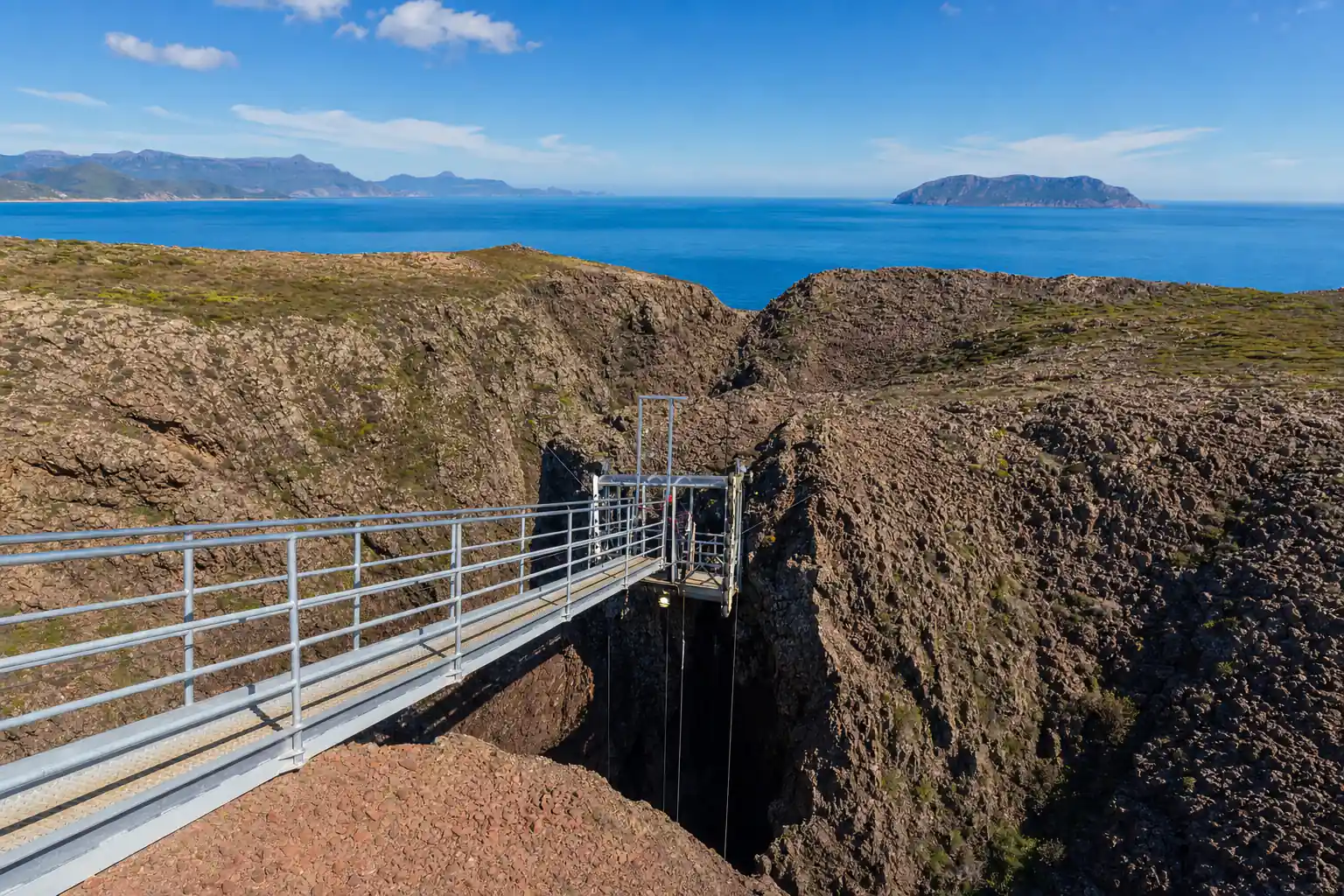
You come off the deck onto loose stone and the party moves clear of the landing point, because the platform has to go straight back up for the next group. That small piece of logistics shapes the first part of the hour: there is a while during which people are still arriving, the winch is running, and the chamber has an audience of six rather than twenty.
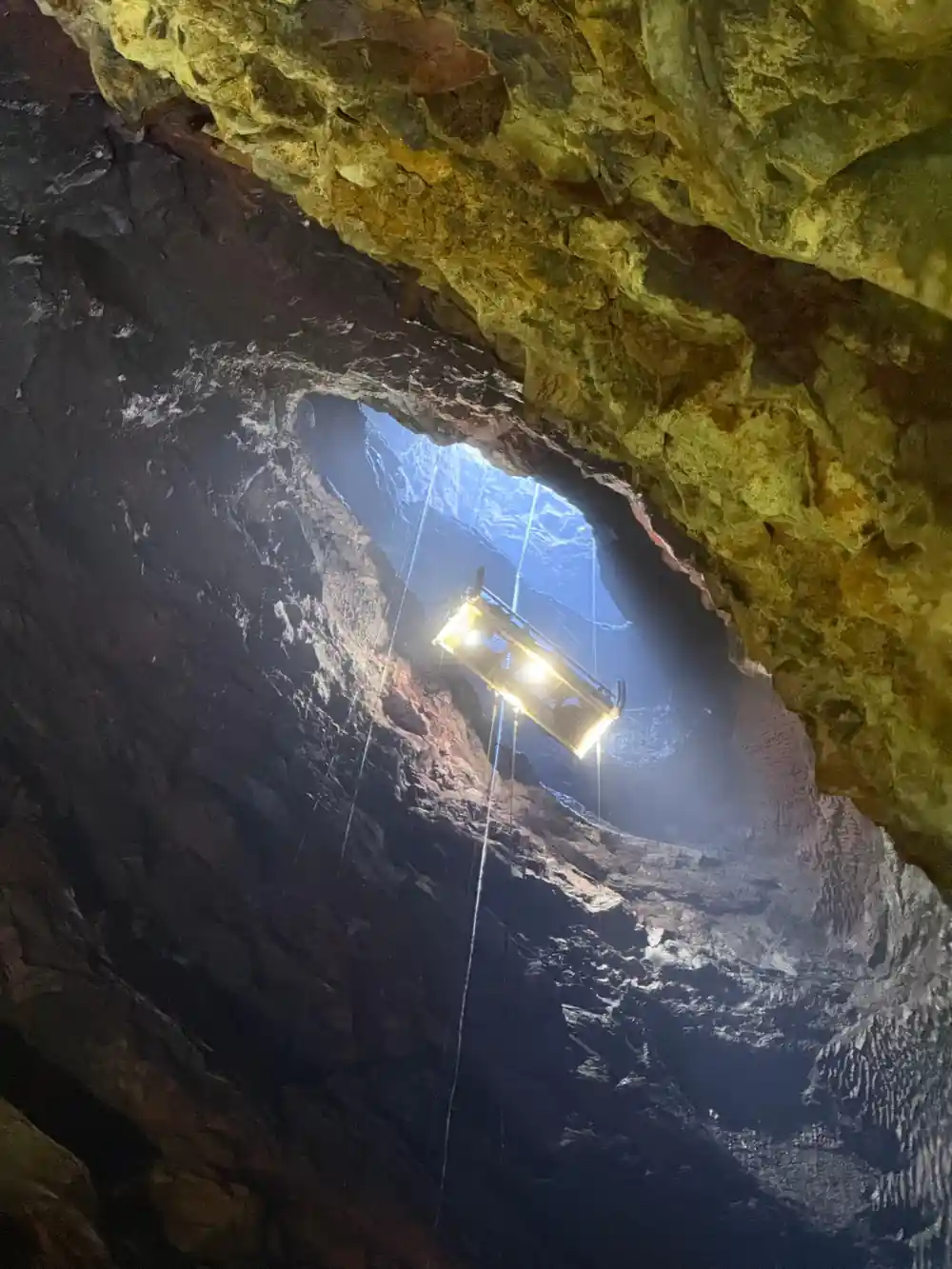
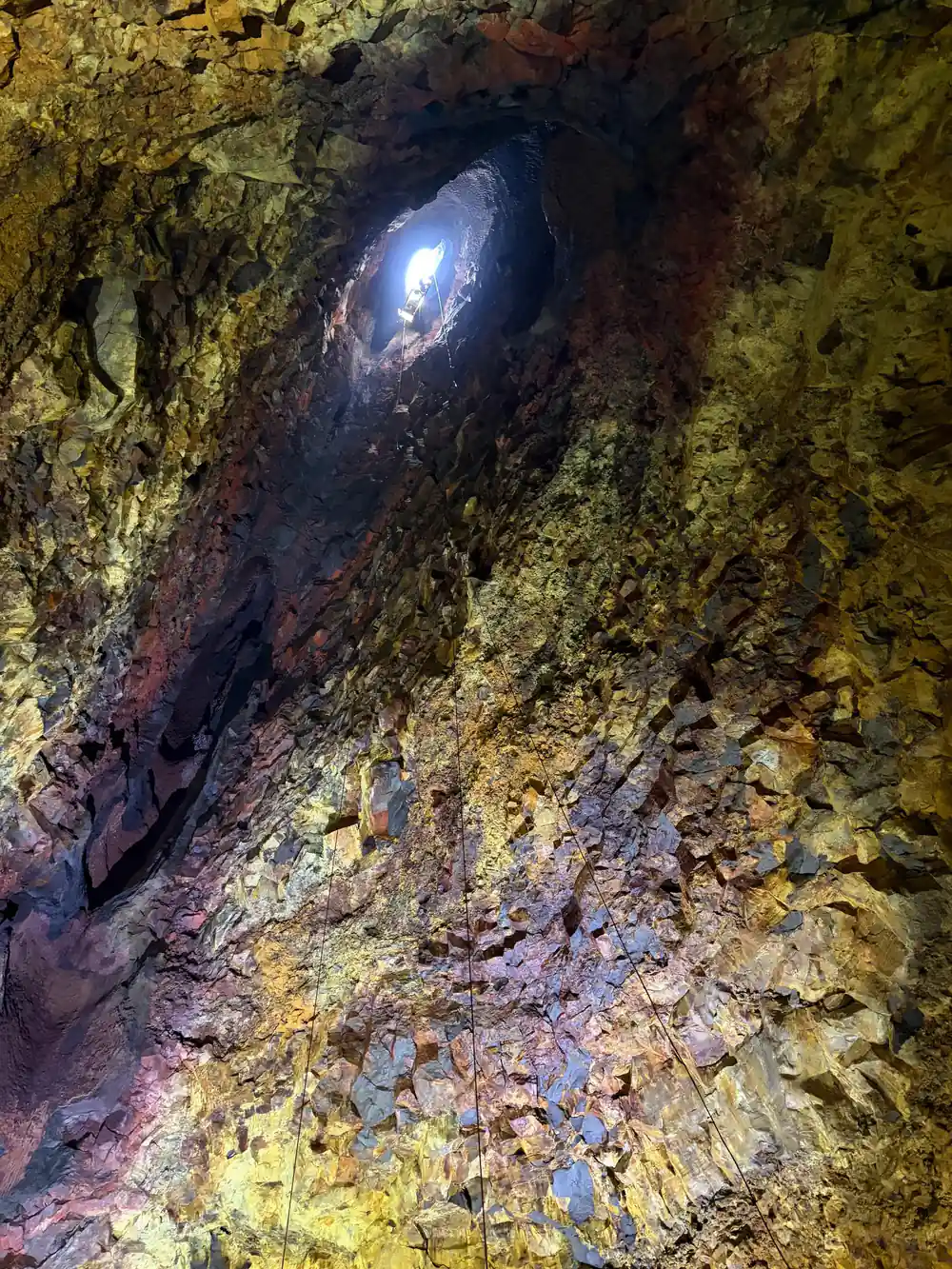
Almost everyone does the same thing in the first minute, which is to turn round and look upwards. This is the moment the drop registers properly. On the way down the opening is above and behind you and you are busy watching walls; from the floor it is a small bright shape a very long way up, and the arithmetic of 120 metres suddenly means something.
The second thing everyone notices is the temperature. It is cold, and it stays cold. This catches people out more than any other single fact about the interior.
Why it is cold, and dry
The intuition that a volcano should be warm is reasonable and completely wrong here. Whatever heat this system had, it lost four thousand years ago. What remains is a large mass of rock sitting at the average temperature of the ground around it, which in Iceland is not generous.
Add to that the fact that you have stopped moving. On the walk out you generated heat; on the floor you stand still and look upwards for an hour. People who shed a layer during the hike and left it in a bag regret it.
The dryness is the other surprise. Caves in most of the world are limestone, and limestone caves are wet: water is what made them, and it keeps arriving. This is not a dissolution cave. Nothing was carved out by water and there is no groundwater system feeding it, so the floor is dusty rather than slick and there is no dripping. It gives the chamber a much more inert quality than a cave has.
Moving about
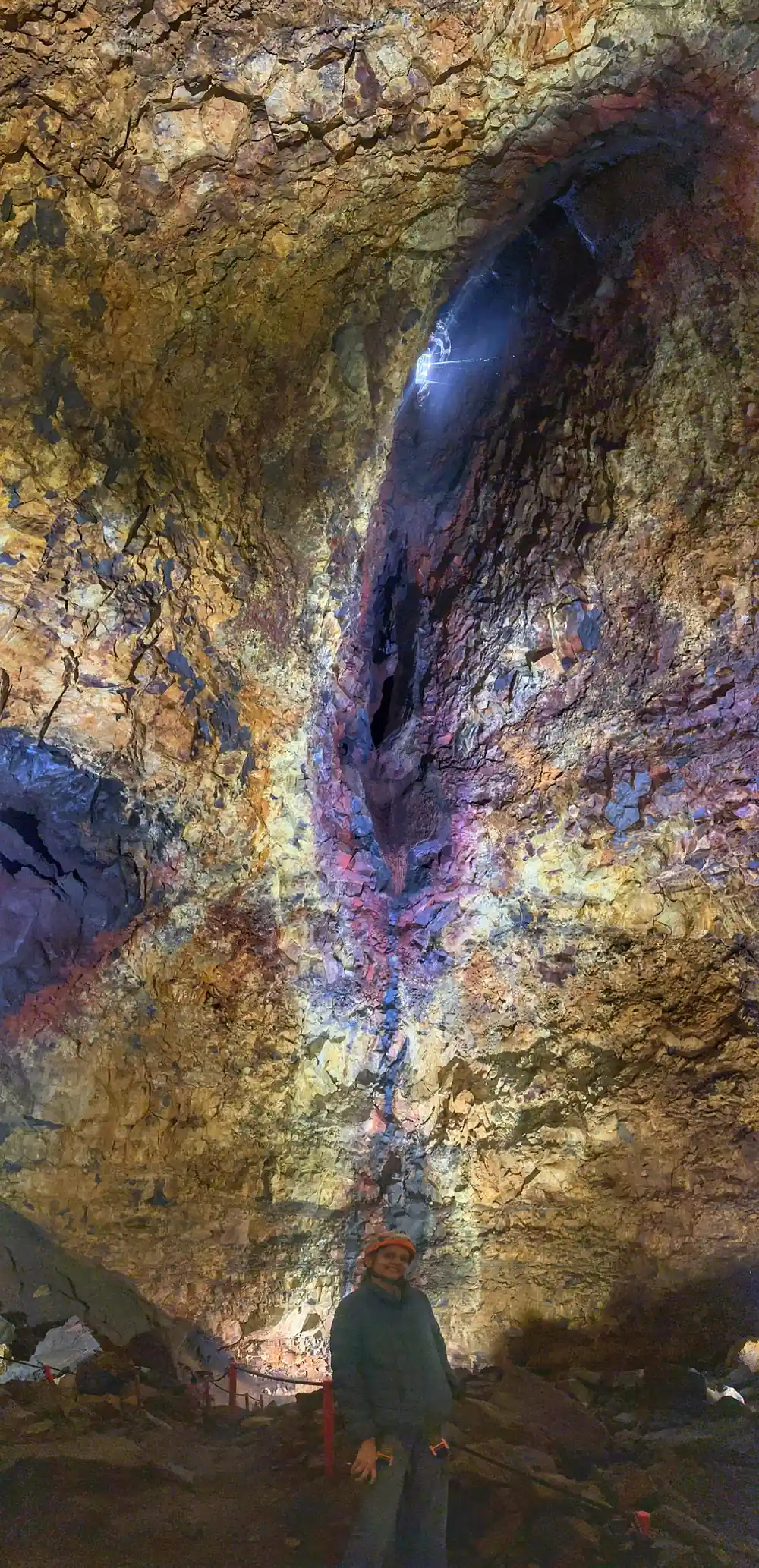
There is a roped area on the debris slope and you have the run of it. It is not large relative to the chamber, and it is not meant to be: the point of the ropes is that the surfaces here are fragile and the mineral crusts do not come back once a boot has been on them.
Underfoot is loose angular rock, sloping, of the kind that shifts slightly with each step. Walking on it in low light takes a moment to get used to and is unremarkable after that, particularly if you have just crossed a lava field to get here.
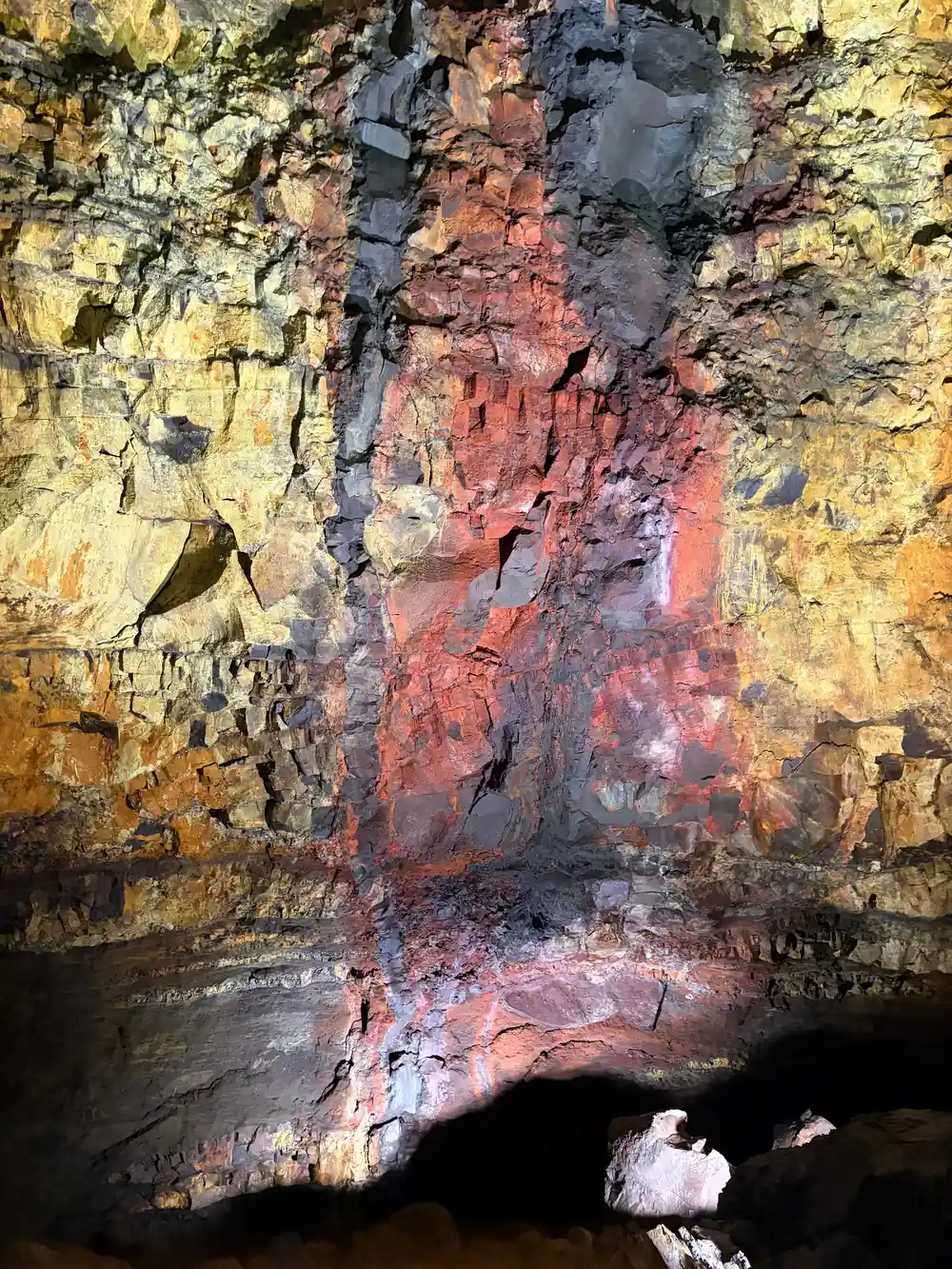
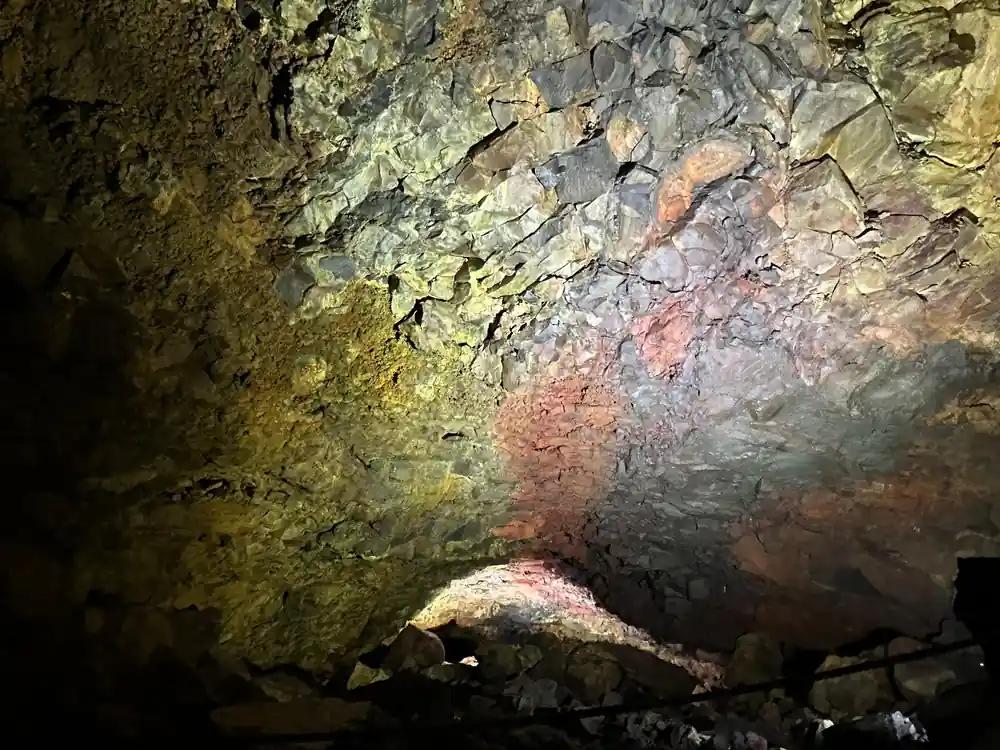
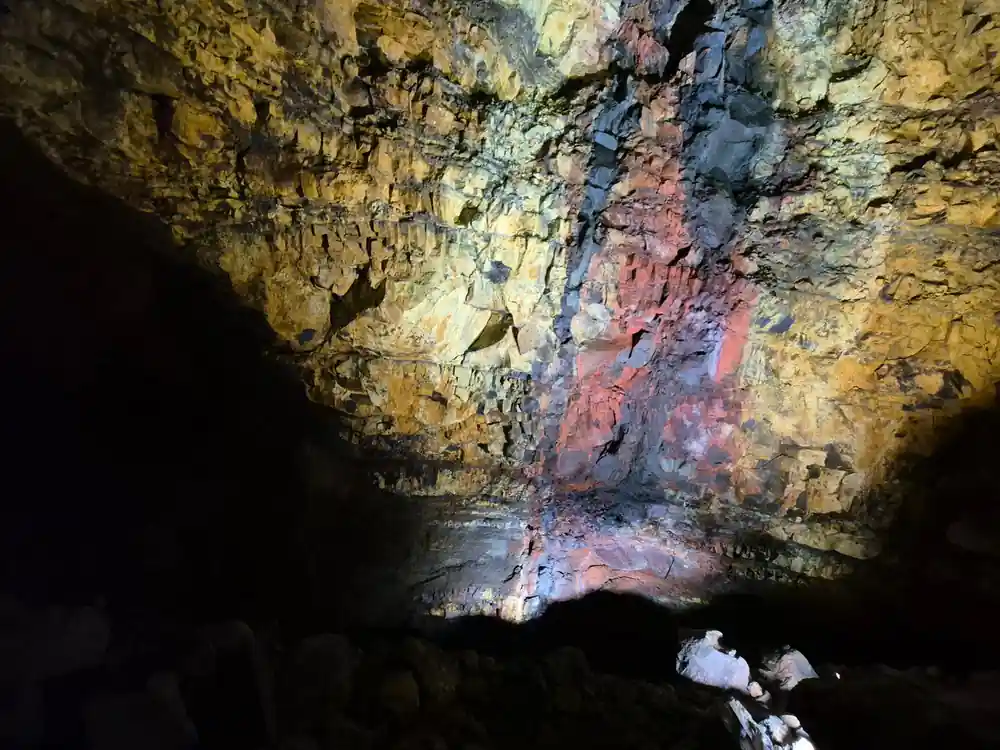
The guides move around with the party rather than lecturing at it. They point out the flow surfaces where the melt was in contact with the wall, the places where colour is banded most strongly, and the geometry of the shaft above. Ask them things. They are the reason the chamber becomes legible rather than merely large, and they have generally been down it several hundred times.
A figure on the debris slope, dwarfed by the walls
The light, and the adapting eye
The chamber is lit by lamps on particular faces, not evenly. Large parts of it stay dark for the whole hour, and the lit sections carry the colour and the detail. It is deliberately partial and it works far better than flooding the place would.
The consequence is that the chamber seems to expand while you are in it. It does not, of course. What changes is your eye: over the course of an hour in low light the pupil opens and the retina adjusts, and surfaces that were black on arrival begin to resolve. People consistently report that the space felt bigger at minute fifty than at minute five, and they are describing their own adaptation.
This has a practical consequence worth acting on. Anything you look at through a bright phone screen resets that adaptation every time. The people who come up describing the chamber most vividly are the ones who took a few photographs early and then put the phone away.
The sound of an hour
It is very quiet, and the quiet has an unusual quality: there is essentially no echo. A rough-walled chamber with a floor of broken rock absorbs sound rather than bouncing it, which is the opposite of what people expect from a large underground space and is faintly unsettling.
Voices sound close and flat. A shout does not travel. The winch running is the loudest thing that happens, and between trips there are stretches of silence that most visitors comment on afterwards, because they are unlike anything available at the surface in a country as windy as this one.
That silence is arguably the strongest single impression the chamber makes, and it is entirely absent from every photograph of it.
Going up, and leaving early
You can go up before the hour is out. It happens, it is not a problem, and the sensible thing is to say so early rather than endure. The deck is running continuously anyway, so somebody wanting to leave simply joins an earlier trip.
For everyone else the hour ends with the parties reassembling and going up in the same fours and fives. The ride out is quicker to the senses than the ride in, partly because there is no anticipation left and partly because the walls closing back in is a much less strange sensation than the walls leaving.
The last thing is daylight, and it is startling out of all proportion to its brightness. An Icelandic overcast is not bright, and after an hour underground it is dazzling.
An hour on the floor of a magma chamber
from US$432Reserve now & pay later
Good to know first
How long do you actually get?
Can you walk around?
Is it cold?
Is it wet?
What is the floor like?
Why does it seem to get bigger?
What do the guides do?
Can you leave early?
The hour, in order
Step off and move clear
The deck has to go straight back up for the next party of five.
Look up
The opening is a small bright shape a very long way overhead. This is when the drop registers.
Notice the cold
You have stopped moving, and the rock has been cold for four thousand years.
Walk the roped area
Loose sloping stone in low light. The ropes protect the crusts, not you.
Let the guides show you
Flow surfaces, colour bands, the geometry of the shaft. Ask questions.
Put the phone away
A bright screen resets your night vision every time you look at it.
Listen
No echo, no dripping, no wind. The silence is what people describe afterwards.
Back on the deck
Same parties, same order, and daylight that feels far brighter than it is.