If you read nothing else
- A deck and a rail. Nothing between you and the rock on any side.
- Slow on purpose, so eyes adjust and the scale registers.
- Four or five passengers and a guide, then it comes back for the next lot.
- The shaft widens below its neck, so the rock pulls away as you sink.
What the machine is
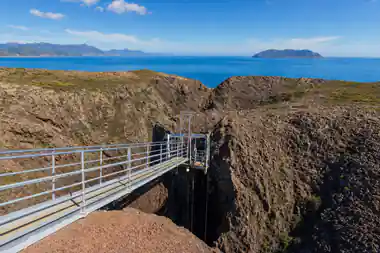
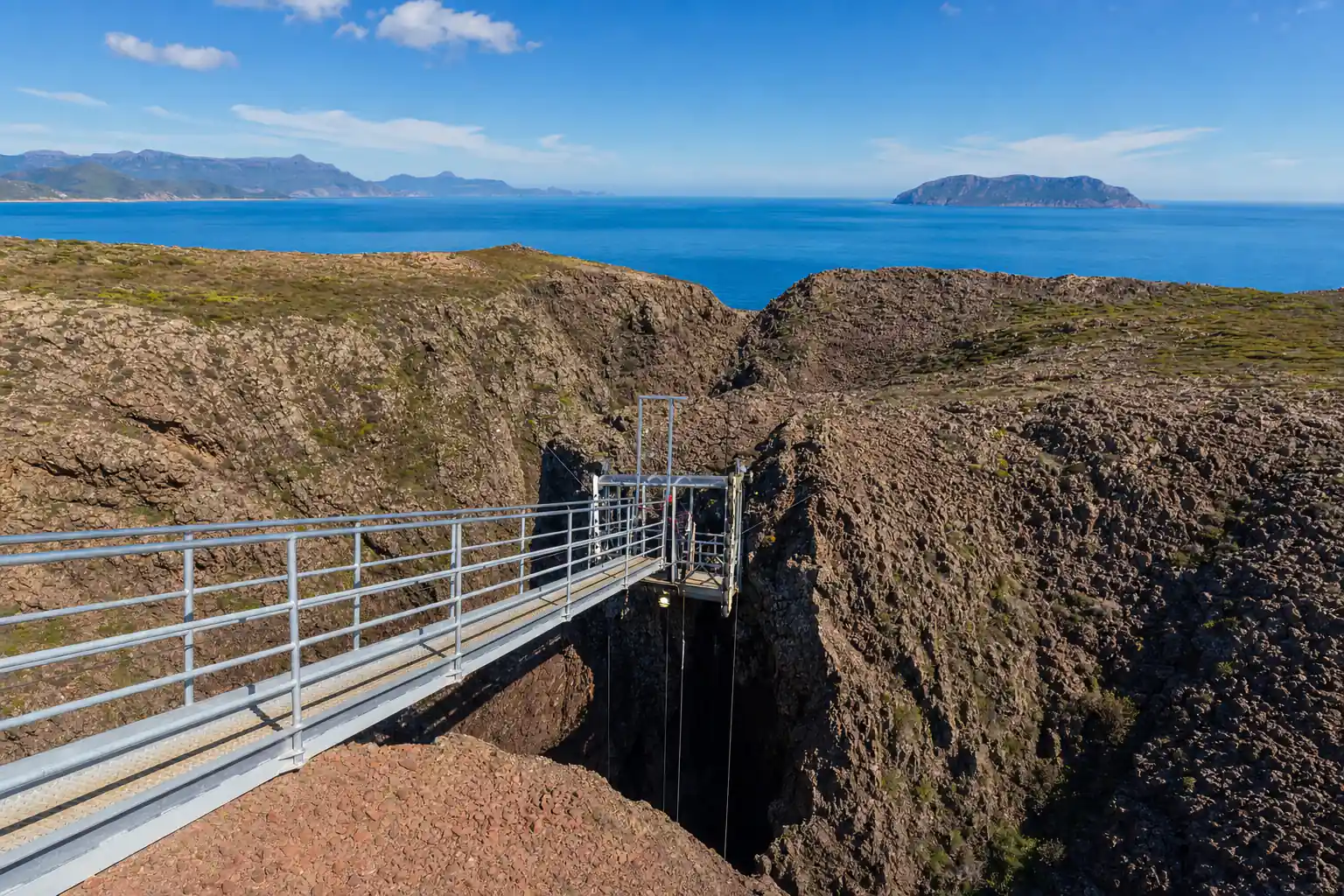
Look at a photograph of the crater from above and you will see a lattice of steel bridging the bowl, with a small rectangular deck slung underneath it. That is the whole apparatus. A span, a winch, a cable and a deck.
It is not an elevator in any sense you would recognise. There is no car, no doors, no shaft lining and no machine room. The deck has a mesh floor, a waist-high rail, and open air on every side, and it hangs on a cable that pays out from a winch mounted on the span above.
The design was constrained by two things that pulled in the same direction. The engineering had to reach the chamber through an opening nobody was permitted to widen, and it had to touch as little rock as possible on the way. Anything with a housing, a guide rail or a fixed structure would have failed both tests. A deck on a cable passes through the gap without altering it and can be removed at the end of the season, which is what happens.
Boarding
The deck is brought up level with a short steel walkway that runs out from the crater floor to the edge of the gap. You step across a small gap from fixed metal onto hanging metal, which is the moment most people find memorable for the wrong reasons.
Helmets are already on by this point, harnesses fitted at the cabin and checked again here. The guide boards with you. Four or five passengers is the load, and the group waiting at the crater is divided into those parties before anyone approaches the edge.
There is a briefing about where to stand, what to hold, and what not to touch on the way down, and it is genuinely practical rather than ceremonial. The rock within arm's reach of the deck carries mineral coatings that a hand removes permanently.
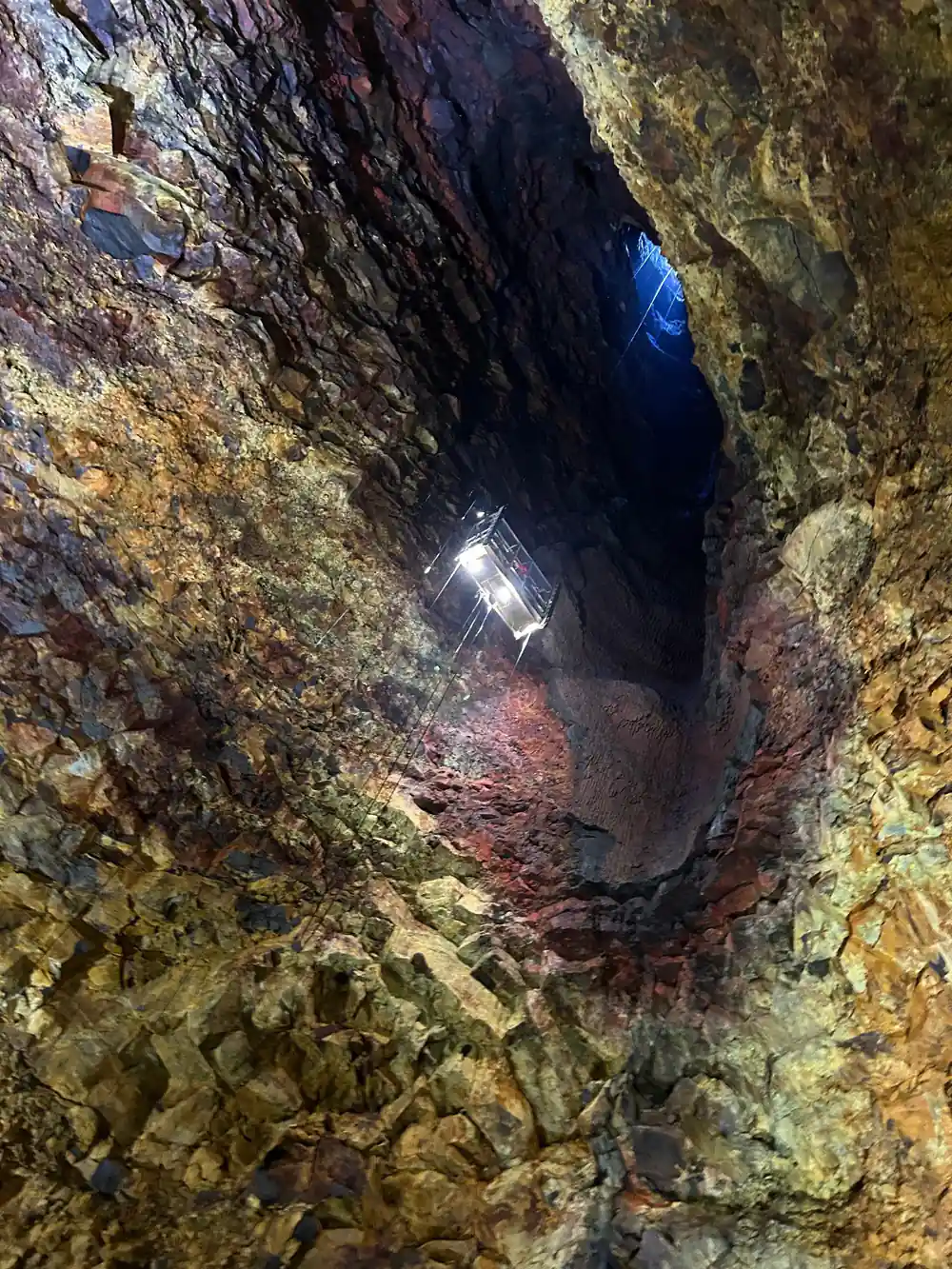
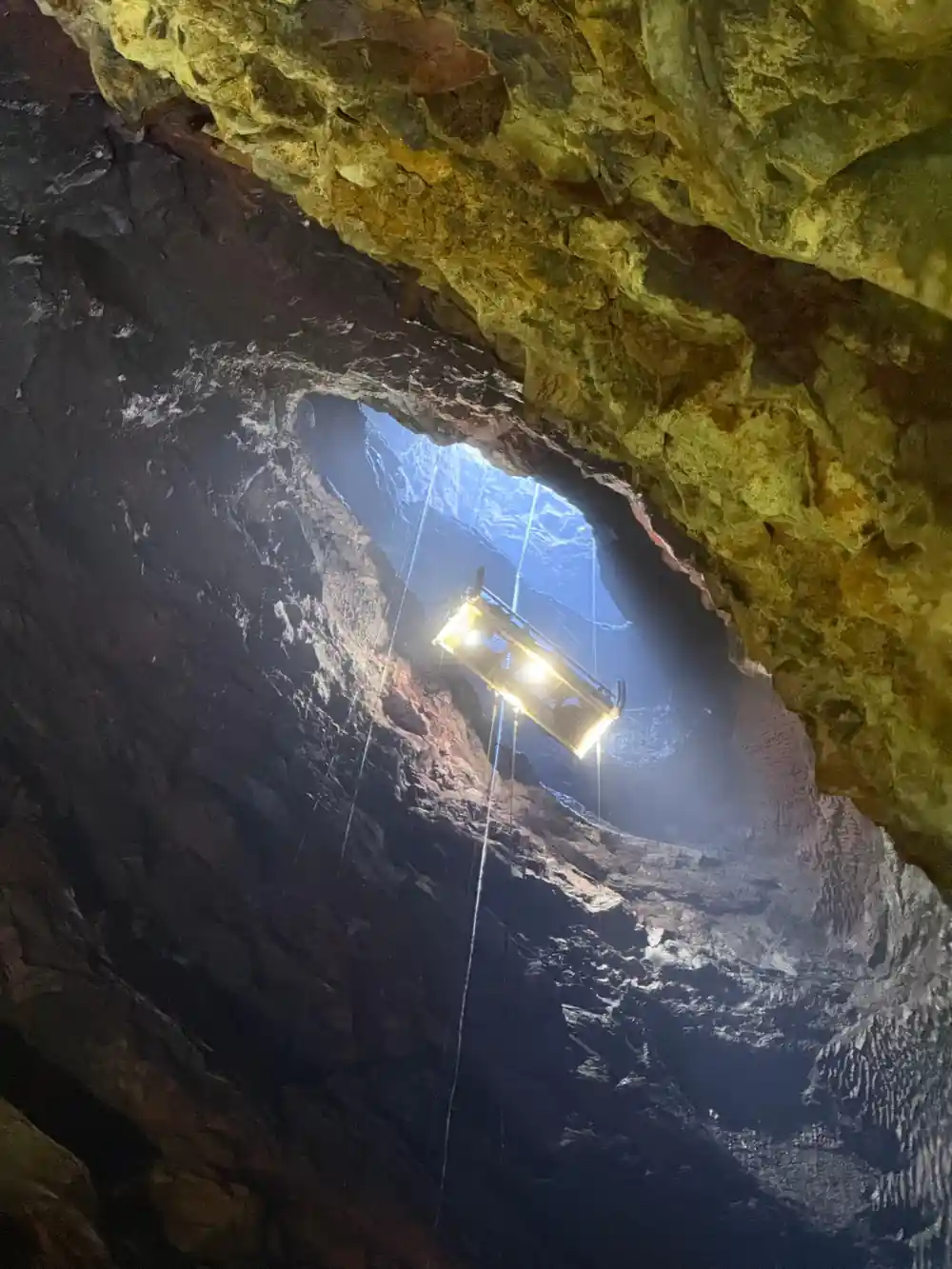
The platform hanging in the lit shaft
The first half: a shaft
The winch takes up and the deck lifts slightly, then begins to sink. For the first stretch the experience is more or less what anyone would predict: you are in a vertical passage with rock close on all sides, moving downwards at walking pace, in fading daylight.
This part is short and it is not why anyone remembers the ride. The neck of the volcano is narrow, the rock is dark and undramatic, and if the whole 120 metres were like this the tour would be a novelty rather than an experience.
What is worth noticing here is the light going. Daylight from the opening drops away quickly, and there is a stretch where neither the sky above nor the lamps below are doing much. Eyes start adjusting during it, which matters for what comes next.
The second half: the walls leave
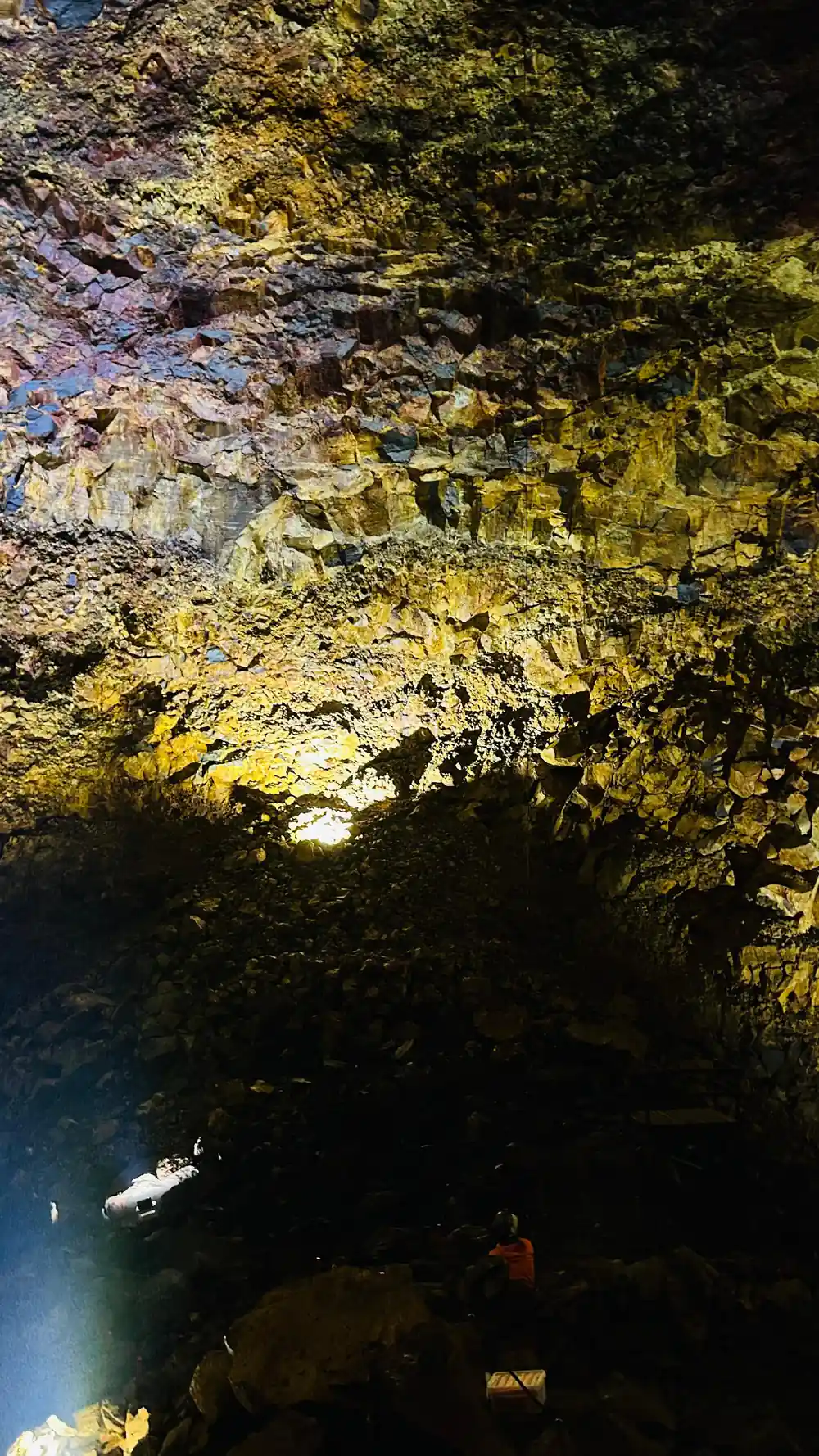
Then the rock on either side stops being where it was. The shaft opens out below its constriction and the walls swing away from the deck, and they keep going. Within a few seconds there is nothing within reach in any direction, and the deck is hanging in a space rather than travelling through a passage.
This is the part that has no equivalent above ground. Descending is a familiar sensation; descending into something that is getting bigger is not. The mind has no template for it, and people describe the same handful of reactions: gripping the rail harder, laughing, or going completely quiet.
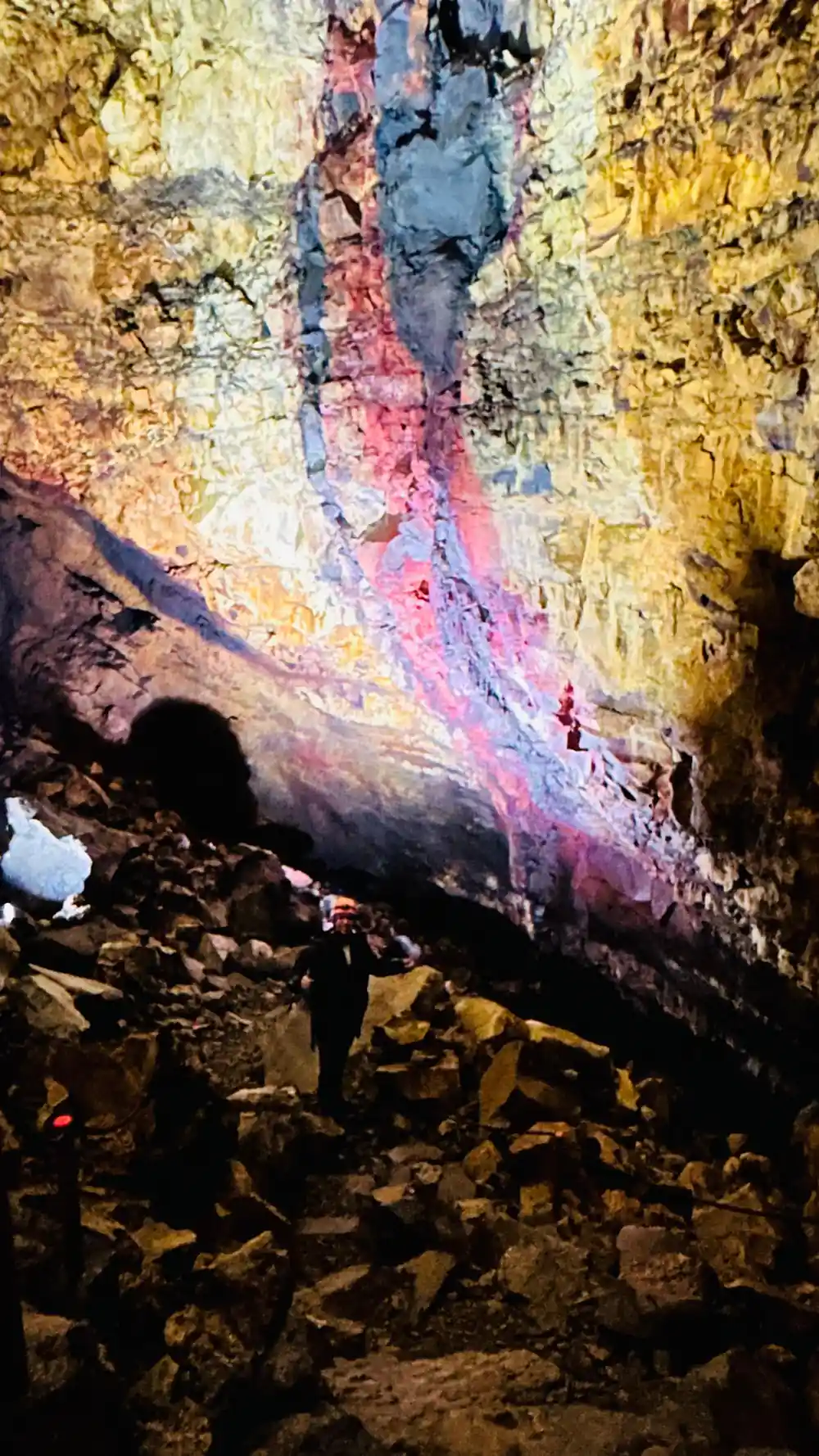
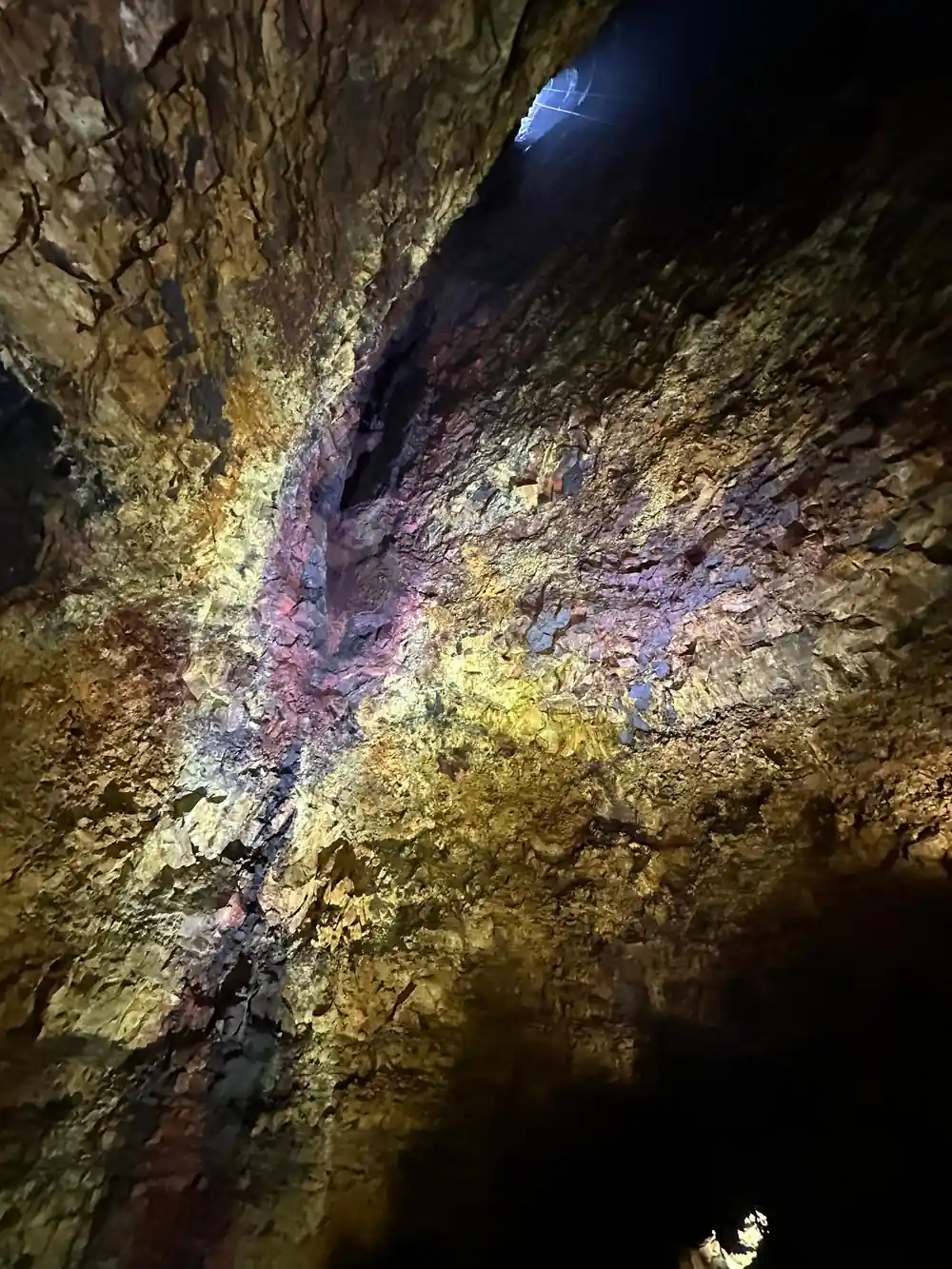
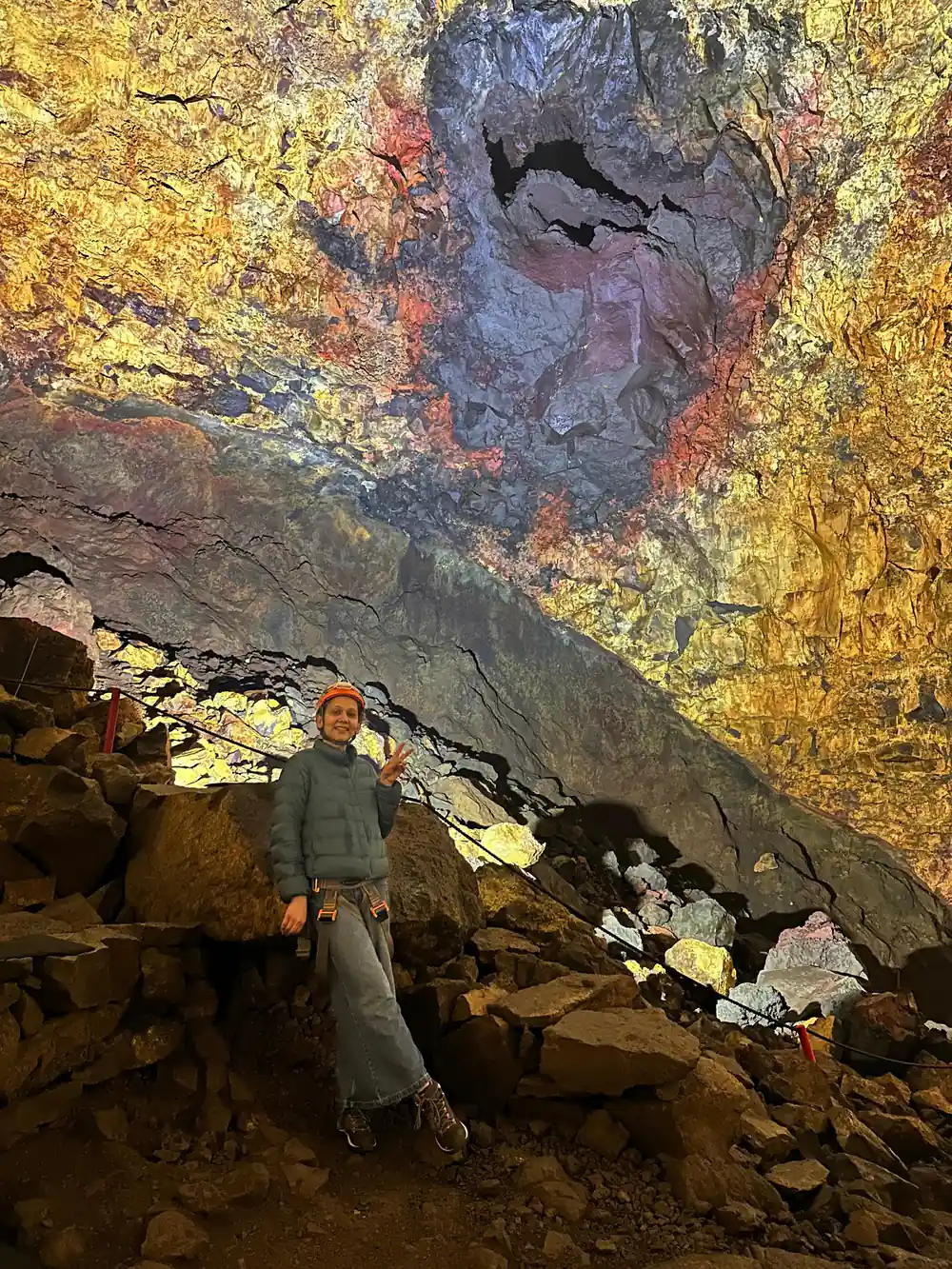
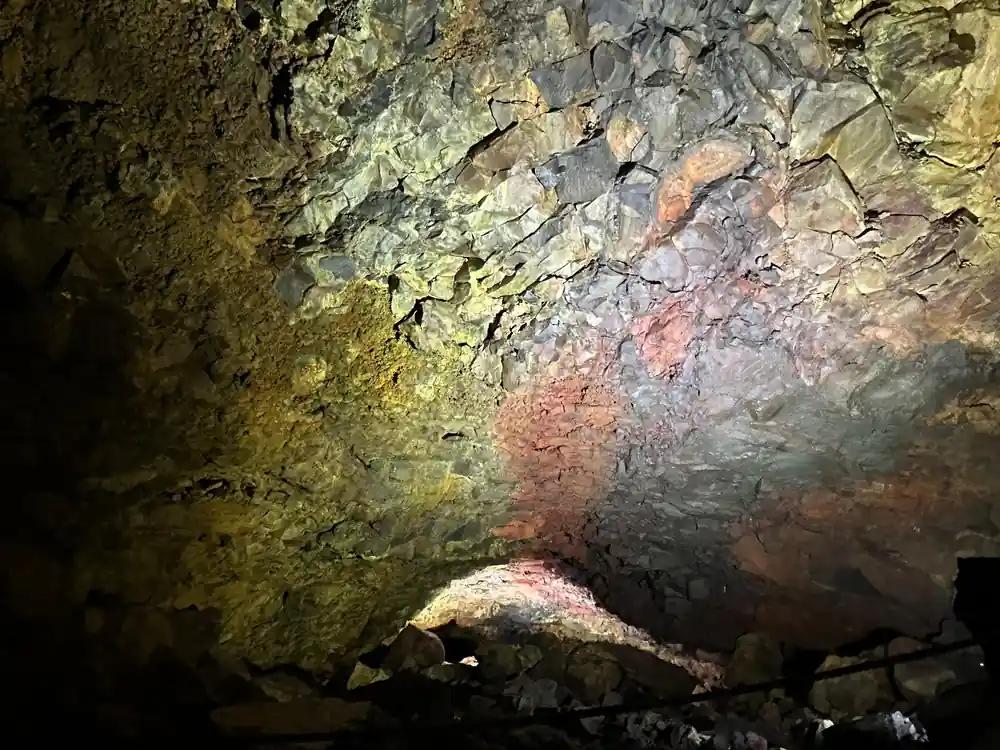
The lamps come into their own here. They are fixed to particular faces rather than spread evenly, so the chamber does not appear all at once. Sections of wall arrive out of the dark as the deck passes them and then fall behind, and the impression is of a space being revealed in instalments rather than lit.
Look up at some point in the last third. The opening you came through has become a small bright shape a long way overhead, and it is the clearest measure of the drop that the chamber offers. Photographs of it are the ones people put on the wall.
10 min
The descent, taken slowly on purpose. Eyes adjust, the guide can talk, and the transition from shaft to chamber happens slowly enough to register.
Does it swing
A little, and less than the sight of it suggests. A loaded deck on a cable is heavy and slow to move; it is not a swing. There is some rotation, which is more noticeable than lateral motion and is arguably an advantage, since it hands you the whole circumference over the course of the descent without anybody having to shuffle.
There is no wind down there, which surprises people. The shaft is a dead-end vertical space, so the air is still from a short way below the surface, and one of the first things you lose on the way down is the noise of moving air.
The winch is audible throughout and is the loudest thing in the chamber. It is a mechanical, unglamorous sound and it is oddly reassuring, in the way that hearing an aircraft's engines is reassuring.
Arriving
The deck comes down onto the rubble slope and stops. You step off onto loose rock, in the dark, at the bottom of a space you cannot see the top of, and the guide leads the party clear so the deck can go back up for the next four or five.
That is the point at which most people turn round and look up properly for the first time. It is also when the cold registers, because you have stopped moving and there is no sun.
The deck will come and go several times while you are down there, ferrying the rest of the group. It is worth watching once from the floor: seeing the thing you arrived on shrink into the shaft with somebody else aboard is the best sense of scale available anywhere in the chamber.
Five at a time, ten minutes each way
from US$432Reserve now & pay later