If you read nothing else
- Rough walls and a broken floor absorb sound instead of returning it.
- Nothing here was made by water, and no water is arriving.
- A dead-end vertical space. The air stops moving a short way down.
- And between trips there is a quiet most people have never heard.
The thing every account mentions
Read enough first-hand descriptions of this place and a pattern appears. People describe the colours, which are photographable. They describe the scale, which is photographable. And then, almost always, they describe the silence, which is not.
It is the strongest impression the chamber makes that no image has ever carried, which is a good reason to write it down. It is also, unusually for a sensory claim, explicable.
The short version: this is a large underground space that behaves acoustically like a small padded one, and every expectation you bring from films, caves and cathedrals is wrong.
Why there is no echo
An echo needs a surface that reflects sound rather than absorbing it, and geometry that sends the reflection back at you. Cathedrals have both: hard flat stone, parallel walls, a long reverberation. Show caves often have both too, which is why they sound the way people expect.
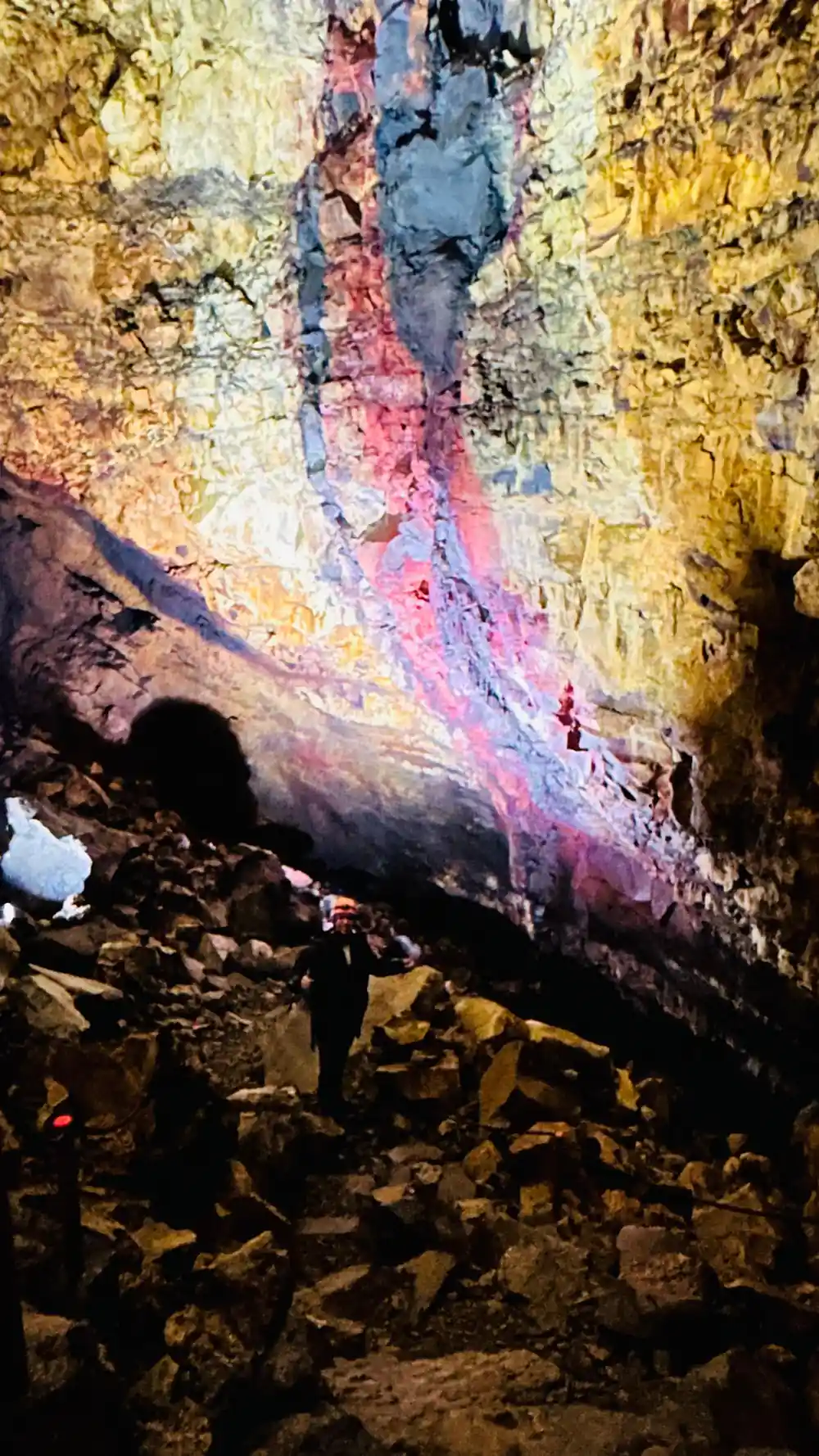
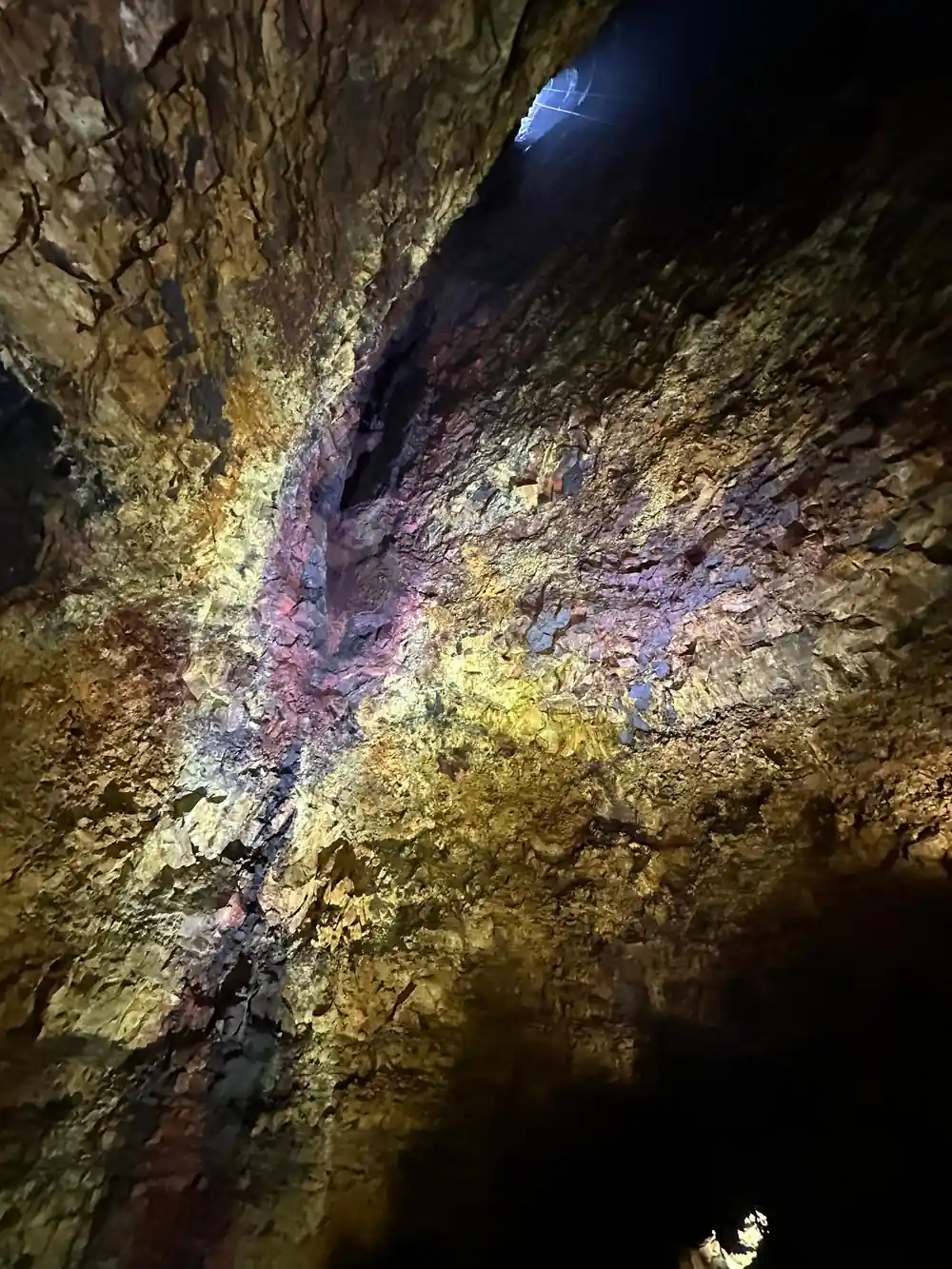
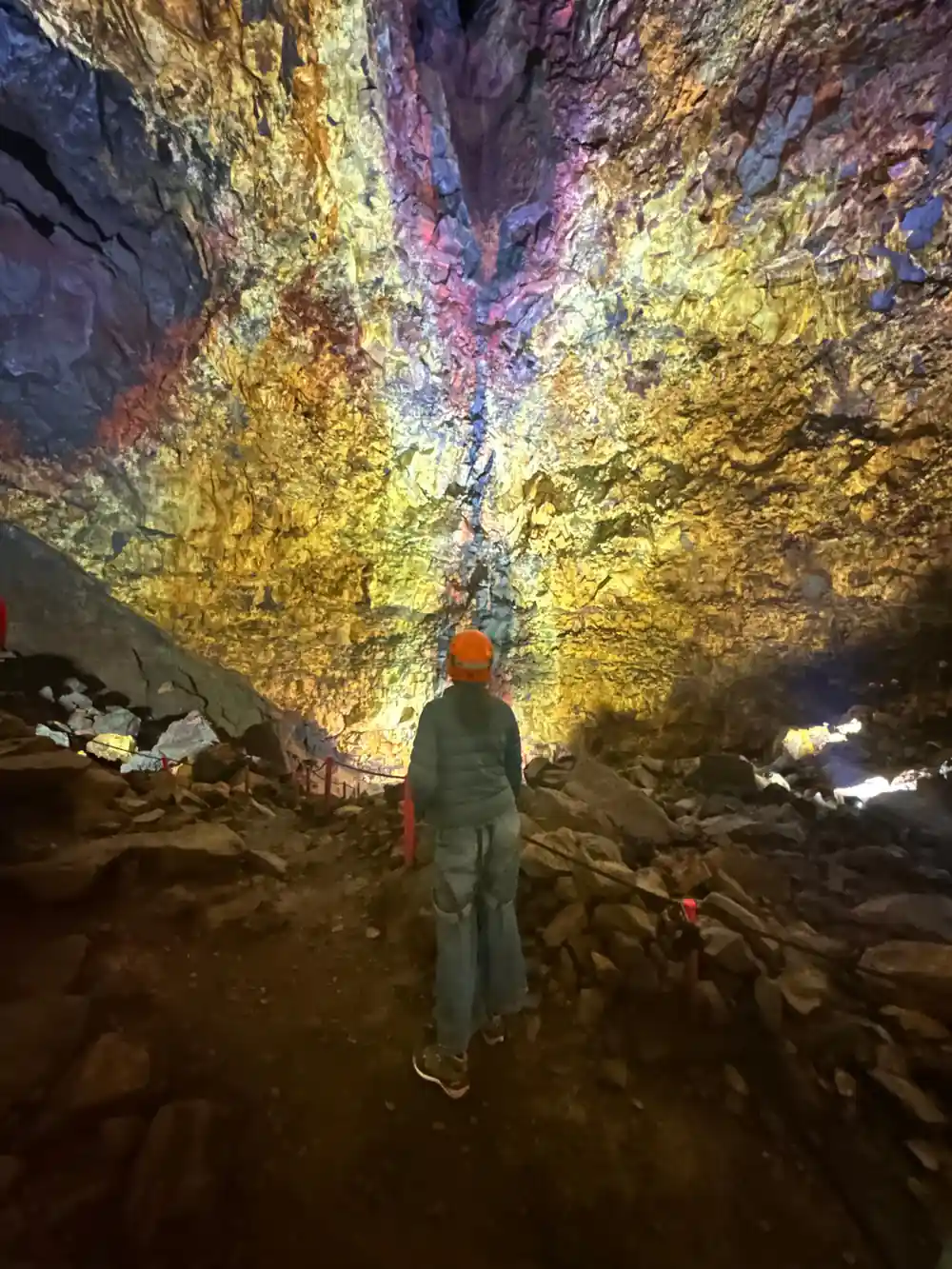
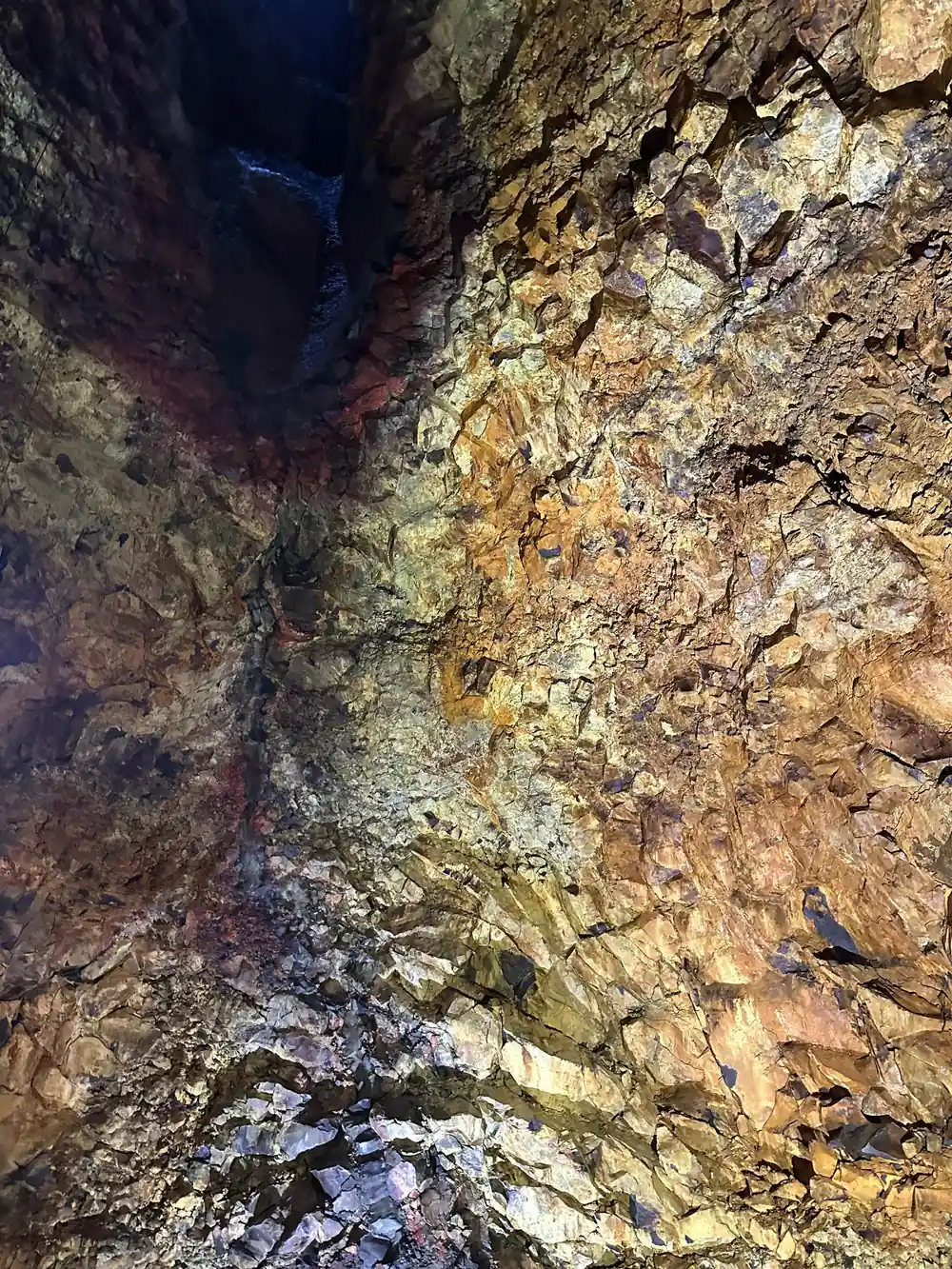
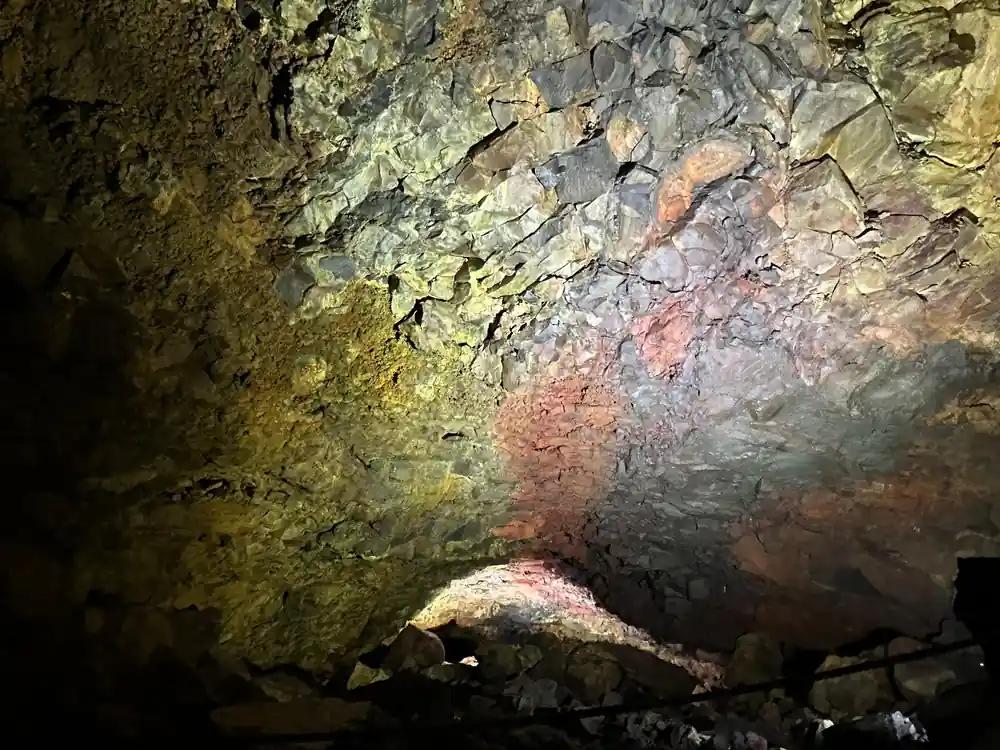
This chamber has neither. The walls are extremely rough at every scale, from metre-sized bulges and ledges down to a surface texture that is closer to clinker than to dressed stone. Rough surfaces scatter sound in all directions instead of returning it coherently, and each scattering loses energy.
The floor makes it worse, or better depending on what you want. It is a slope of loose angular rubble with air gaps throughout, which is very close to the way an acoustic absorber is constructed. A broken pile of rock is an excellent way to make a noise stop existing.
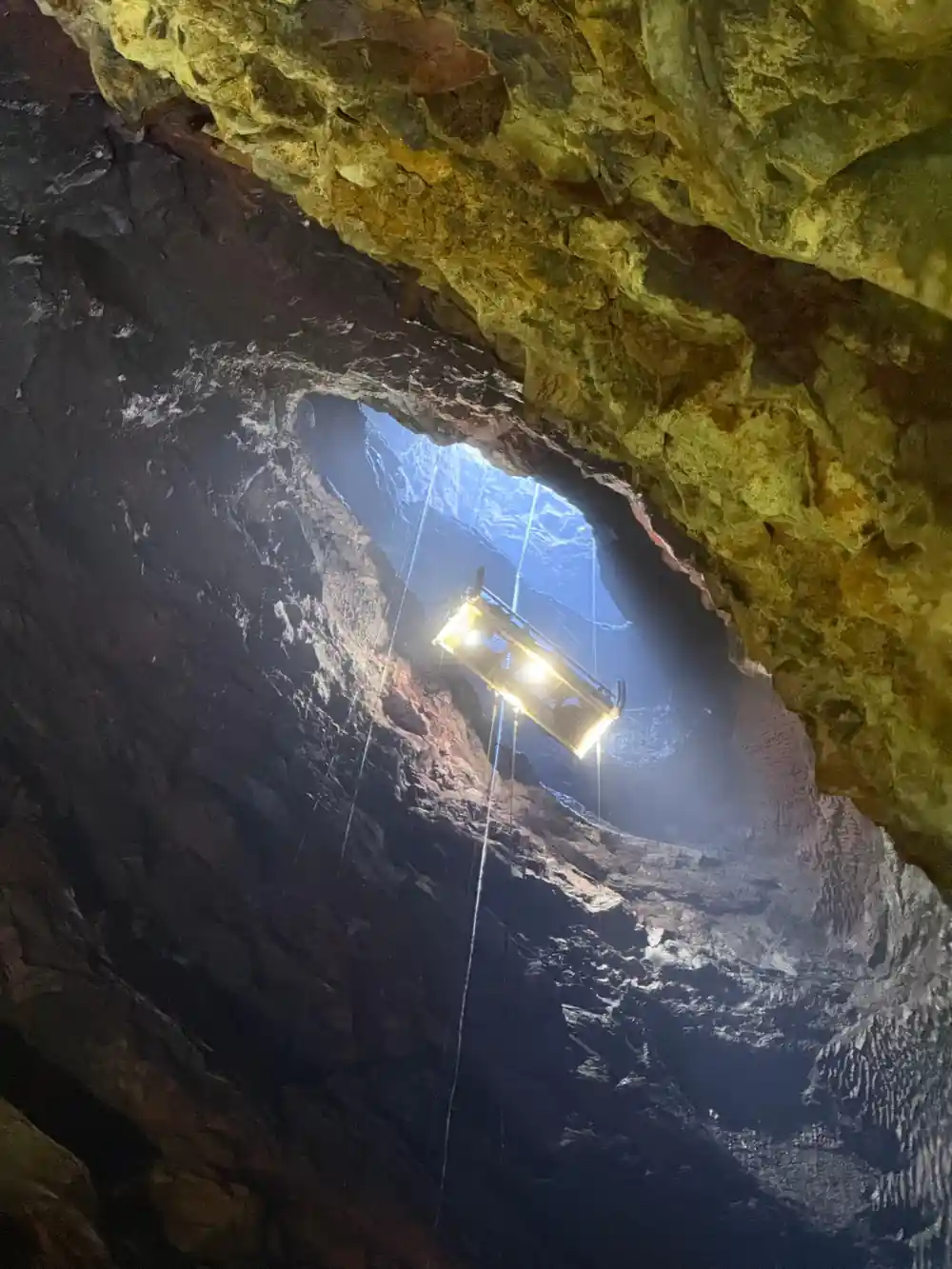
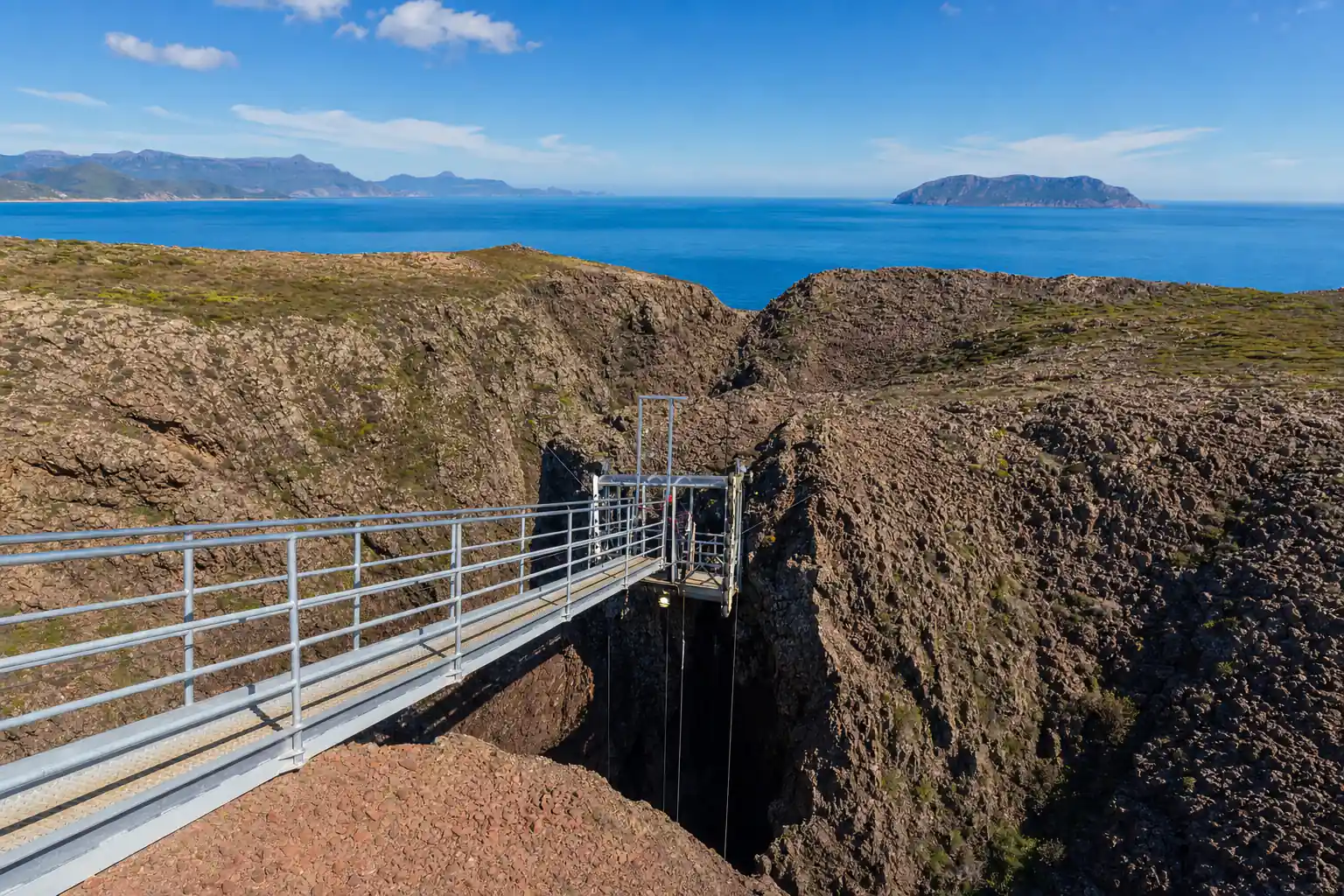
And the shape works against reverberation too. There are no parallel surfaces to bounce sound between, and the one direction with any distance to it is upward, into a shaft that acts as a chimney for whatever manages to get up there.
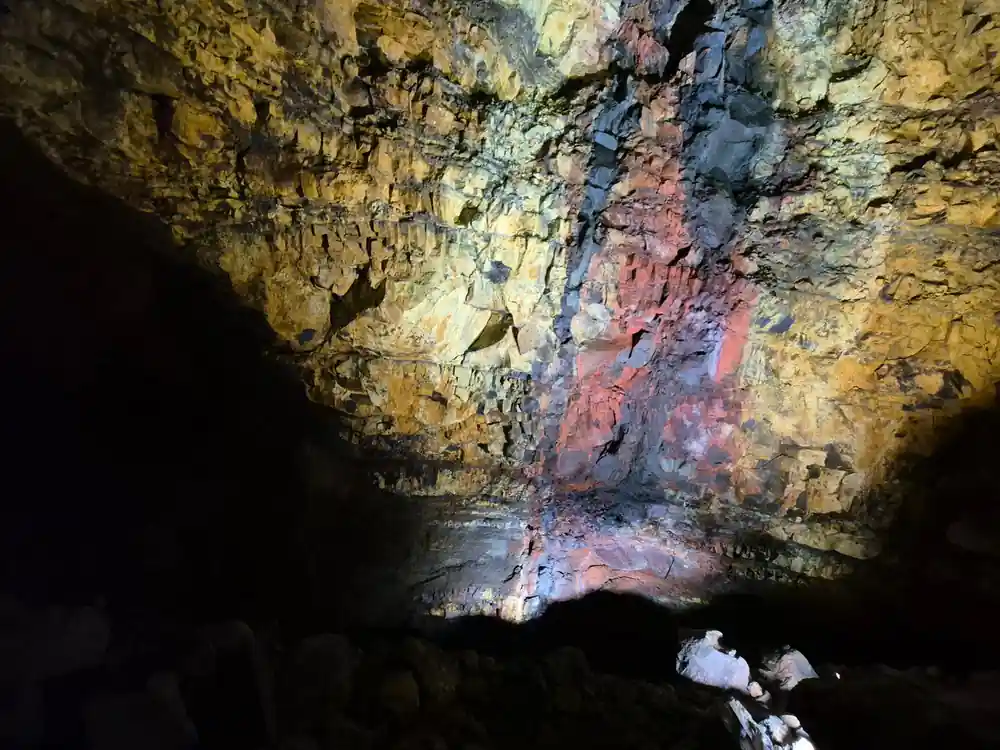
The shaft from the floor, the entrance a small bright point
What that feels like
Voices sound close and slightly flat, as if the person is standing nearer than they are. There is no bloom on them and nothing comes back. Speaking normally at a distance of twenty metres does not really work; the sound arrives thin.
A shout does not travel the way you would expect it to. People try it and are quietly disappointed, and the disappointment is itself informative about how strongly we expect a big underground room to ring.
The overall effect is a kind of acoustic deadness that most people have only experienced in a recording studio, applied to a space over a hundred metres tall. It is genuinely disorientating for the first few minutes, because the ears are reporting a small room and the eyes are reporting an enormous one.
The things that are not there
No dripping. This is the one that catches people who have been in limestone caves, where water is both the architect and the permanent soundtrack. Nothing here was dissolved out by water; the space was made by molten rock leaving, and there is no groundwater system feeding the ceiling. The chamber is dry and silent rather than wet and ticking.
No wind. Above ground, Iceland is rarely quiet, because there is almost always air moving over open country and you stop noticing it until it goes. It goes about thirty metres down. The shaft is a dead end, so there is nothing to drive a draught, and the disappearance of wind noise is one of the first things the descent takes away.
No traffic, no aircraft, no machinery. A hundred and twenty metres of rock is a superb sound barrier, and the surface world becomes completely inaudible.
No echo
Rough walls scatter sound instead of returning it, and a floor of loose broken rock absorbs what is left. A vast space that sounds like a small one.
What is left
The winch, which runs every few minutes while the group is being ferried down and up. It is a plain mechanical sound, and in a space this dead it arrives without much reverberation, which makes it seem closer than it is. Most people find it reassuring rather than intrusive.
Boots on loose rock, which is the dominant sound while anyone is moving, and which is unusually crisp because there is no reverberation to smear it.
Voices, close and flat. And then, between trips, when nobody is walking and the winch has stopped, a silence that a fair number of visitors describe as the single most memorable thing about the day. It is not the absence of loud noise; it is the absence of everything, including the low background hum that exists everywhere on the surface and that you have never once noticed.
Worth doing deliberately
If there is one piece of advice on this page, it is to spend two of your sixty minutes standing still and not talking. It is a small thing and almost nobody does it, because a group of five that has just been lowered into a volcano has a good deal to say to each other.
Pick a moment when the winch is at the top and the party is spread out. Stop walking. The chamber will do something that no photograph of it has ever managed, and it lasts about as long as you let it.
Then go back to talking, because the guides are the other thing worth using down there and they are considerably more informative than the quiet.
The part no photograph carries
from US$432Reserve now & pay later