If you read nothing else
- Icelandic meat soup, with a vegetarian version for anyone who wants one.
- Coffee, tea and chocolate. Also included.
- Warm, plain, with toilets and somewhere to put a bag.
- After the chamber, and before anything else about the day.
What kjotsupa is
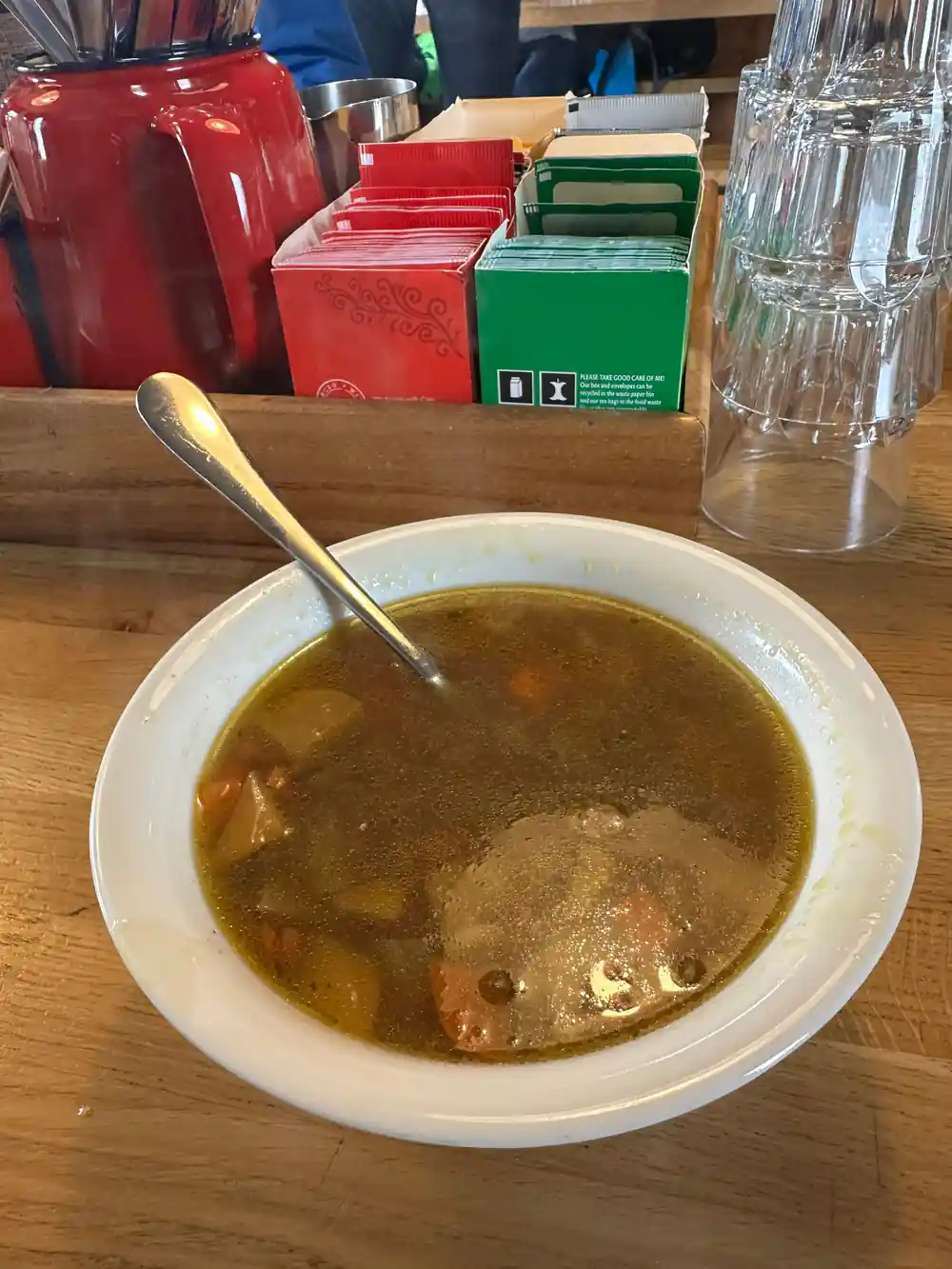
Icelandic meat soup is one of the plainest dishes in European cooking and one of the most reliable. Lamb, on the bone or off it, simmered with root vegetables - swede, carrot, potato - and often a little rice or oats to thicken, in a thin clear broth with almost nothing in the way of seasoning beyond salt and the lamb itself.
It is not a stew and it is not trying to be. There is no browning, no wine, no herbs to speak of, and the result is a broad, mild, slightly sweet broth with soft vegetables and lamb that has given up everything it had to the liquid.
It is the food of a country that historically had lamb, root vegetables and not much else, cooked in the way that gets the most out of all three. Icelanders eat it constantly and it turns up at every kind of occasion, which is roughly what happens to a national dish that is genuinely good rather than merely traditional.
There is a vegetarian version for anyone who wants it, and it is a proper alternative rather than the soup with the lamb removed.
Why it lands the way it does
On paper a bowl of soup is a small thing to put at the end of a tour and hardly worth a page. In practice it is the second thing most people mention when they describe the day, after the chamber itself, and the reason is entirely about context.
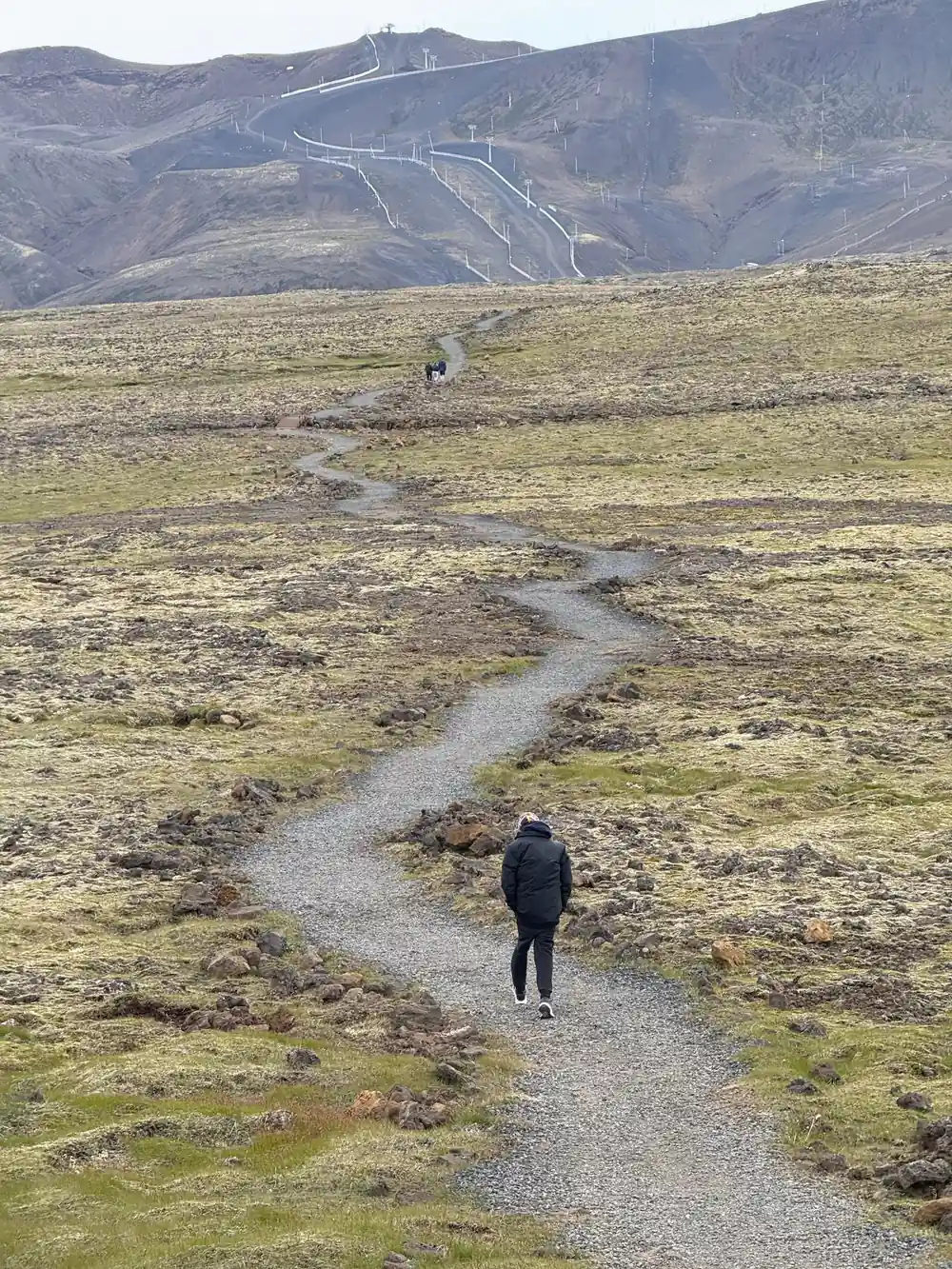
You have walked for three quarters of an hour across uneven ground in cold air, stood at an exposed crater rim for an indeterminate wait, spent an hour standing still in a space that never gets above single figures, and then walked back. By the time you reach the cabin you are tired in the specific way that cold and effort together produce, and mildly dehydrated, and hungrier than you noticed.
A hot, salty, unambitious broth is very close to the ideal response to that state. It rehydrates, it replaces salt, it is warm all the way down, and it demands nothing of a tired person. A more sophisticated dish would be worse.
There is a social effect too. The group has spent five hours in single file, in helmets, in the dark, mostly not talking. Around a table in a warm hut with bowls in front of them, they turn back into people, and the comparing of notes that follows is where a lot of the day gets processed.
Soup being ladled in the cabin kitchen
The cabin
It is a ski cabin, and it is worth adjusting expectations to that rather than to a visitor centre. There is no exhibition, no shop of any consequence, no cafe in the commercial sense. It is a mountain hut belonging to a ski area, borrowed for the season by a volcano tour.
What it has is what matters: heat, tables, a kitchen, toilets and a roof. After the plateau, those are luxuries and the absence of anything else is not felt.
It is also where the day begins. The gear fitting and the briefing happen here on arrival, so the room you eat in at the end is the room you were harnessed in at the start, and that circularity is quietly satisfying.
Practicalities
There are toilets, which is worth stating plainly because there is nothing whatsoever between the cabin and the crater and the round trip is over two hours plus a wait plus an hour underground. Use them before you set out. This is the single most useful sentence on this page.
You can leave things at the cabin. Anything you are not carrying across the lava - a bag, spare clothes, whatever you drove up in - stays there rather than coming with you.
Dietary requirements are worth mentioning when you book rather than at the counter. The vegetarian alternative is standard; anything beyond that is a question for the operator in advance, because a mountain hut is not equipped to improvise.
And if the soup is not to your taste, the hot drinks and the sweet thing are also included, and nobody minds.
Inclusions
Icelandic meat soup with a vegetarian alternative, plus coffee, tea and something sweet, at the cabin at the end of the day.
The thing about food and memory
It is a small observation and it survives repetition. Almost every account of this tour, including the ones that complain about the walk or the weather, mentions the soup with affection.
Part of that is the physiology above. Part of it is that the day is otherwise sensory in ways that are hard to hold onto - dark, silence, scale, cold - and a bowl of hot broth is the one entirely ordinary experience in six hours of unusual ones. It gives the memory something to anchor to.
Whatever the mechanism, the operator has evidently worked out that a hot meal at the end of a cold day repays the trouble of making it, which is a more thoughtful piece of tour design than the phrase soup included suggests.
Included, hot, and better than it sounds
from US$432Reserve now & pay later