If you read nothing else
- Not the descent. Forty-five minutes over broken lava catches people out.
- Photographs make it look like a cave. It is not shaped like one.
- A volcano ought to be warm. This one stopped being warm in the Bronze Age.
- An hour spent photographing is an hour spent not seeing.
The walk, which is the commonest complaint
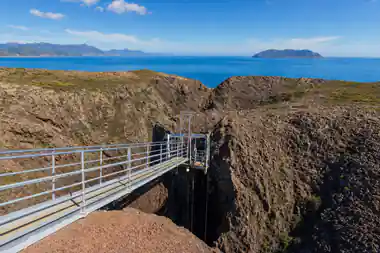
Ask people what they would tell a friend and the walk comes up before anything else, usually with mild indignation. It is 45 to 50 minutes each way, and the surprise is not the duration but the surface.
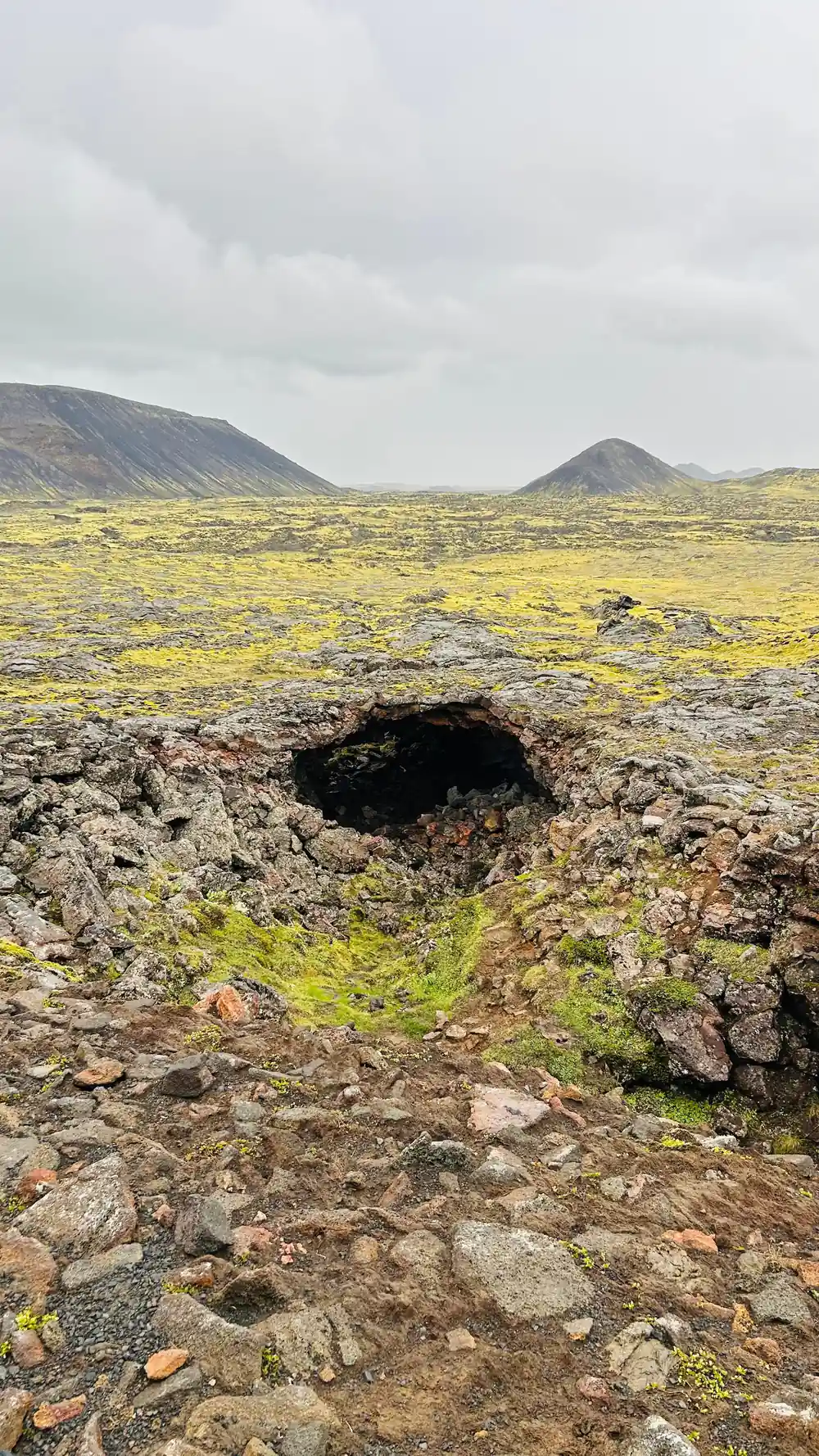
The operator is explicit about this in advance and people still get caught, because a photograph of a mossy green plain reads as a meadow. It is not a meadow. It is a broken lava flow with a soft continuous blanket over it, so the ground looks even and is not, and every step is very slightly different from the last one.
That is tiring in a way that flat walking is not, and it is unkind to trainers. The people who report the walk as fine are almost uniformly the people who wore boots.
Nobody who has done it describes it as difficult, and nobody describes it as the pleasant stroll they had pictured. Somewhere between those is accurate.
The scale, in the other direction
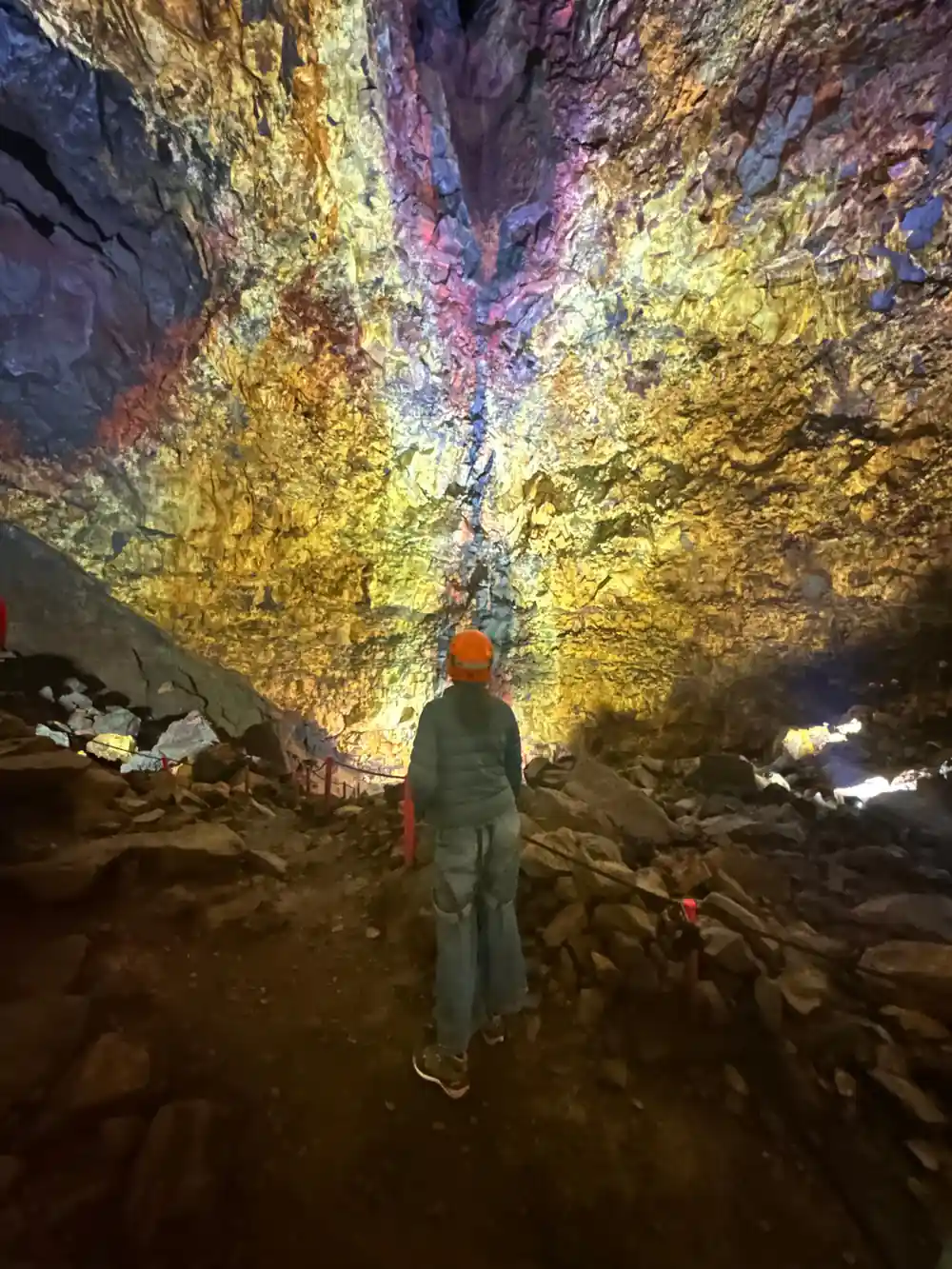
The reverse surprise, and much more welcome. People arrive with an idea assembled from photographs, and photographs of this chamber consistently under-sell it.
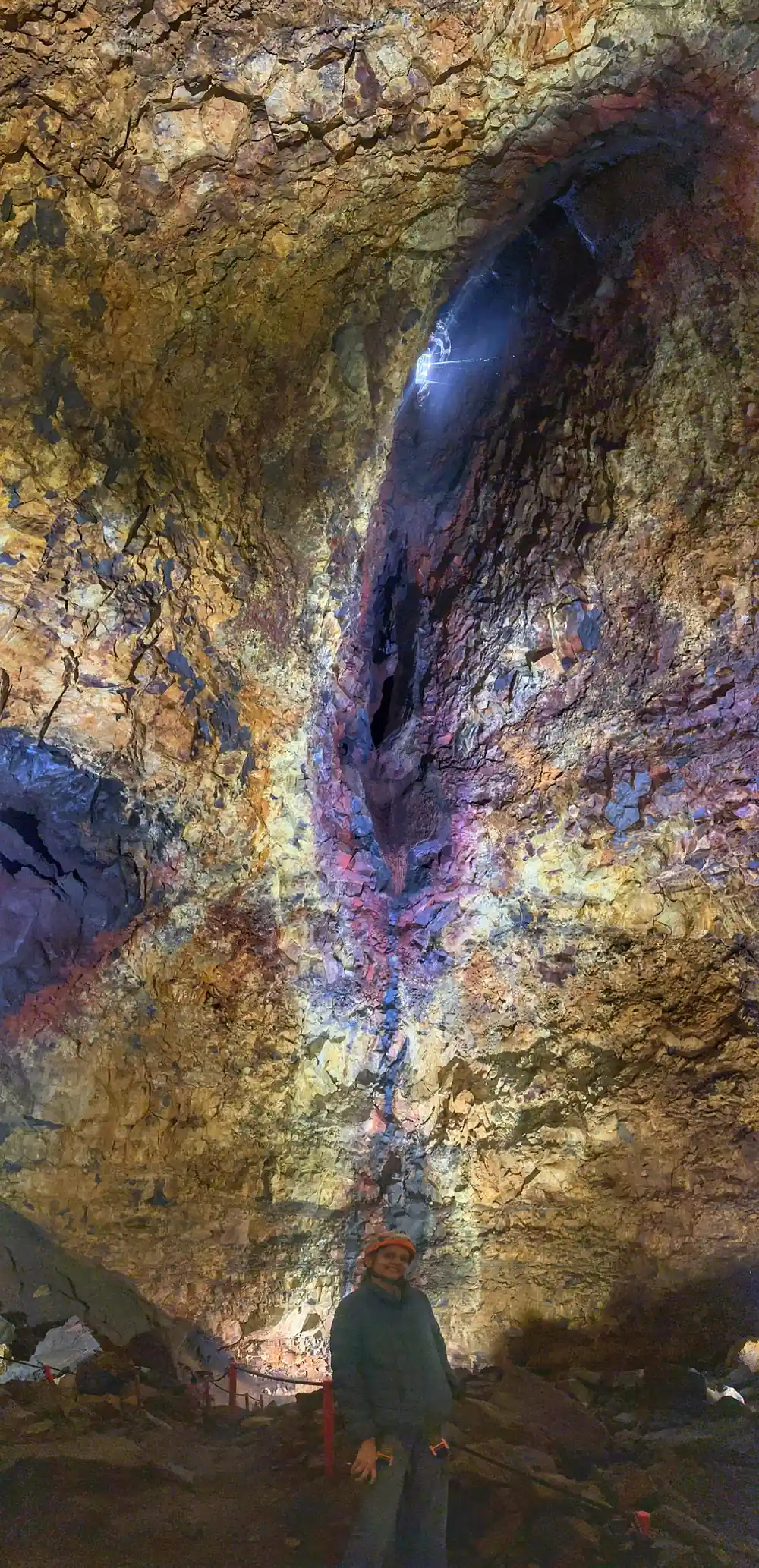
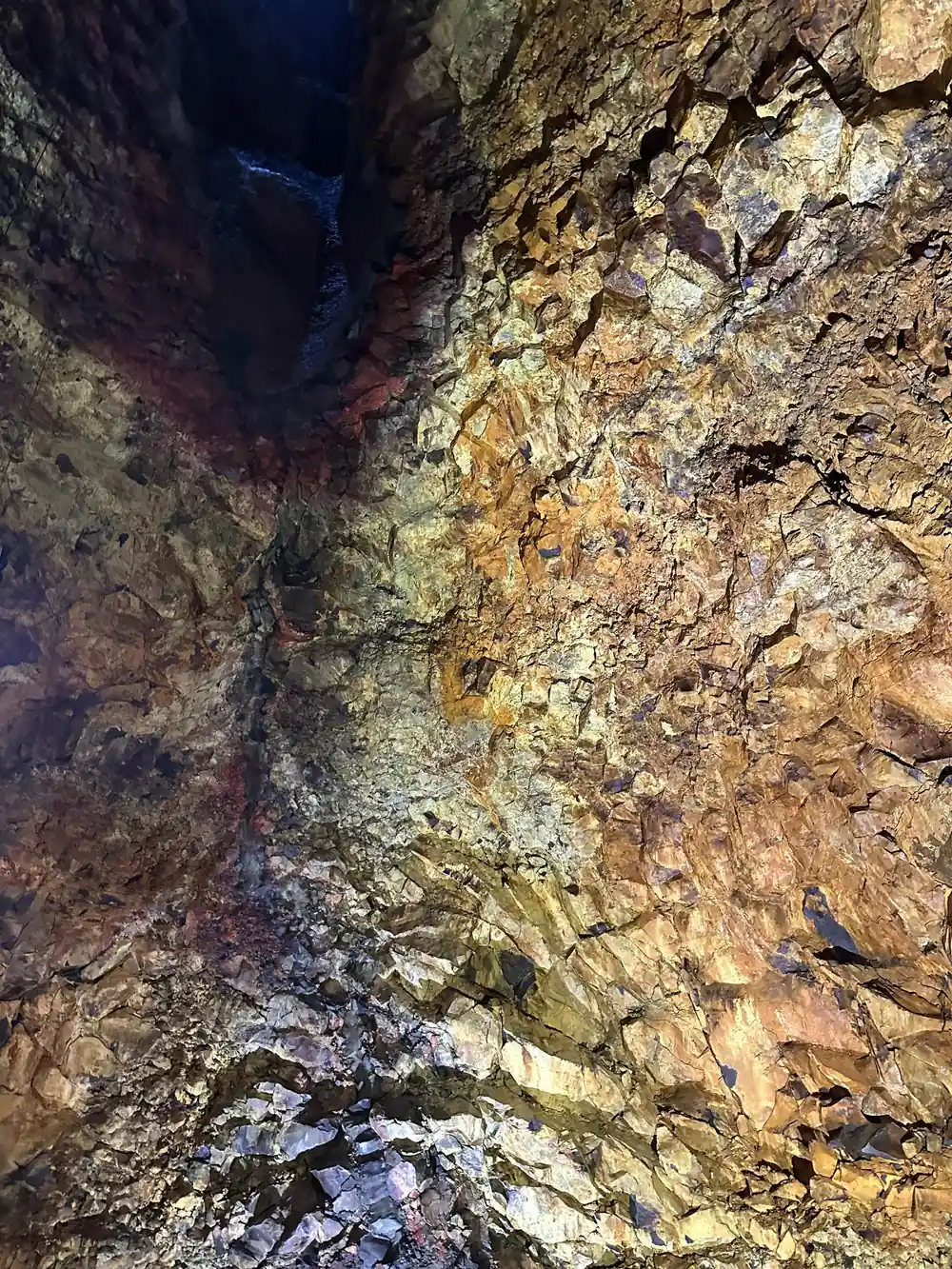
The reason is that a photograph of a lit rock wall reads as a cave, because that is what caves look like in pictures. The information that would tell you otherwise - the distance to the far side, the height of the roof, the fact that there is no far side in the direction you are looking - is exactly the information a two-dimensional image of a partly lit space cannot carry.
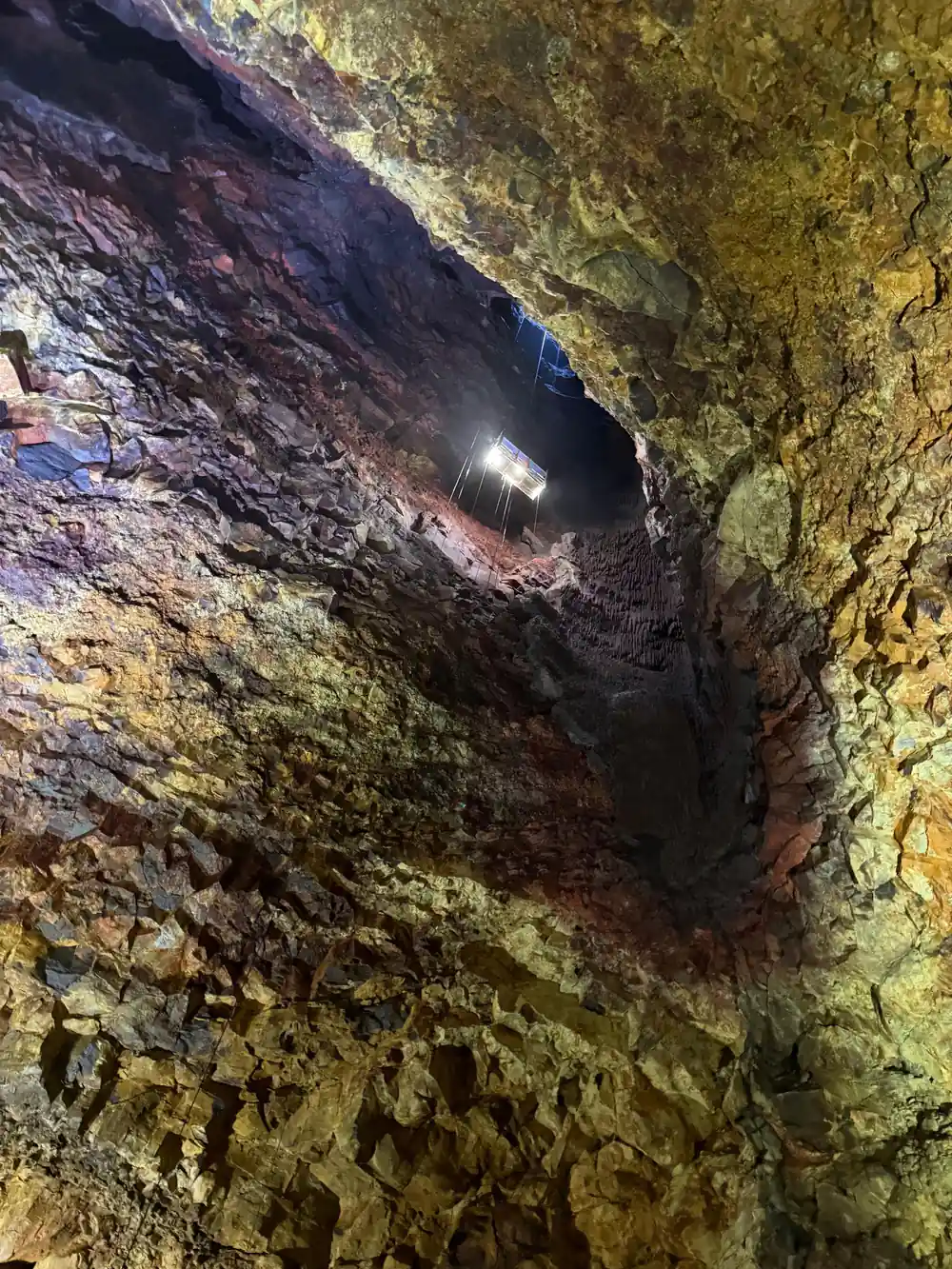
So the standard reaction on stepping off the platform is a recalibration. It is bigger. It is much bigger. And the shape is wrong for a cave: the walls lean outwards rather than closing in, which is the visual signature of a space that was full of something and then was not.
This is the one thing on the tour that reliably exceeds expectation, and it is worth arriving prepared to be surprised by it rather than trying to picture it in advance.
The cold
Almost nobody expects to be cold inside a volcano and almost everybody is. The intuition is powerful and completely wrong: whatever heat this system had, it lost four thousand years ago, and the rock now sits at the temperature of the Icelandic ground around it.
It is made worse by what you are doing. The walk out generates heat, and people arrive at the crater warm and shed a layer. Then they stand at an exposed rim waiting for a winch, and then they stand still on a debris slope for an hour looking upwards.
The fix is trivial and people still get it wrong: keep a warm layer accessible rather than packed, and put it on before you get on the platform rather than after you notice.
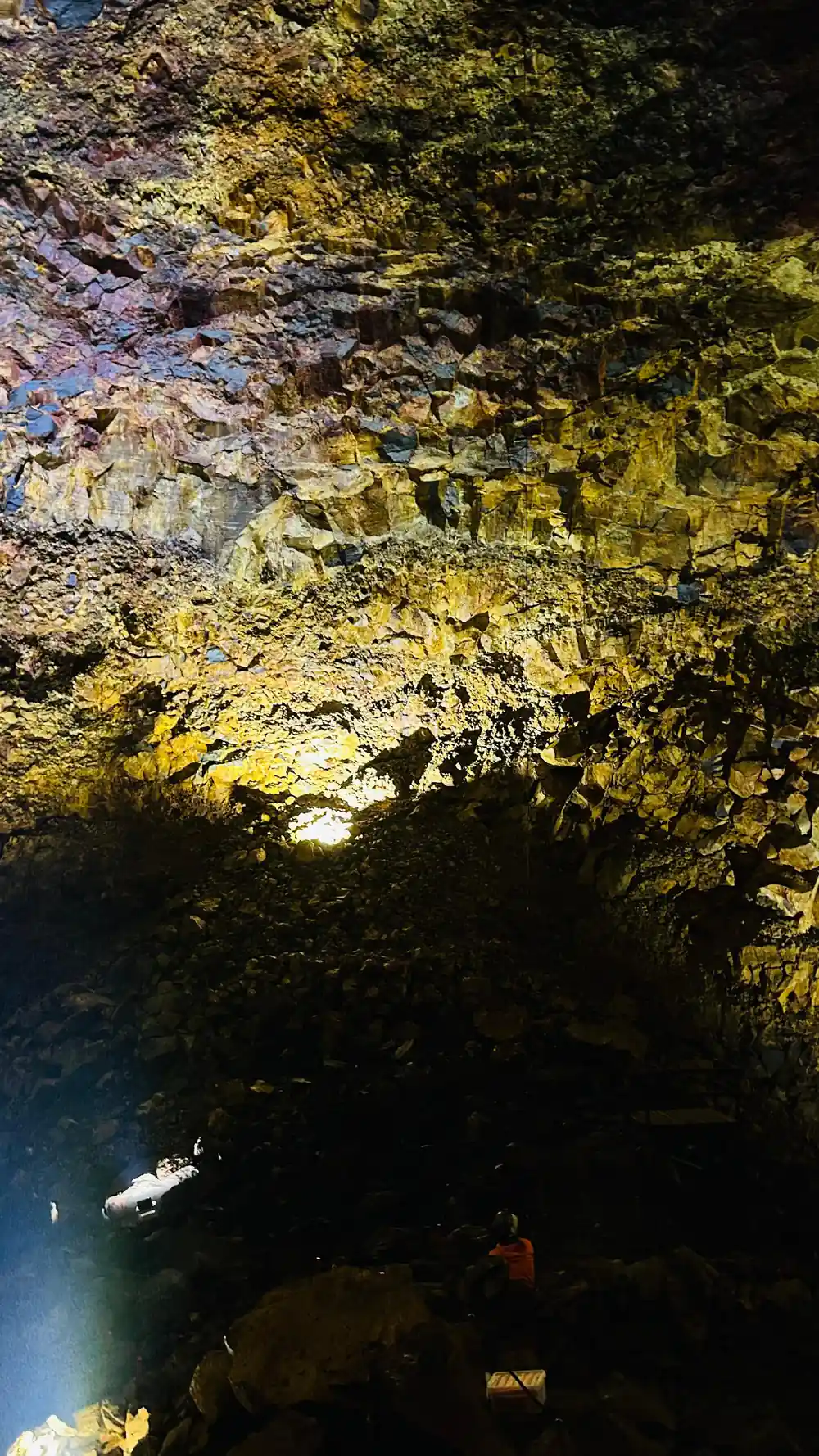
The chamber floor with the party spread across it
The silence
This one surprises people who did not know to expect it, which is nearly everyone, because it appears in no photograph and few descriptions.
The chamber has essentially no echo. Rough walls and a floor of loose broken rock absorb sound rather than returning it, so a vast space sounds like a small one. There is no dripping, because nothing here was made by water. There is no wind, because the shaft is a dead end.
The result, between winch trips, is a quality of quiet that most people have simply never encountered, and a good number describe it afterwards as the strongest impression of the day. It is also the one that fades fastest from memory, which is an argument for standing still for two minutes and paying attention while you are there.
The colours are real
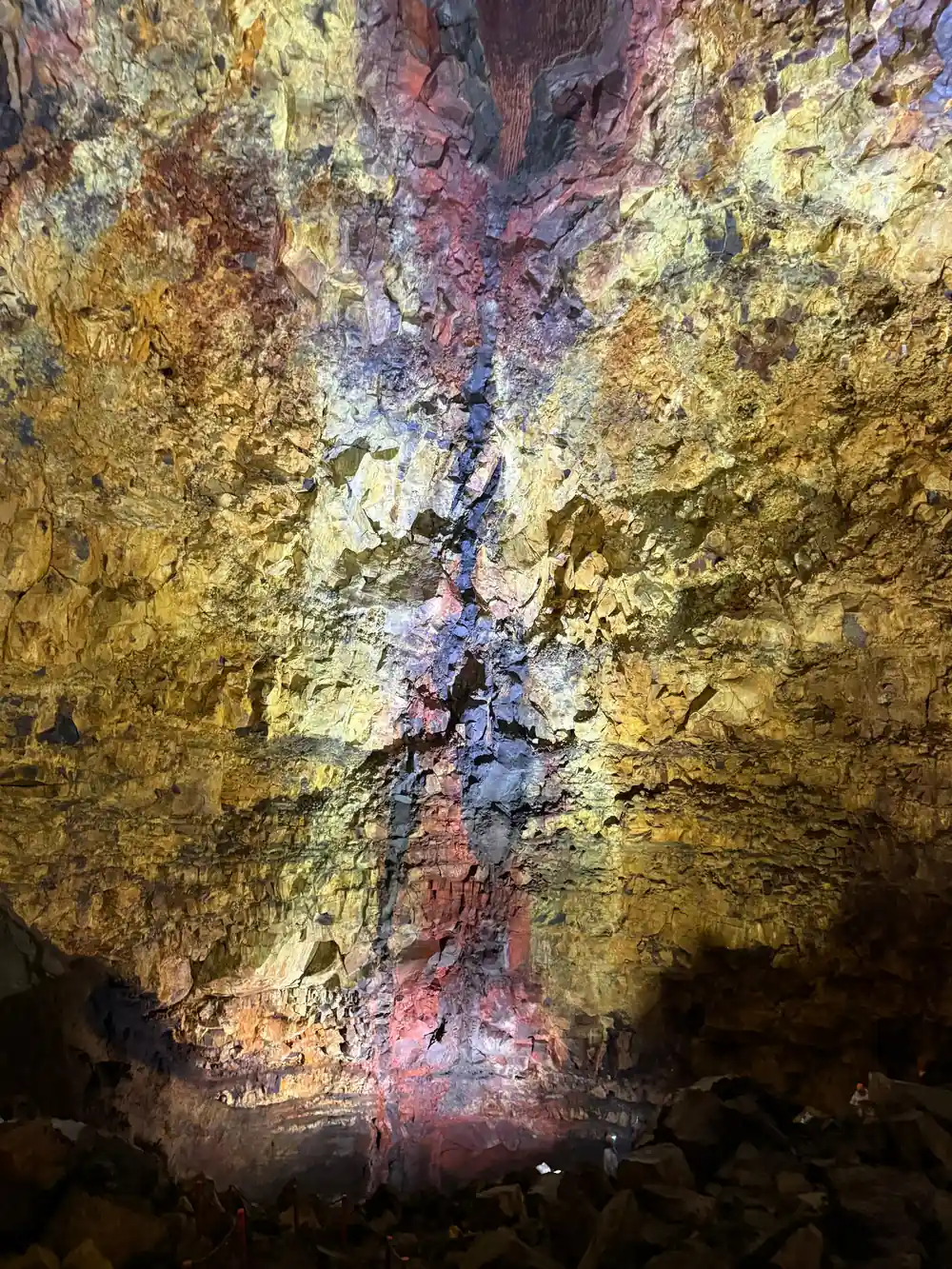
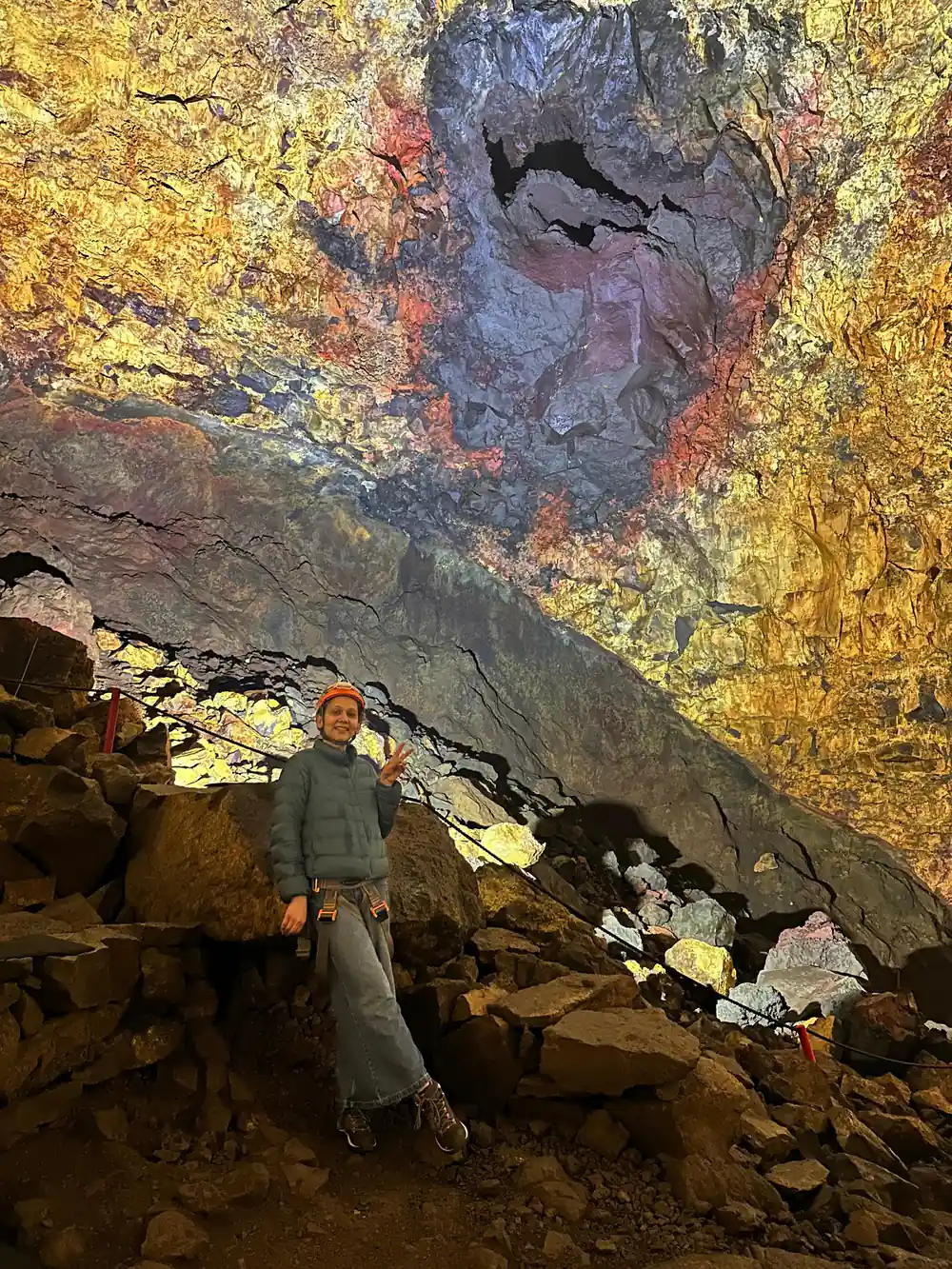
A great many people arrive quietly convinced that the photographs have been enhanced, and it is a reasonable suspicion given how the images look. They have not. The rock genuinely is red, ochre, sulphur yellow and violet.
What is true is that the chamber is lit rather than daylit, so what you see depends on where the lamps are pointed, and large areas stay dark. The colour is real and its distribution is a lighting decision.
The reverse surprise also occurs. People who have seen the most saturated photographs occasionally find the reality more muted, because the eye does not apply the contrast a camera does. Both reactions are common and both are about photography rather than about rock.
What people would do differently
The regret that comes up most often is the phone. An hour is not long, adapted vision takes most of it to develop, and every glance at a bright screen resets the process. People come up with forty photographs and a vaguer memory than the person beside them who took four.
Second is footwear, covered above and entirely avoidable.
Third is the layer left in the car, also entirely avoidable.
Fourth, and more interesting, is not asking the guides anything. There is a guide with every party of five for the whole hour, they have been down hundreds of times, and they know what every surface in the chamber is. That is an unusually good ratio for a site of this scientific interest, and a significant number of visitors spend the hour photographing rock and never once ask what they are photographing.
What nobody regrets
Going. Including the people who complain about the walk, the wait and the weather, which is most of them.
The reason is simple enough and is worth stating plainly at the end of a page full of caveats. There is one drained magma chamber on earth with a way of putting visitors inside it. Everything awkward about this day follows from that being true and from the operator's determination to keep it intact.
Six hours is a lot for one, and the one has no substitute anywhere.
Boots, a spare layer, and put the phone away
from US$432Reserve now & pay later