If you read nothing else
- Some faces are lit and the rest is black. Every exposure is a choice about what to lose.
- The camera averages a scene that has no average.
- It reaches nothing and flattens whatever it does reach.
- Without one the scale disappears completely.
Why the pictures you have seen disagree
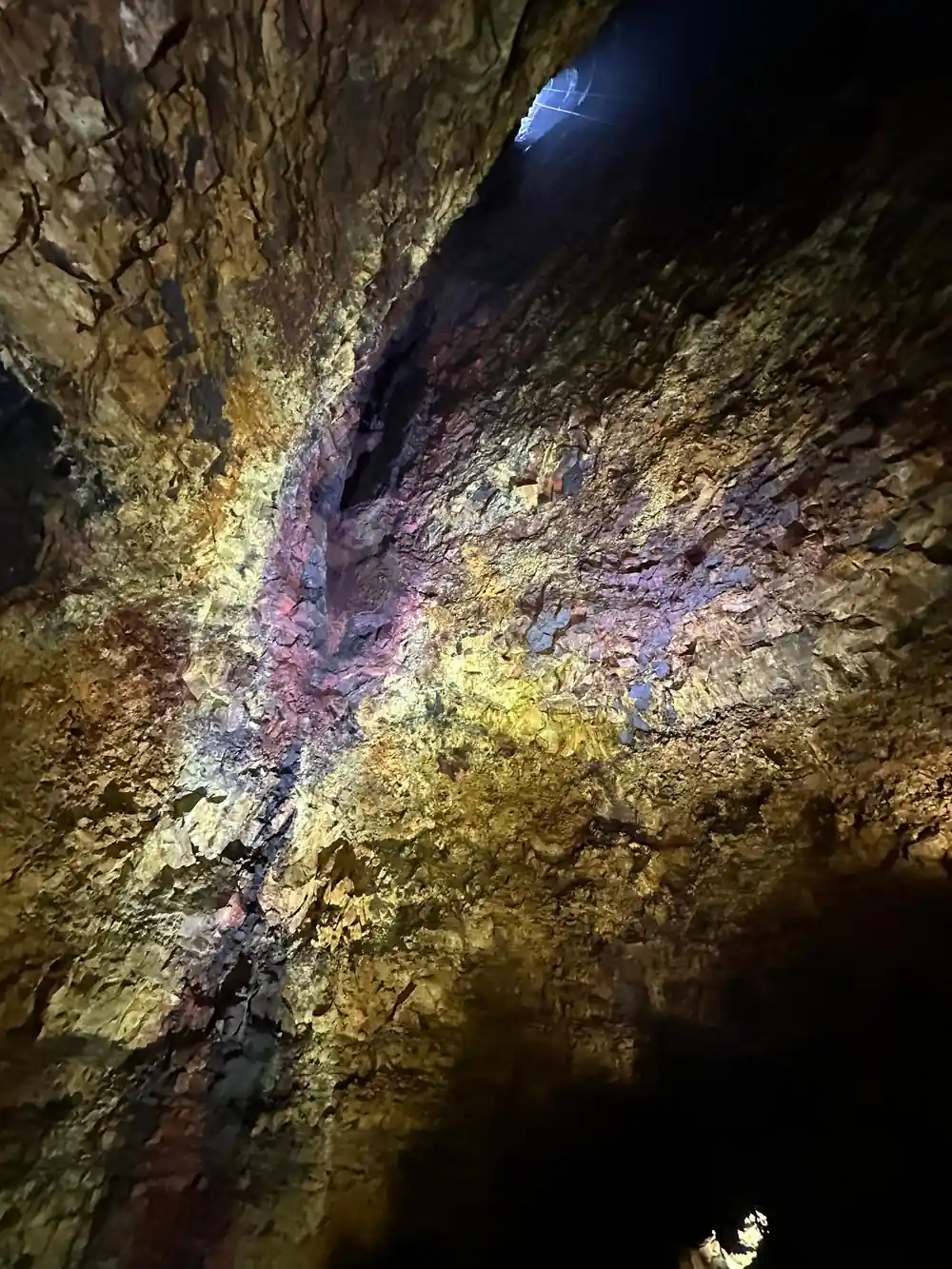
Look at twenty photographs of this chamber and they will not appear to be of the same place. Some are golden and detailed with black surrounds; some are dim and even and slightly muddy; some show a vast void with one lit wall; some show a wall and no void at all.
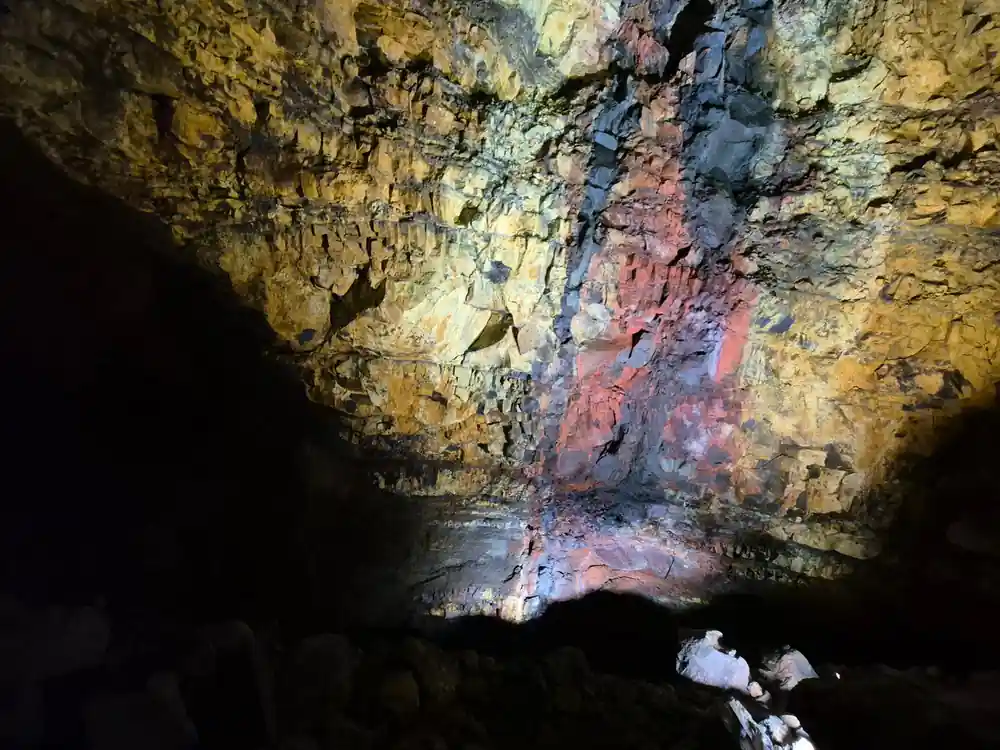
None of them is fake. The chamber is lit by a small number of lamps fixed to particular faces, and the difference between those lit faces and everything else is enormous - far beyond what any single exposure can hold.
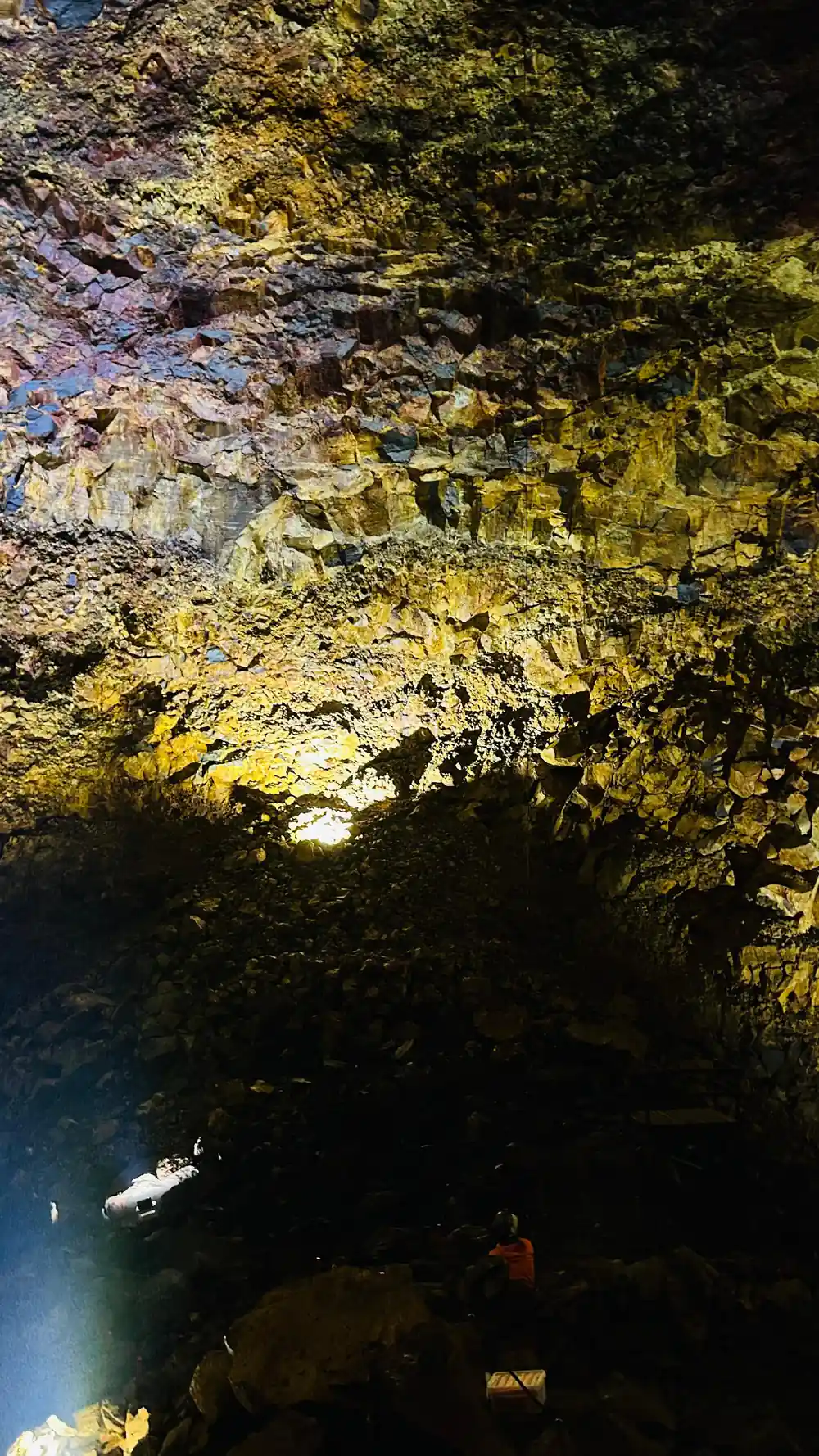
So every photograph is a decision about what to throw away. Expose for the lit wall and the chamber becomes a bright surface in blackness. Expose for the dark and the lit wall blows out to white and the whole thing flattens. There is no setting that gets both, and the eye, which is doing continuous local adaptation, is cheating in a way no camera can.
What a phone does, and why it is wrong
A phone meters the scene, notices that most of it is very dark, and does the sensible thing for most situations: it raises the exposure until the average looks reasonable. In a room where the average is meaningless, that produces a grey, noisy image with a blown-out bright patch in it.
It will also reach for a long shutter, because there is not much light, and then apply aggressive noise reduction to hide the consequences. The result is soft, smeary rock with the texture removed, which is unfortunate given that texture is what the walls are for.
Modern night modes help and produce the flat, even, slightly unreal version of the chamber you will have seen. They are a legitimate rendering and they are not what you are standing in.
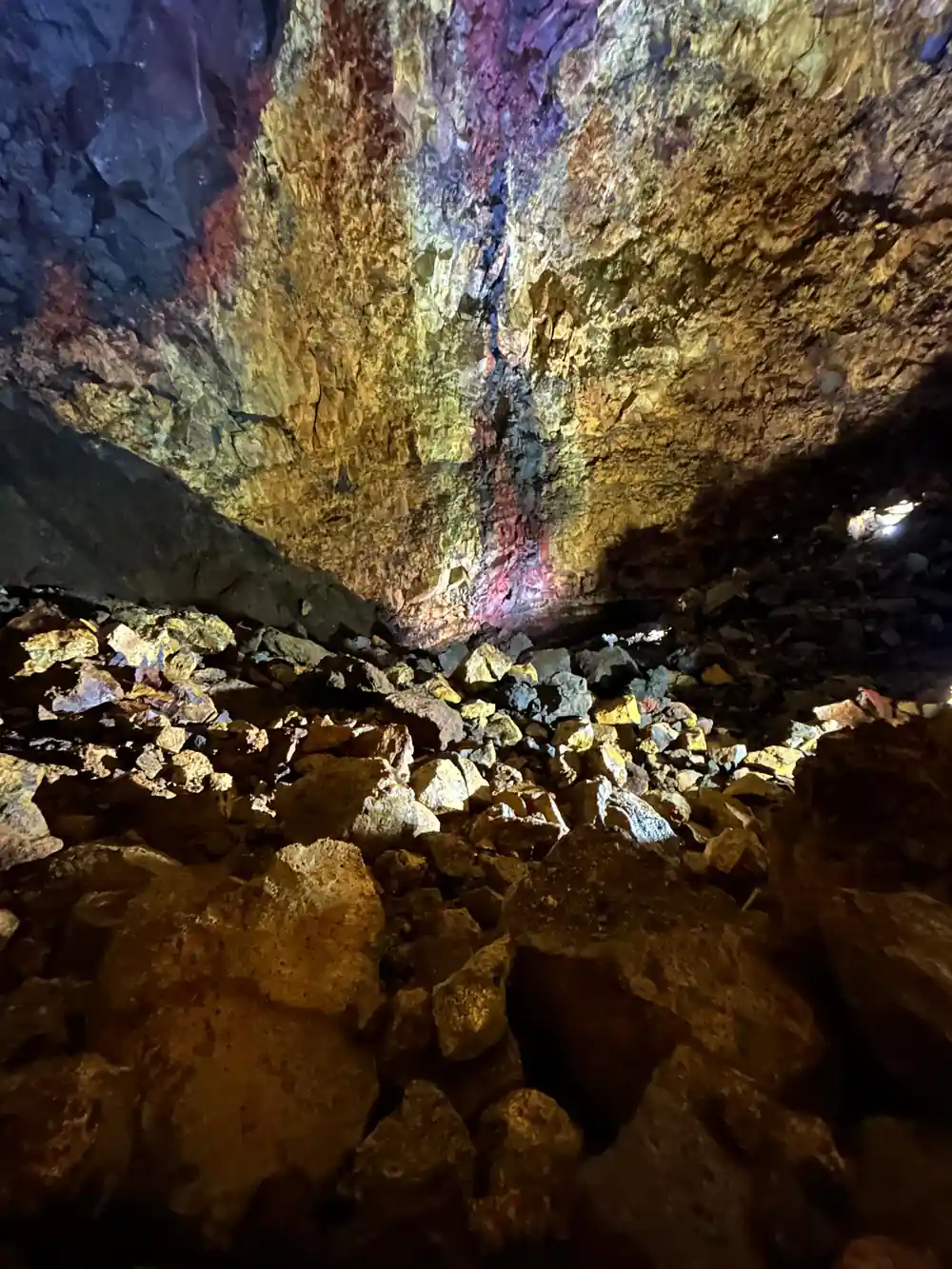
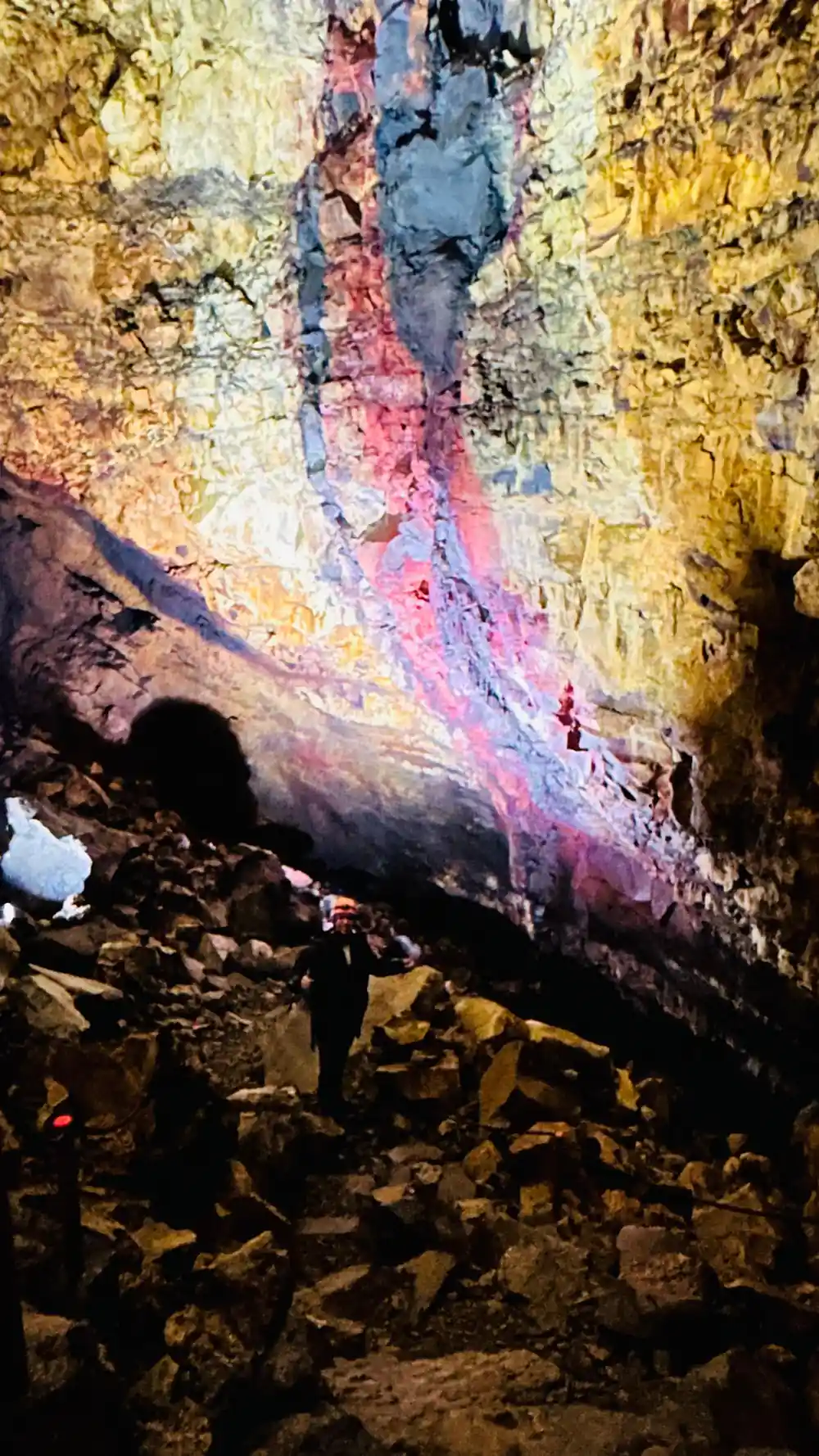
A lit wall against a black chamber
What actually works
Expose for the lit wall and let the rest go black. This is the single most useful adjustment and it is available on any phone: tap the lit rock, then drag the exposure slider down. The image you get will look under-exposed on the screen and correct everywhere else.
Brace against something. There is no tripod, the light is low, and a braced phone at a slow shutter is dramatically better than a held one. Rock, a rail, a companion's shoulder.
Turn the flash off. A phone flash has a useful range of a couple of metres and the nearest wall of interest is considerably further than that, so it will light nothing except possibly the back of somebody's head. Where it does reach, it destroys the modelling that the side-lighting gives the rock.
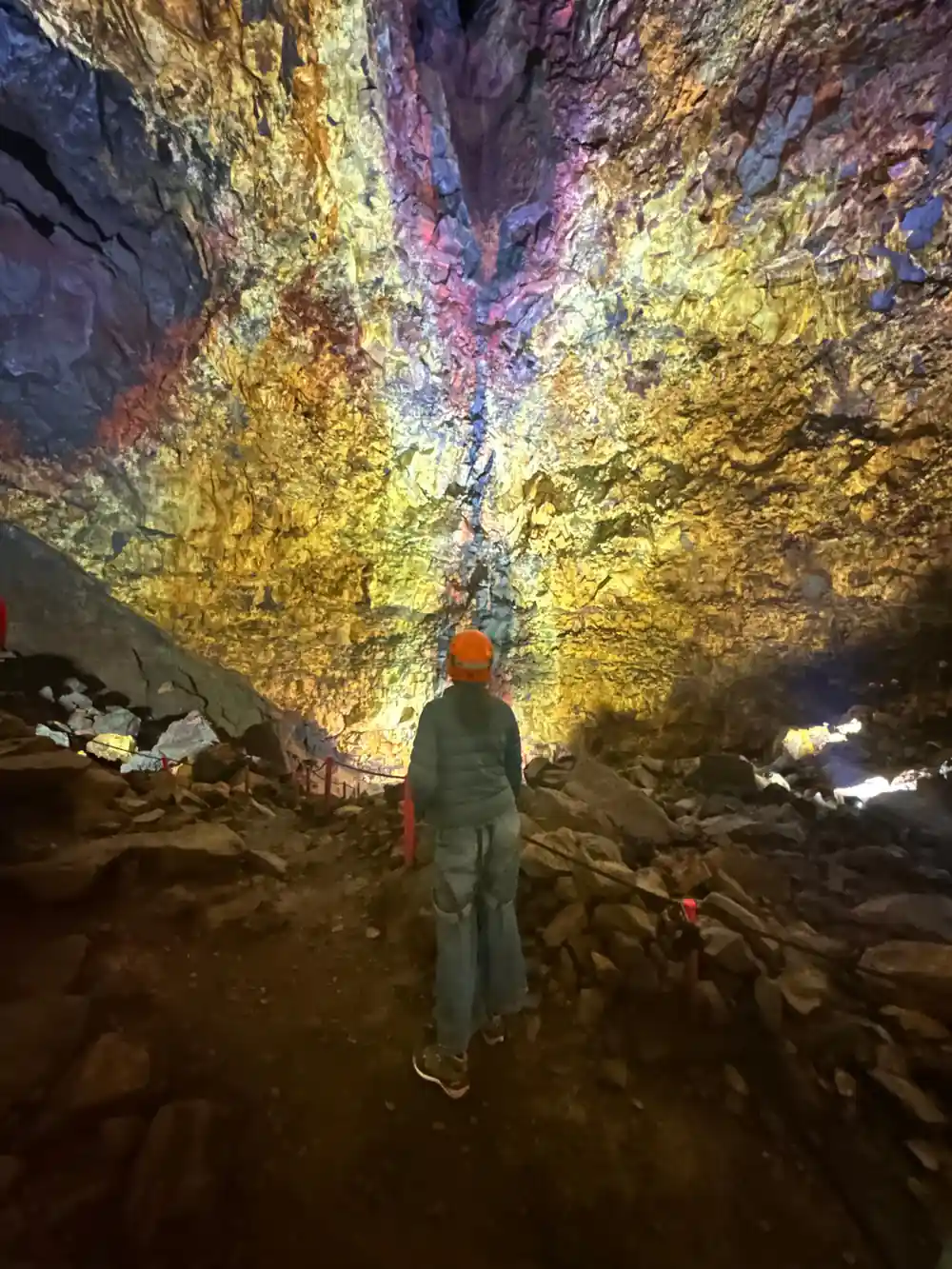
Put a person in the shot. This is not sentiment, it is the only way the scale survives. A photograph of a wall is a photograph of a wall; a photograph of a wall with a figure at the bottom of it is a photograph of a magma chamber. Every image of this place that has ever impressed anybody has a person in it.
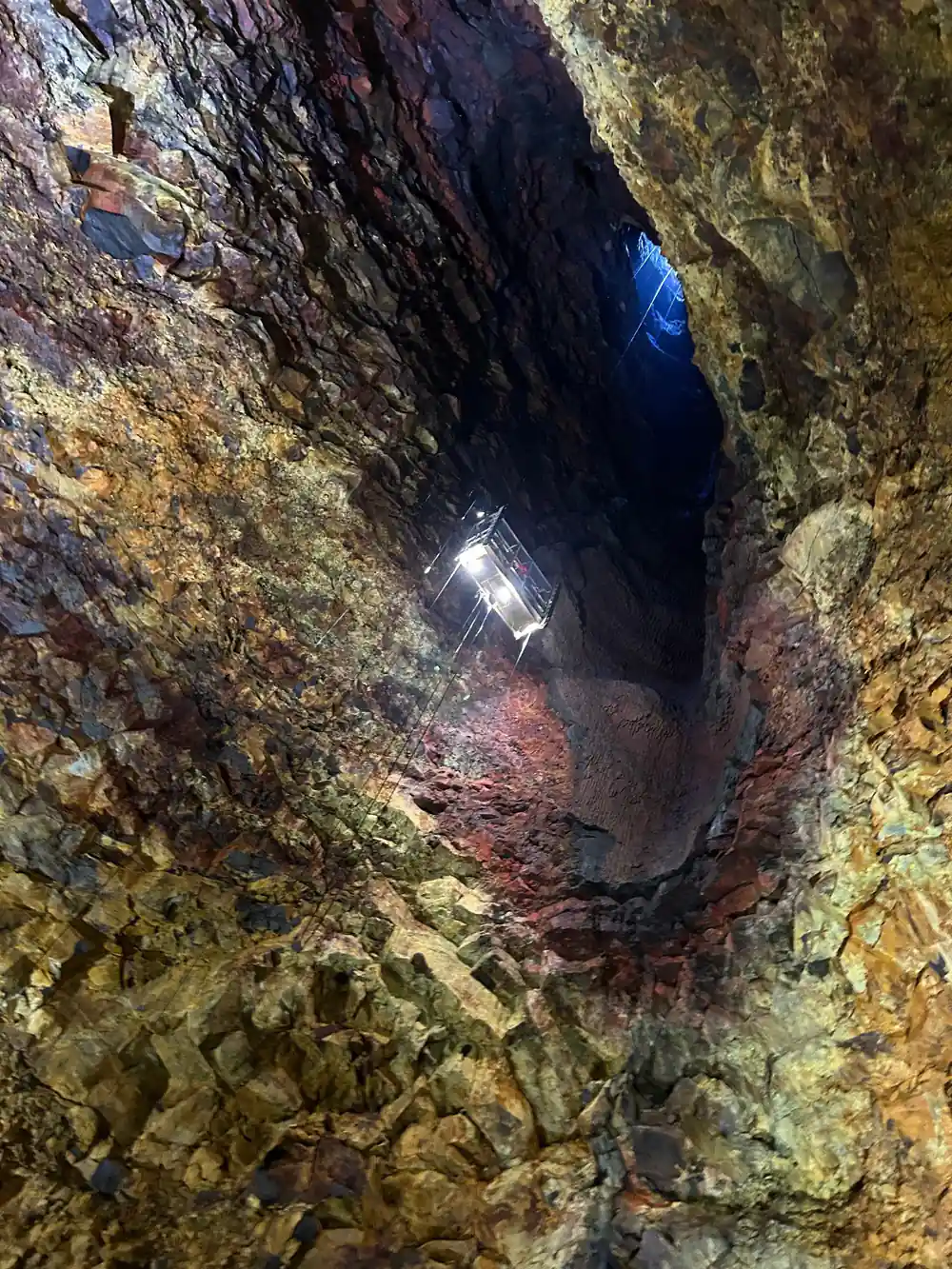
And shoot upwards at least once, with the entrance shaft in frame. The bright hole a long way overhead is the most legible single measure of depth the chamber offers.
If you have brought a camera
A camera with manual control and decent high-ISO performance will do considerably better, mostly because you can choose what to sacrifice rather than having it chosen for you.
Shoot raw if you can, because this is exactly the situation raw exists for: enormous dynamic range and the need to recover shadow detail afterwards without wrecking it. Set a high ISO deliberately rather than letting a slow shutter blur a handheld frame; noise is recoverable and motion blur is not.
A fast wide lens is the right tool. Wide because the space is large and close, fast because there is very little light, and prime rather than zoom for the same reason.
Tripods are not practical. The floor is loose sloping rubble, you are inside a roped area with other people, and the hour is short. Bracing is the realistic version.
The advice nobody takes
Take three photographs and then put the camera away.
There is a specific mechanism behind this rather than mere piety. The chamber works on adapted vision: over the hour your eyes open up and surfaces that were invisible on arrival start to resolve, and the space appears to grow. A bright screen at arm's length resets that adaptation in a second or two, and it takes minutes to recover.
So the person photographing steadily for an hour is not merely distracted; they are systematically preventing themselves from seeing the thing they are photographing. They will come up with more images and less memory than the person who took three shots in the first five minutes and then stood still.
The images are also, frankly, going to be worse than the operator's own. They have been down there in every condition with proper equipment and no time limit, and their photographs are freely visible. Yours are worth taking because they are yours and because you were there. Three of them is plenty for that.
Three photographs, then look
from US$432Reserve now & pay later